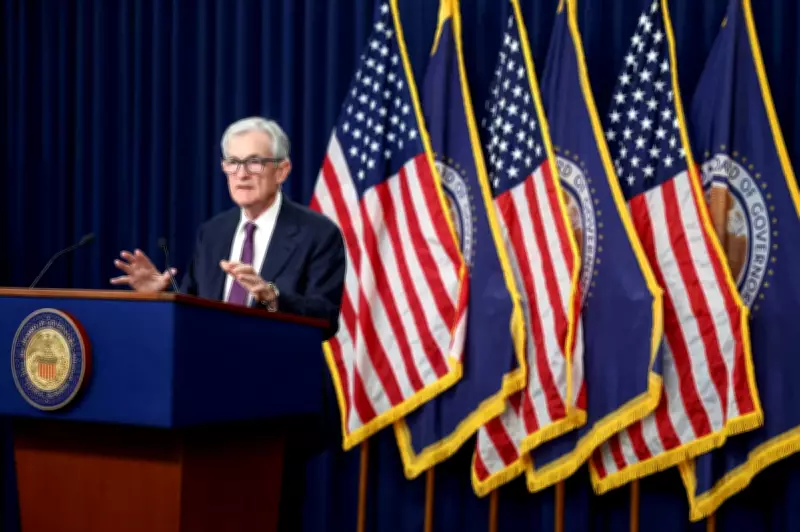
Jerome Powell, the chair of the US Federal Reserve, announced he will stay on the central bank's rate-setting board after his term as chair ends in May, a move that signals continued uncertainty at the Fed and defiance of President Donald Trump's demands for rate cuts.
Rate Decision and Powell's Announcement
The Fed board on Wednesday left interest rates unchanged for the third time this year, despite Trump's repeated calls for lower rates. Powell made the announcement after the meeting, stating that he would remain on the board to oversee the remaining steps in the process regarding the White House's investigations into renovations at the Fed.
Before Wednesday, Powell had said he would step down from the board when the investigations are "well and truly over with transparency and finality." Powell's term as chair ends on 15 May, but his term as Fed governor continues until January 2028.
"My decisions on these matters will continue to be guided entirely by what I believe in the best interest of the institution and the people we serve," Powell said. He emphasized the importance of keeping the Fed independent from politics, stating: "The things that have happened really in the last three months, I think, have left me no choice but to stay until I see them through at least that long."
Economic Context and Dissent
Fed officials cited elevated inflation, slow job growth, and uncertainty in the Middle East as reasons for leaving rates untouched. The board's statement noted that "jobs gains have remained low, on average, and the unemployment rate has been little changed in recent months. Inflation is elevated, in part reflecting the recent increase in global energy prices."
Only one of the board's 12 voting members voted against leaving the rate unchanged, but the Fed also signaled growing dissent: three members supported maintaining the current rate but disagreed with the suggestion that rates would be lowered later this year.
Brent crude oil briefly hit $119 a barrel on Wednesday, a monthly high and a 7% jump in a day amid uncertainty around the war with Iran.
Political and Legal Developments
The Fed meeting ended hours after the US Senate banking committee confirmed former Fed governor Kevin Warsh, clearing a path for his confirmation as new chair. Warsh is expected to be more amenable to Trump's calls for rate cuts, but with only one vote on the rate-setting board, he cannot deliver cuts without support from other members.
Powell has been the target of hostile attacks from Trump over the Fed's rates agenda. Trump's fury culminated in a Justice Department investigation into building renovations at the Fed that went over budget. In a rare rebuke, Powell called the investigation a "pretext" after the Fed resisted Trump's attempts to influence interest rates.
The investigation cast a shadow over Warsh's nomination after Republican Senator Thom Tillis said he would block it until the White House dropped the investigation. The department dropped its investigation into Powell last week, but the White House suggested other investigations into the renovations remain active.
US Attorney for the District of Columbia Jeanine Pirro stated: "I have directed my office to close our investigation as the [inspector general's office] undertakes this inquiry. Note well, however, that I will not hesitate to restart a criminal investigation should the facts warrant doing so."
Fed Independence at Risk
Powell made some of his most pointed remarks yet on the state of Fed independence, which he said is "at risk" amid "legal assaults." He said: "The institution is being battered over these things. We're having to resort to the courts to enforce our ability to make monetary policy without political considerations." He added that while he is confident the Fed will make informed decisions, "we've had to fight for it."
Economists largely agree that an independent central bank is essential for a stable economy. Higher interest rates have helped bring inflation down from a generational high of 9.1% with minimal impact on the labor market. However, the central bank's influence has been overshadowed by White House policies, such as Trump's tariffs and immigration crackdown, as well as higher energy prices amid the war with Iran.
After reaching a two-decade high of 5.25% to 5.5% in 2023, rates are now down to 3.5% to 3.75%. The latest inflation reading showed prices rose 3.3% in March, 1.3% higher than the Fed's 2% target. The unemployment rate has stabilized at 4.3% after rising slightly last year.