
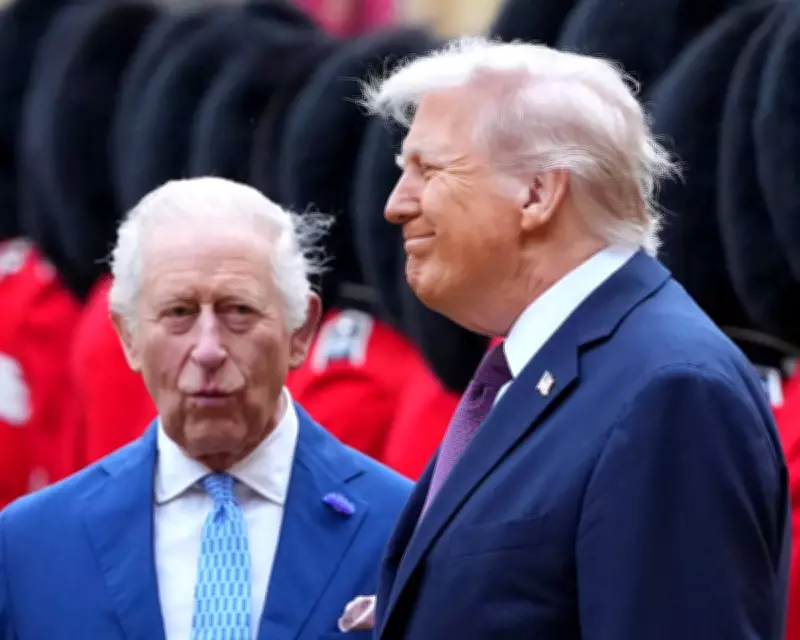
King Charles is embarking on a high-stakes four-day state visit to the United States, where he will have to navigate a diplomatic tightrope as the guest of President Donald Trump. The visit, set against the backdrop of heightened security concerns after a recent shooting at the White House correspondents' dinner, aims to reaffirm and renew bilateral ties on the 250th anniversary of American independence.
Unprecedented Diplomatic Challenge
Contemporary political historian Anthony Seldon described the visit as 'obviously beyond tricky,' with a degree of difficulty surpassing any official visit since George VI met Franklin D. Roosevelt on the eve of World War II. 'Because you are dealing with somebody who is so unpredictable,' Seldon noted. He added that while relations with the US have faced tense periods before, including under Lyndon B. Johnson, Richard Nixon, and Dwight Eisenhower, the current situation is particularly delicate.
Seldon remarked that Charles is 'probably the one person in the world who Trump doesn't want to offend,' which gives the king more leeway. He suggested that Charles could either be cautious or remind Americans of shared values such as separation of powers, individual rights, and the rule of law.
Prof Philip Murphy of the University of London warned that the risk is greater for Prime Minister Keir Starmer than for Charles, especially after controversies involving Peter Mandelson and Olly Robbins. He criticized the government for risking the prestige of the head of state by putting him in contact with Trump.
Security Concerns
Security for the king is being taken very seriously. Darren Jones, the chief secretary to the prime minister, confirmed that appropriate security measures are in place. A Buckingham Palace spokesperson stated that discussions are ongoing with US colleagues to assess the impact of Saturday's events on operational planning.
The King's Most Important Speech
Charles's address to a joint meeting of Congress will be televised internationally and is considered his most important speech to date. He is expected to recognize challenges faced by both countries, but Trump is known for taking offense easily. When Queen Elizabeth II addressed Congress in 1991, she spoke of NATO, European openness, and cultural diversity—remarks that would now be seen as a direct attack on Trump.
Murphy believes Charles will appeal over Trump's head to the American public, stressing common values without directly criticizing the president. Seldon added that the speech could be oblique and deftly delivered, reminding Americans of deep bonds between the nations.
Private vs. Public Diplomacy
Charles's Oval Office meeting with Trump will take place in private after a photo call, avoiding the humiliation suffered by Volodymyr Zelenskyy. However, the king must tread carefully with a president who often shares private conversations publicly. Murphy noted that Trump may not respect the privacy of the meeting.
The Epstein and Sussex Shadows
The ghost of Jeffrey Epstein and the shadow of the Duke and Duchess of Sussex loom over the visit. Calls for Charles and Camilla to meet Epstein survivors have been rejected by the palace, citing potential interference with police inquiries. Protests may occur, but the itinerary limits public exposure.
Murphy observed that while there is risk, the visit also offers a benefit for Charles to demonstrate his valuable role beyond politics, especially after controversies involving Prince Andrew, Harry, and Meghan. There are no plans for a reunion between Charles and Harry during the trip.




