
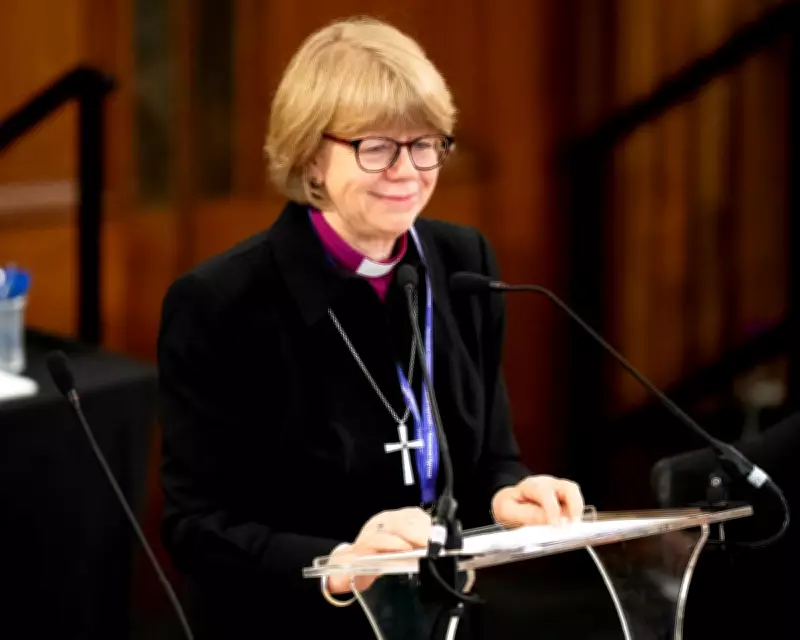
The newly appointed Archbishop of Canterbury, Sarah Mullally, has made a solemn commitment to restore public confidence in how the Church of England addresses allegations of abuse against children and vulnerable adults. Addressing the General Synod, the church's governing body, Mullally acknowledged that the institution has "fallen tragically short" in its past handling of such serious matters.
A Pledge for Proper Independence in Safeguarding
Mullally emphasised that "proper independence" would form the cornerstone of her approach to dealing with abuse allegations during her tenure. This statement comes as a direct response to longstanding criticism that the Church of England has historically managed complaints internally, rather than through transparent, external mechanisms.
"Safeguarding is a fundamental, non-negotiable responsibility, sharpened by our past failings and shaped by the work we still have to do," Mullally told the assembled synod members in London. She received applause and cheers upon her address, marking her first major speech as de facto leader of the church.
Learning from Past Failures
The new archbishop's appointment follows the resignation of her predecessor, Justin Welby, who stepped down fourteen months ago after a damning report highlighted significant failures in handling a high-profile abuse case. The investigation focused on John Smyth, a former barrister who sadistically beat boys and young men, revealing that Welby had failed to act appropriately after being informed of allegations in 2013.
Mullally stated her commitment to an "approach of grave seriousness and focused direction to all matters relating to safeguarding in all contexts in the church." She promised that victims and survivors would be placed at the heart of all future actions, marking a significant shift in pastoral priority.
Transparency and Robust Processes
The archbishop outlined her vision for institutional reform, stating: "We have too often failed to recognise or take seriously the abuse of power in all its forms. Robust and transparent processes are central to the health of any institution." She highlighted the need for clear guidelines around conduct, proper appointment procedures, and effective mechanisms for handling concerns, complaints, and whistleblowing.
While acknowledging that some progress has been made, Mullally warned against complacency: "We must be wholly committed to listening to victims and survivors, and to delivering timely and robust trauma-informed processes. We must be willing, always, for light to be shone on our actions and decisions."
Personal Challenges and Historical Context
Mullally's own journey to leadership has not been without controversy. Following her appointment announcement last year, it emerged that she had been accused of improperly handling a complaint against a priest in London in 2020, with allegations that the matter was not adequately investigated. Last month, the Church of England confirmed it would take no further action regarding these claims.
As the first female leader of the global Anglican communion, Mullally faces additional challenges. A significant proportion of Anglicans, both in the UK and worldwide, remain opposed to women's ordination as priests, meaning her leadership cannot automatically assume universal support.
A Shepherd's Vocation
Drawing on her background as a former NHS chief nursing officer, Mullally told the synod: "As a shepherd, I will strive to be calm, consistent and compassionate to all." She reflected on how her Christian vocation had guided her from nursing to priesthood, then to bishopric, and now to archbishopric, describing the unifying theme as "washing feet, and serving and caring for others."
Looking beyond safeguarding issues, Mullally called for the church to "flex the muscle of hope" in facing global challenges. "We must not deny the challenges that are in front of us – the challenges of inequality and injustice, the volatility of global politics, climate crisis and more – but say with confidence that God is in the midst of us," she concluded, setting a broad agenda for her leadership that extends from institutional reform to global engagement.




