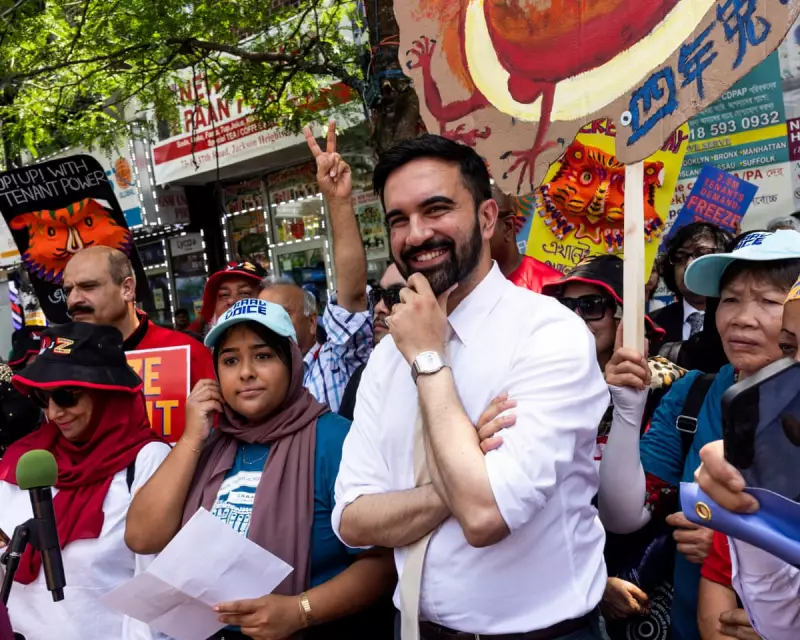
In a historic moment for New York City, Zohran Mamdani was sworn in as the city's 110th mayor on the steps of City Hall. The inauguration, followed by a public celebration for tens of thousands in Lower Manhattan, marks the beginning of a new political chapter defined by youth, diversity, and a progressive agenda.
A Mayor Who Represents a Changing City
The ceremony culminated a remarkable political journey that captivated not just New Yorkers but observers worldwide. Mamdani, who will become the city's youngest mayor since 1892, its first Muslim mayor, and its first mayor born on the African continent, represents a dramatic shift in the city's leadership. His campaign, launched in late 2024, resonated deeply with communities often marginalised in mainstream politics, offering a vision starkly opposed to the rising tide of nationalism and hate.
For long-time residents like journalist Mona Eltahawy, who has lived in New York for 23 years, Mamdani's ascent transforms the city's feel. She notes that unlike previous mayors such as Bloomberg, de Blasio, or Adams, Mamdani uniquely encapsulates the complex identities of millions of New Yorkers, including the city's large Muslim population. His appeal was evident on the campaign trail, from a fundraiser for the Asiyah Women’s Centre in Queens—where a kebab vendor proudly noted the candidate was a fan—to the streets of Harlem, where even Eltahawy's landlady voiced her support.

Policy Promises and Political Contrast
Mamdani's platform directly addresses the pressing concerns of everyday New Yorkers. He has vowed to freeze rents for approximately 2 million people living in rent-stabilised apartments, a key pledge in his focus on affordability. His unapologetic and personal style also broke political moulds, such as when he openly admitted during a debate to purchasing marijuana from a legal shop, endearing him to many.
His victory stands in sharp relief to the politics emanating from his own borough of Queens, which is also the home of former President Donald Trump and Republican councilwoman Vickie Paladino, who infamously called for the "expulsion of Muslims" after the Bondi Beach massacre. In this context, Mamdani's win is seen as a powerful rebuke to bigotry and a breath of hopeful air. Queens, celebrated as a global capital of linguistic diversity with hundreds of languages spoken, now sends a message of inclusion to the world.
A Symbol for American Muslims
Mamdani's rise carries profound symbolic weight for American Muslims. For a community that comprises less than 2% of the U.S. population and has grappled with visibility and prejudice, particularly since the 9/11 attacks, his first-name celebrity status is unprecedented. He complicates the monolithic narrative of what a Muslim is, representing a progressive, socially just, and distinctly New York identity.
For Eltahawy, who moved to New York a year after 9/11 and was once arrested for defacing an Islamophobic subway advert, Mamdani represents the possibility she fought for: that her nieces, nephews, and all American Muslim children would not have to choose between their faith and their nationality. Now, she says, she can point to Mayor Zohran.
As 2026 begins, New York City embarks on the "Year of Zohran." His administration promises to champion social justice, reject hate, and tackle the city's affordability crisis head-on, setting a new course from the steps of the very hall where, in 2011, new citizens from 140 countries took their oath.