
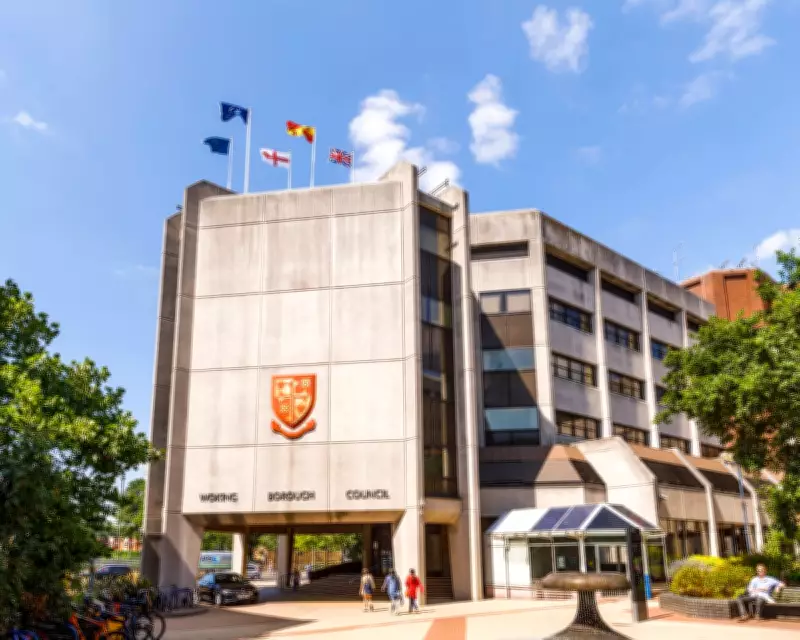
Woking Council Secures £500m Bailout Following Labour's Election Policy Reversal
The bankrupt Woking council has been granted a substantial £500 million bailout, a development that emerges amidst significant political turmoil. This financial rescue coincides with Labour's abrupt U-turn on plans to postpone local elections in England, a decision that has ignited widespread debate over democratic principles and governmental competence.
Labour's Controversial Election Delay and Subsequent Retreat
Initially, Labour proposed delaying local elections to align with a broader reorganisation of local government, aiming to simplify two-tier councils into unitary authorities. However, this move faced intense scrutiny, particularly because 21 of the 30 affected councils were Labour-led, creating perceptions of democratic manipulation. The Electoral Commission had previously warned that such last-minute changes could jeopardise the smooth running of elections and overwhelm staff.
In a dramatic shift, Labour reversed its decision after a legal challenge from Nigel Farage, who publicly criticised the policy. This reversal has left many councillors in a precarious position, now facing elections they believed were postponed and appearing evasive to constituents. Experts, including the Institute for Government, had cautioned against delays, noting that some councillors might end up serving extended six-year terms, further straining local governance.
Surrey as a Test Case for Local Government Reform
The focus now shifts to Surrey, where the upcoming May elections will serve as a critical test for Labour's local government reforms. In this region, new unitary councils—East Surrey and West Surrey—will replace the existing county and 11 district councils. As part of this restructuring, Woking council's £500m bailout is integral to stabilising its finances and ensuring the new system operates more efficiently than its predecessor.
This bailout is not merely a financial lifeline but a component of a larger experiment in administrative efficiency. Over 20 areas across England have submitted plans for similar unitary authorities, indicating a nationwide push for reform. However, concerns persist that with fewer councillors and larger authorities, decision-making may become more distant from local communities, potentially undermining democratic engagement.
Political Fallout and Future Implications
Labour's election U-turn has exposed deeper issues within the party, with some MPs fearing it could damage Sir Keir Starmer's authority and fuel narratives of incompetence. The controversy has provided fertile ground for opposition groups like Reform UK, which could leverage voter discontent to challenge Labour's agenda. Despite this, the core of Labour's reform programme remains intact, emphasising the need to fix a broken local government system rather than cancel elections.
Ultimately, while election timing disputes may fade, the enduring challenge for Labour is to address stagnant living standards and failing public services with robust, social democratic solutions. The Woking bailout and Surrey reforms represent pivotal steps in this journey, but their success will depend on transparent governance and public trust.




