Ealing Council Faces High Court Challenge Over Children's Centre Closures
A West London council has been forced to defend its controversial decision to close 10 children's centres in the High Court this week. The case, brought by parents on behalf of a two-year-old child who cannot be named for legal reasons, argues that Ealing Council's consultation process was fundamentally unlawful.
The Legal Battle Unfolds
On Tuesday, February 24, and Wednesday, February 25, the Royal Courts of Justice hosted a judicial review that could have significant implications for local authority decision-making. Represented by Jenni Richards KC, the claimant presented three key grounds for challenging the closures.
First, the legal team argued that the consultation was conducted unlawfully because proposals were not presented at a formative stage. According to the claimant, the council had already decided to close the centres before consulting the public, and consultees were not provided with sufficient information to properly consider the policy.
The council countered this argument by pointing out that they had initially planned to close 13 centres but reduced this to 10 following consultation. They maintained this demonstrated the policy was indeed at a formative stage and open to change.
Service Provision and Legal Obligations
Second, Ms Richards argued that Ealing Council failed in its legal obligation to ensure adequate children's services would remain available, particularly for vulnerable families who rely most heavily on these centres. Local authorities have a statutory duty to provide sufficient children's centres and services within their boroughs.
Finally, the claimant insisted the decision to close 10 centres was "irrational" because it ignored key evidence and consultation responses. The defence maintained that by bringing services directly into communities, the council was acting entirely rationally.
Controversial Consultation Process
During proceedings in Courtroom 3, Ms Richards alleged that Ealing Council deliberately misled the public about the primary reasons for the closures. While council documents outlined financial savings as a key motivation, this justification was allegedly absent from consultation materials presented to residents.
Defending the consultation process, Rory Dunlop KC acknowledged that financial savings represented a benefit to the council but emphasized that improving early help services remained the primary goal. "In determining the need for children's centres, value for money and services are key," he stated. "How can we improve outcomes for families with the greatest need? Second, and it is second, is the value for money - it is part of every decision a local authority must make."
Definitional Disputes and Data Concerns
A surprising revelation emerged during the hearing regarding what actually constitutes a children's centre under current legislation. Despite claiming to operate 25 children's centres, the council acknowledged that only seven meet the legal definition requiring specific service provisions. The remaining facilities are classified as "link sites" providing children's services.
This legal distinction means that following the proposed closures, Ealing would retain just four legally-defined children's centres, with three of the current seven facing closure. The discrepancy between public perception and legal reality became a significant point of contention.
Another critical issue centered on whether residents received adequate information to participate meaningfully in the consultation. The council failed to explain why the ten specific centres were selected for closure, yet their lawyers argued the public possessed sufficient information to make informed contributions.
Community Response and Research Controversy
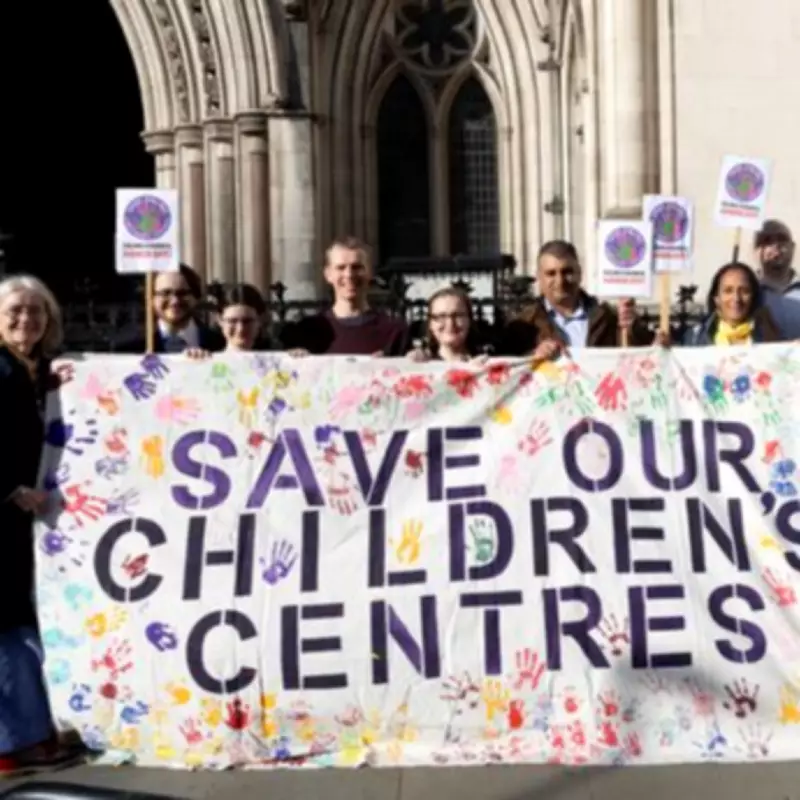
The hearing attracted significant community interest, with 16 supporters of the claimant attending, primarily from the Save Ealing Children's Centres campaign group. Liberal Democrat Councillor Jon Ball joined them in the courtroom, while Council Leader Cllr Peter Mason participated in proceedings.
During the second day, the claimant's counsel challenged the council's reliance on 2024 research suggesting some residents avoid council buildings due to stigma. "There is a reliance on the 2024 research," the counsel argued. "First, the 2024 research doesn't actually say what they say it says, and secondly, there is no evidence that it was before the decision maker, nor that the research formed any part of the consultation."
Campaigner Reactions and Judicial Process
Speaking outside court following the hearing's conclusion, Claire Welsby, a former senior council officer and lead campaigner for Save Ealing Children's Centres, expressed frustration with the council's approach. "It didn't have to get to this stage if the council listened to Save Ealing Children's Centres last year," she remarked. "But it took a family representing their child to come forward and to take on this challenge."
Presiding over the judicial review, Mr Justice Kimblin informed the court that he would reserve his decision without committing to a specific timeframe for the outcome. Should the judge rule in favor of the two-year-old claimant and declare the decision unlawful, the claimant has requested both the quashing of the closure decision and reimbursement of legal costs associated with bringing the case.
The High Court's eventual ruling will establish important precedents regarding local authority consultation processes and their legal obligations toward children's service provision. As communities across London watch closely, the decision could influence how councils approach similar difficult decisions in the future.