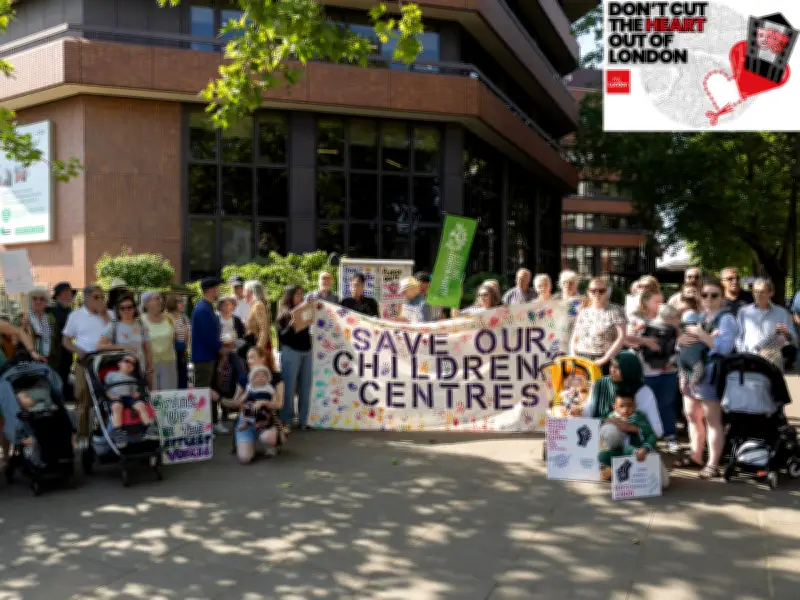
The Court of Appeal has rejected an appeal against the closure of ten children's centres in the London Borough of Ealing, marking the end of the legal challenge brought by parents of a two-year-old. The appeal sought to overturn a High Court decision from April 2026 that sided with Ealing Council, dismissing claims that the consultation process was flawed.
Court upholds earlier ruling
The judicial review, heard in February 2026, resulted in a judgment in April that rejected all three grounds of the claimants' case. The parents then appealed, but the Court of Appeal has now upheld the High Court's decision. This concludes the lengthy legal process that began when the council first announced the closures in April 2025.
The claimants argued that the council had predetermined the closures before consulting the public, that consultation materials were inadequate, and that the council failed to ensure sufficient provision of children's services under Section 5A(1) of the Childcare Act 2006. Mr Justice Kimblin rejected all three claims, stating that the initial budget was merely a proposal, the council provided enough information for meaningful consultation, and it properly weighed relevant factors.
Campaigner's reaction
Claire Welsby, a lead campaigner for Save Ealing Children's Centres and now a Green Party councillor and Leader of the Green Party on Ealing Council, expressed disappointment. She told the Local Democracy Reporting Service (LDRS): "I'm disappointed that the decision to close 10 children's centres will [go ahead]... and you know [there is] nothing we can do about that, that's the end of the road for the courts… We can't go any further legally, so what we must do is hold the council to account."
She added: "The claim by the claimant, who was by default representing thousands of children and families across the borough was valid, and it has pushed the council to justify their decision… [Ealing Council] promise that services for children under five and their families will improve, and myself within the council can ask on behalf of parents to hold them accountable for their decision… We had great doubts on the campaign and the claimant and the case had doubts that this would be an improvement…. But it's up to the council to prove us wrong now and improve these much valued and needed services."
Council's response
A spokesperson for Ealing Council said: "The council can now resume work on improving early help services. Our priority continues to be making sure families can access the right early help support across the borough based on what best meets local needs. Nothing is changing immediately and families will continue to be able to access early help support while plans move forward. We are working with partners to develop the detailed plans for implementing changes and as soon as they are finalised partners, families and stakeholders will be informed clearly and in advance about the changes and when they will happen."
Ealing Council confirmed it spent £109,630 on legal fees fighting the judicial review.
Details of the judicial review
The claimant, a parent of a two-year-old, argued that the council had already decided to close the ten centres before holding a public consultation. They claimed that the materials provided to the public did not adequately explain why specific centres were chosen for closure, making it impossible for the public to comprehensively respond. The final claim argued that under Section 5A(1) of the Childcare Act 2006, the council must ensure "sufficient provision" of children's services, and that the council failed to provide evidence that the closures would not negatively impact children's outcomes.
Mr Justice Kimblin rejected all three claims. He said that the initial budget was merely a proposal, meaning prior consultation was not legally required. The fact that the council ultimately reduced the number of closures after the consultation proved the decision was not predetermined. He found that the council provided enough information to foster a "two-way flow of information", successfully gaining articulate public responses that led to material changes in the proposal. Furthermore, the council properly upheld the requirements of the Childcare Act by adequately weighing geographical, demographic, and financial factors, with no obvious errors or mistakes of fact.