
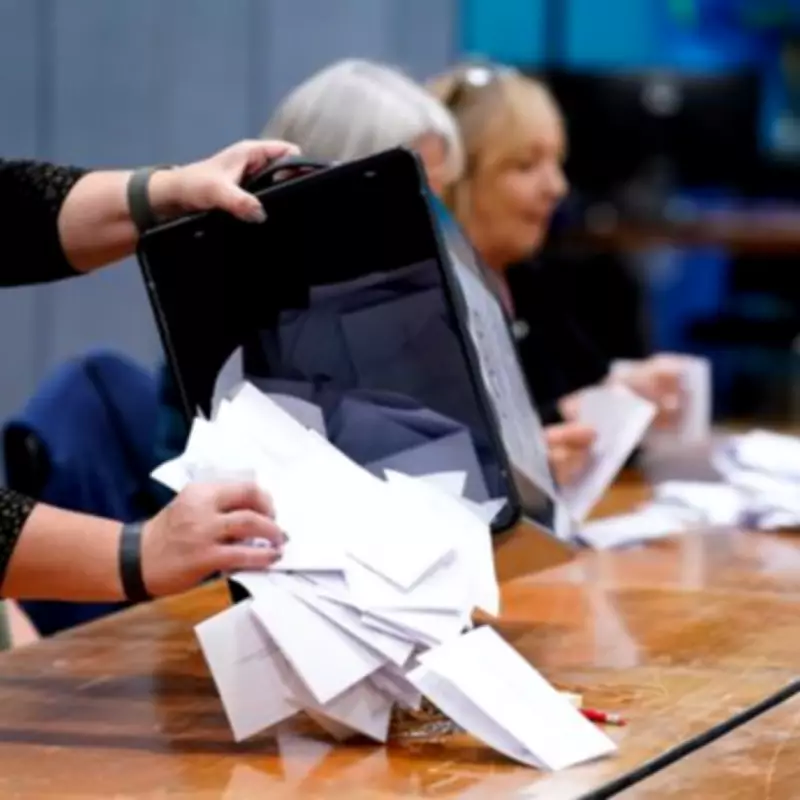
As the dust begins to settle on a set of election results that saw Labour lose overall control of Brent Council, the key question on many people's minds now will be 'what happens next'? With none of the four political parties represented holding enough seats to push through its agenda on its own, compromise and collaboration will need to be the name of the game.
Whilst not entirely a shock - and in many ways it was due to widespread public discontent with central government - the scale of the losses for Labour in Brent may have raised some eyebrows. The party returned 23 fewer seats than it did in 2022, winning 26 of the 57 available seats and in the process falling three short of an overall majority.
On the other side, the Liberal Democrats, Conservatives, and Greens will be pleased with the outcome. Each party increased the number of seats they hold on the council, winning 11, 11, and 9 respectively. But with Brent Council now under no overall control - a situation it hasn't been in since 2006 - what will this mean for delivering services and, more importantly, how will it impact residents?
What Happens Now?
Through informal conversations with party members across the political spectrum, the Local Democracy Reporting Service (LDRS) has been advised what the days, weeks and months ahead may look like. The first thing that needs to be done is for the parties to agree on the formation of an administration - including the council leader, Cabinet, and mayoral positions - which must be confirmed within a month of the election. In the meantime, the previous Leader, Cllr Muhammed Butt, will remain in the post but all Cabinet positions fall away until the Annual Council Meeting (ACM) next week (May 20). Cllr Butt will be responsible for the portfolios in the interim.
At the ACM, councillors will elect a new leader, mayors, Cabinet positions, and the makeup of various committees and sub-committees. However, unlike the previous 16 years where this was merely a rubber stamping exercise for Labour, the party no longer has enough votes to instil its preferred choices so the decisions will need support from the other represented groups. This is where things could become tricky.
Possible Governance Models
Having been used to pushing through its agenda unilaterally over the last decade and a half, Labour will have to reach across the floor for support - which can be achieved either on a case by case basis or through a formal coalition with another party. Over the coming days, the leadership will be speaking to all parties to try to find some common ground to work out what the price of doing business is.
- Formal coalition: A structured agreement where two or more political parties work together to run the council, with Cabinet positions and joint programs shared around.
- Strategic alliance: A formal, medium-to-long-term partnership where parties share resources, management, and services.
- Confidence and supply agreement: Getting support from one or more parties on confidence votes and the budget. On any issues not outlined in the agreement, the parties would not be bound to support the administration.
One of the hurdles to these agreements is that the parameters of Labour working with other parties are set nationally - not on a local level. Essentially, the national Labour Party will have to agree to the strategy moving forwards. As the Liberal Democrats and Conservatives hold the same number of seats, it will be down to Labour to decide which party will become the official opposition and this decision could be key with regards to how things play out.
Potential Challenges
But there lies another potential problem. All three smaller parties - in terms of seats - ran election campaigns attacking Brent Labour's delivery over the past few years. The political divide has been widening recently and their voters could be turned off if any of them are seen to be working with parties they ideologically disagree with. The ACM will be the indicator of how successful these on-going backroom discussions have been and whether a compromise can be reached.
Another, somewhat unlikely, alternative would be for the three smaller parties to join forces - either formally or informally. The Liberal Democrats, Conservatives, and Greens together hold 31 of the 57 seats and, therefore, a majority of votes. However, whilst stranger things have happened, it doesn't seem realistic that this fragile coalition could hold given the parties profound differences on key areas of policy.
What Does This Mean for Residents?
As most services delivered by the local authority are statutory - including social care, education, and waste collection - many of the changes will likely go unnoticed. However, as the makeup of certain committees and sub-committees will be more mixed, it is possible that some decisions that have previously been voted through without issue may become more complicated.
This may be more prominent in areas such as planning, regeneration, or licensing where, whilst there is some commonality, there will be differences in terms of issues including what is an acceptable number of affordable or social housing agreed within a development, the specifics of a regeneration project, or simply the concentration of new homes within an area.
Whatever happens over the course of the next four years before the next elections, the rainbow makeup of the council will emphasise the need for compromise.




