
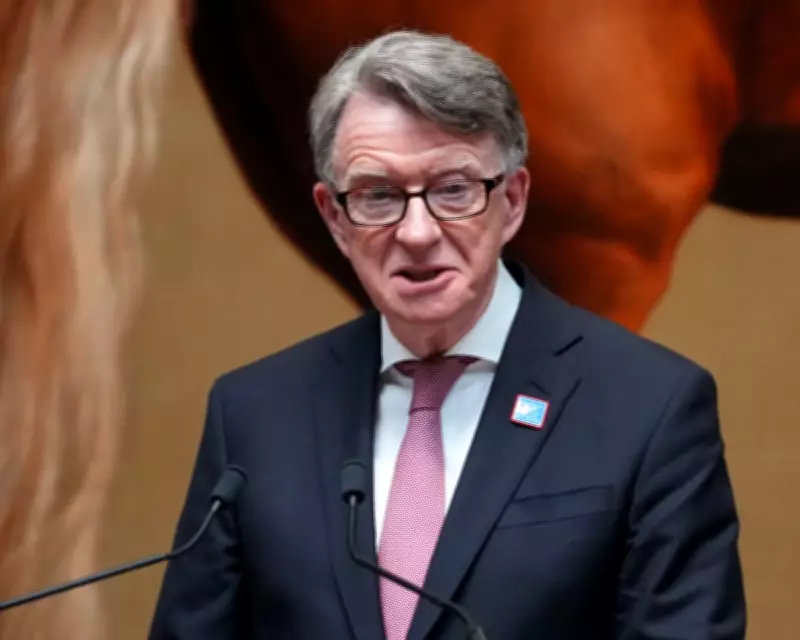
Global Counsel Enters Administration as Mandelson-Epstein Scandal Takes Toll
Global Counsel, the advisory firm co-founded by former Labour peer Peter Mandelson, has announced its collapse into administration, attributing the downfall to the intense 'maelstrom' of political and media scrutiny stemming from Mandelson's connections to the convicted sex offender Jeffrey Epstein. The company confirmed it has petitioned a court to appoint Interpath as administrator to oversee asset realization, signaling a dramatic end to its operations.
Client Exodus and Reputational Damage
Despite concerted efforts to distance itself from its founders, Global Counsel has suffered a devastating loss of clients, including major corporations such as Barclays Bank, Tesco, and the Premier League. The firm's attempts to sever ties with Mandelson and co-founder Benjamin Wegg-Prosser proved insufficient to stem the tide of departures, as revelations from recently released Epstein files continued to tarnish its reputation.
In a statement posted on LinkedIn, the company acknowledged that Mandelson's role as a co-founder and his conduct, particularly in the early years of the business, has 'indelibly coloured' its public perception. The statement emphasized that while the current iteration of Global Counsel has no connection to Mandelson, the legacy of his actions has made it 'challenging to continue with the business in its current form.'
Key Revelations and Business Impact
The crisis deepened after it emerged that Mandelson sought Epstein's advice on establishing Global Counsel in 2010, shortly after leaving office following Labour's general election defeat. Additionally, the Epstein files revealed that Wegg-Prosser met with the sex offender while he was under house arrest in New York, sharing the company's business plan during the encounter.
Wegg-Prosser, who stepped down as chief executive earlier this month, has previously described the meeting as a 'short meeting of no consequence' that lasted only 25 minutes and was suggested by Mandelson. However, the damage to Global Counsel's credibility was irreversible, leading to a cascade of client losses, including Klarna, Phoenix Group, KKR, and Vodafone, which placed its contract under review.
Administration and Job Losses
The appointment of administrators marks a significant shift for Global Counsel, with the company warning that it will no longer be 'business as usual.' Administrators have indicated that any ongoing client servicing will be limited, inevitably resulting in a 'significant number of redundancies' among its approximately 100 employees across offices in London, Berlin, Brussels, Doha, and Singapore.
The board expressed gratitude to staff for their 'exceptional resilience' and acknowledged that shareholders have 'suffered a material loss through no fault of their own.' This collapse underscores the severe consequences of reputational damage in the advisory sector, highlighting how past associations can derail even established firms.
Broader Implications and Industry Response
The fallout from the Mandelson-Epstein scandal has sent shockwaves through the business community, raising questions about due diligence and ethical standards in corporate advisory services. Companies like GSK, which previously engaged Global Counsel, have stated they have 'no plans' for future collaboration, reflecting a broader trend of clients distancing themselves from firms linked to controversy.
As Global Counsel navigates administration, the episode serves as a cautionary tale about the lasting impact of founder misconduct on business viability, emphasizing the need for transparency and accountability in professional networks.




