
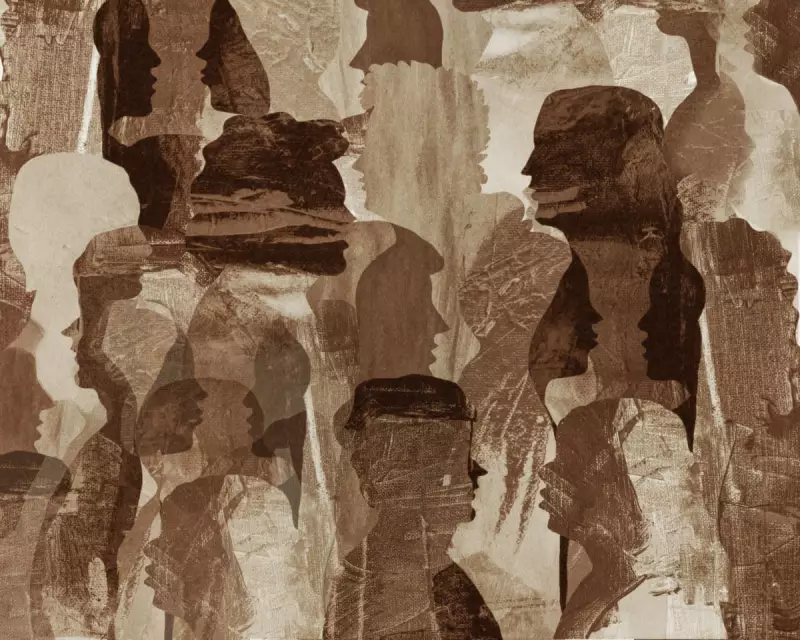
Donald Trump's enduring vision of a white-dominated America appears to be slipping permanently from his grasp, a reality that may explain his perpetual discontent. His promises to his Maga base of a nation purged of immigrants from what he has infamously termed "shithole countries" confront an irreversible demographic tide.
The Unstoppable Shrinkage of White America
However aggressive his proposed policies on deportation and border control, the non-Hispanic white demographic footprint in the United States is destined to shrink. When Trump was four years old, white people constituted roughly 90% of the population. By 2024, that share had plummeted to 57.5%. The Census Bureau projects this group will lose 3.6 million people in the next five years alone, with declines accelerating in subsequent decades.
This trend is immune to immigration restrictions. Trump is not the first leader to attempt safeguarding a racial ideal; the 1924 Johnson-Reed Act successfully prioritised European immigrants, ensuring that as late as 1960, 75% of newcomers were from Europe. However, the 1965 Hart-Celler Act, which shifted focus to family reunification, changed everything. Today, only about 10% of immigrants are European, with over half originating from Latin America.
The Cost of a Zero-Immigration America
If Trump and his influential aide Stephen Miller succeeded in reducing net immigration to zero, the consequences would be severe for national strength. The US population would not just stagnate; it would contract sharply—6% smaller by 2050, 10% smaller by 2060, and a staggering one-third smaller by 2100.
More critically, the nation would age rapidly. The working-age population would shrink faster than the overall total. Currently, people over 65 make up one-fifth of Americans. In a world without immigration, their share would swell to one-quarter by mid-century and exceed one-third by the century's end, supported by a dwindling labour force.
Faulty Solutions and a Demographic Conundrum
The White House has noted these worrying projections but has offered solutions widely viewed as unrealistic or ineffective. The administration's focus on boosting the native-born fertility rate ignores a global phenomenon that puzzles scholars. The US fertility rate sits at 1.6 children per woman, well below the 2.1 replacement rate needed for population stability.
Pronatalist policies in other developed nations have shown limited success. Trump's suggested remedies—such as a "National Medal of Motherhood" or small cash bonuses for new births—are considered trivial, especially alongside policies that may hinder child-rearing, like potential cuts to children's healthcare.
The president's fundamental dilemma is stark: the most straightforward policy to mitigate America's demographic decline relies on the very non-white immigrants he has repeatedly disparaged. Under a high-immigration scenario (averaging 1.5 million net arrivals annually), the US population would grow 13% by 2050, and the ageing crisis would be significantly delayed.
Yet, this solution presents its own challenge for Trump's ideology. High immigration accelerates the racial shift he opposes. In that scenario, the non-Hispanic white share would drop from 58% today to under 47% by 2050, while the Hispanic share would rise from just under 20% to almost 26%.
The ultimate, inescapable conclusion of the data presents a torturous paradox for the former president: if his goal is a powerful, growing, and economically vibrant America, he must accept and allow it to become browner. His alternative path leads toward a nation that is smaller, older, and weaker—a far cry from the 'great' America he promises to restore.




