
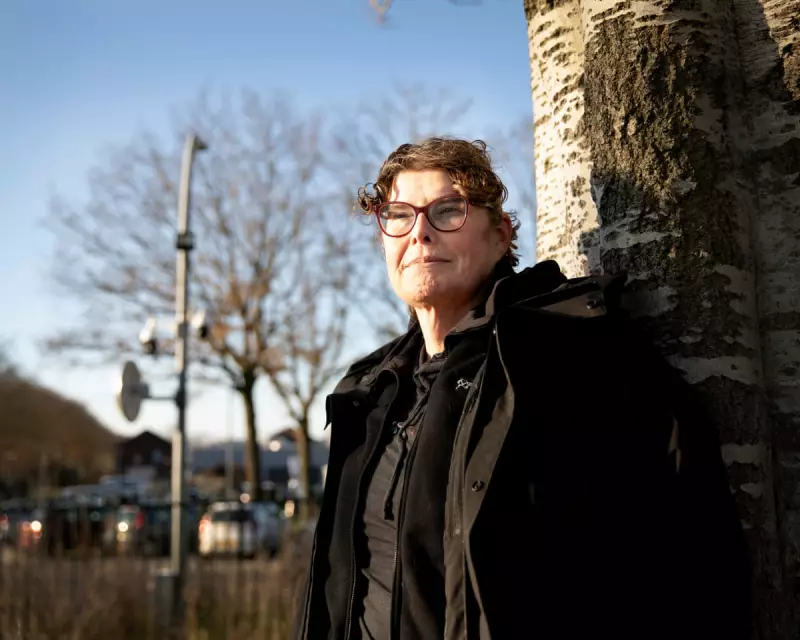
A quiet Dutch town near the German border has become an unlikely refuge for Americans fleeing what they describe as a hostile and dangerous environment for transgender people in the United States. According to official Dutch immigration data, 76 American citizens claimed asylum in the Netherlands last year, a dramatic increase from just nine in 2024.
From San Francisco to a Secure Camp: A Flight for Safety
The Netherlands' largest asylum reception centre, located in Ter Apel, is now home to a small but growing number of US nationals. Unlike the UK, the Dutch system houses asylum seekers in designated centres, often fenced and guarded. For individuals like Jane-Michelle Arc, a 47-year-old software engineer from San Francisco, arriving here was an act of desperation.
Arc, who is transgender, flew to Amsterdam's Schiphol airport last April and asked officials how to seek refuge. "They laughed because: what’s this big dumb American doing here asking about asylum?" she recalled. Her decision stemmed from escalating abuse and fear, leading her to stop leaving her home unless absolutely necessary. After a terrifying incident where she believed a woman would run her over, she resolved to leave.
She was directed to Ter Apel, where initial accommodation was a stark, graffiti-covered room. The camp, while not a prison, is secured with fences and gate checks. Residents are later moved to different blocks, with Arc placed in a section informally known as "the queer block" for LGBT asylum seekers.
A Shared Fear: The American Dream Fades for Trans Community
In the communal spaces of Ter Apel, Arc found common ground with transgender refugees from countries like Libya, Iran, and Morocco. "Our stories were so similar," she said. Despite America's global image as a land of opportunity, she insists the reality for trans women, even in liberal San Francisco, was one of constant threat and discrimination.
This sentiment is echoed by Ashe Wilde, a 40-year-old American trans man who arrived at the camp last October. He transitioned in 2019 and states that anti-trans hatred has intensified, particularly following the re-election of Donald Trump. Wilde points to Trump's inaugural speech declaring only two genders and an executive order that erased federal recognition of transgender identities as pivotal, shocking moments.
"I was called a paedo and a groomer," Wilde claimed, describing a climate where transgender people are increasingly equated with paedophiles. He also reported physical altercations. For both Wilde and Arc, Trump's policies signalled the removal of vital anti-discrimination protections and a government-sanctioned rejection of their identities.
A Slim Chance: The High Bar for Asylum from a 'Safe' Country
Despite their perilous journeys, the prospects for Americans being granted asylum in the Netherlands are exceedingly low. Professor Marlou Schrover of Leiden University, an expert on Dutch immigration, explains the stringent conditions of the UN Refugee Convention. Applicants must prove persecution, demonstrate that local authorities failed to protect them, and show no safe alternative within their own country.
"Even getting beaten up by the police is not enough," Schrover stated. For a claim to succeed, the US would likely need to begin systematically imprisoning people solely for their gender identity. Simply denying the right to change a gender marker on a passport is insufficient. Furthermore, Dutch authorities are wary of designating the US, a key ally, as an unsafe country.
A spokesperson for the Dutch ministry confirmed that while "a few dozen" children with US passports have been granted asylum as dependents in recent years, no American has been successful since Trump's return to power. Among those rejected is Lisa Gayle Carter-Stewart, who fled Montana with her 14-year-old transgender child, Nox. Their claim was "automatically rejected" as the US is considered a safe country of origin, despite Nox's severe mental health struggles and suicide attempts at the camp.
For those facing deportation, the fear is profound. Arc fears detention by ICE and being placed in a male facility, where she believes she would be harmed or killed. Wilde speaks of a forced de-transition due to dwindling access to hormone therapy. "I would absolutely be dead," he said of a potential return.
The situation presents a complex dilemma for the Netherlands, highlighting a stark divergence in human rights perspectives with its American ally and putting a human face on the global struggle for transgender safety and recognition.




