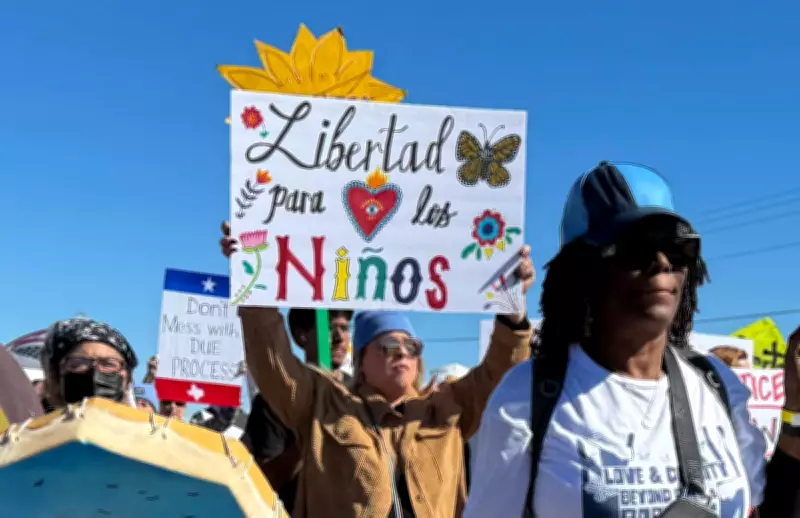
US Accused of Moving Pregnant Immigrant Girls to Texas to Avoid Abortion Services
In a move decried as a significant human rights violation, the United States is reportedly transferring all unaccompanied immigrant children who are pregnant, many due to rape, to a single facility in Texas. Critics argue this strategy is designed to circumvent the provision of abortion services, exploiting state laws that severely restrict reproductive rights.
Targeted Transfers to a Restrictive State
Since July, more than a dozen pregnant minors, some as young as 13, have been relocated to a facility in San Benito, a small town along the south Texas border. According to a joint investigation by the Texas Newsroom and the California Newsroom, about half of these girls became pregnant as a result of rape. In Texas, abortion is banned in nearly all circumstances, including cases of rape and incest, making it virtually impossible for these detainees to access such services.
Jonathan White, a former top official with the Office of Refugee Resettlement (ORR) under both the Obama and Trump administrations, stated, "It's a choice to ensure zero abortions." He explained that by moving pregnant children to Texas, federal officials avoid directly denying abortions, as state laws effectively block access. "Making the decision for these girls whether they will give birth to their rapist's baby is an extraordinary human rights problem," White added.
Broader Concerns Over Reproductive Healthcare in Detention
This relocation amplifies existing issues within immigration detention centers, including allegations of inadequate healthcare for pregnant individuals, separation of nursing parents and infants, and past instances of forced sterilization. Diana Romero, a professor and director at the Center on Immigrant, Refugee and Global Health at CUNY, labeled the "total disregard" for detainee rights as a "dramatic violation" of international law and public health standards.
Romero emphasized that forcing anyone to carry a pregnancy to term is egregious, and relocating them to states with restrictive abortion laws adds another layer of concern. "Everyone attempts to write their politics on the bodies of these children," White remarked, highlighting the politicization of these vulnerable individuals.
Vulnerabilities and Lack of Specialized Care
Unaccompanied minors, often fleeing trafficking and other harms, typically fall under ORR care. The pregnant girls, with an average age of 15 or 16, face high-risk pregnancies due to their youth, yet it is unclear if the remote Texas facility can provide the necessary specialized medical attention. White noted that while the government does not track sexual assault rates among these girls, estimates suggest 80% to 90% experience such trauma, with about half of pregnancies resulting from abuse.
Many girls only discover their pregnancy upon examination under ORR custody, further complicating their plight. The detained children, often high school sophomores and juniors, are alone in a foreign country and pregnant, frequently from sexual assault. "That has to inform how protective we are of them," White urged.
Legal and Governmental Responses
The Flores settlement agreement of 1997 mandates that children in US detention have access to comprehensive reproductive health services. In 2018, the American Civil Liberties Union won a case against the Department of Health and Human Services (HHS), requiring officials to connect pregnant unaccompanied children with abortion services if desired. However, the Dobbs decision has since overturned the constitutional right to abortion, making access dependent on location.
When questioned about the care of pregnant girls and ORR's control by immigration officials, HHS spokesperson Emily Hilliard dismissed the claims as "completely inaccurate," asserting ORR's commitment to the safety and well-being of children in custody. Despite this, sources report that several girls have given birth in the Texas facility, which has a history of inadequate care, and are detained there with their infants.
Historical Context and Reproductive Justice
Romero pointed out that accessing abortion is already difficult in restrictive states, and "presumed immigrants" face additional barriers due to racial and ethnic targeting, increasing human rights risks. She highlighted a long history of reproductive rights violations against people of color, including Black, Latina, and Native American women, by the US government.
Reproductive justice, Romero explained, encompasses not only the right to terminate a pregnancy but also to carry it to term under safe conditions. The current situation undermines this principle, placing vulnerable children in precarious positions. "Surely, a 16-year-old who has been abused and wants to terminate that pregnancy should not be prevented by the federal government from doing so," White concluded, underscoring the urgency of addressing this crisis.