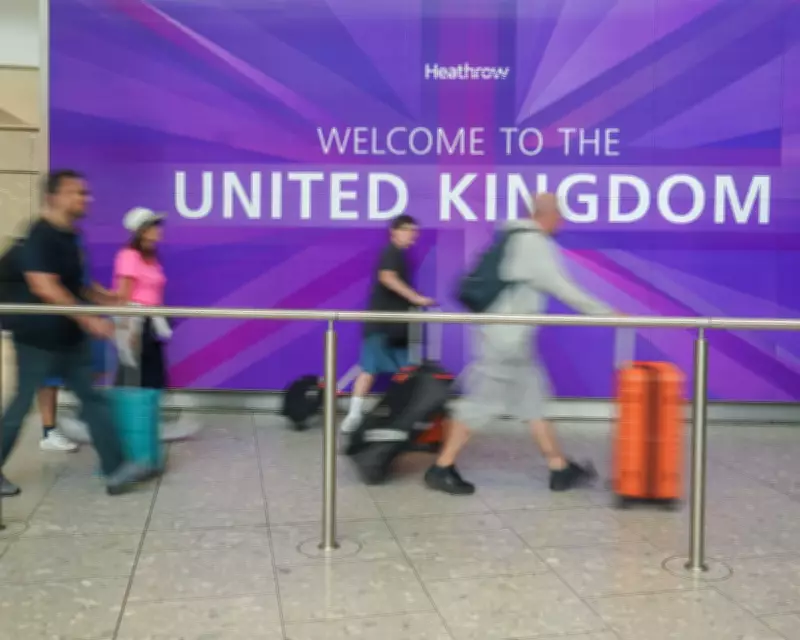
British Dual Nationals Face Immediate Travel Restrictions as Home Office Implements New Rules
The Home Office has confirmed that British citizens holding dual nationality risk being refused entry to the United Kingdom starting this Wednesday, as new travel documentation requirements come into force without any transitional grace period.
Government Ignores Calls for Grace Period
The government has decisively rejected pleas from affected families, the Liberal Democrats, and former Conservative cabinet minister David Davies for a temporary adjustment period. These stakeholders had urgently requested additional time for British dual nationals to obtain necessary documentation before facing potential travel disruptions.
Under the newly implemented regulations, individuals who fail to present either a valid British passport or a certificate of entitlement proving their right to enter the UK may be denied boarding on flights, ferries, or trains bound for British territory.
Home Office Statement on Enhanced Border Security
A Home Office spokesperson elaborated on the policy shift, stating: "The United Kingdom is transitioning toward a modernized digital immigration framework designed to strengthen our border security measures. Effective February 25th, international carriers will be required to verify all passengers possess valid permission or status to travel to the UK—mirroring existing procedures for visa nationals."
The spokesperson further clarified: "For British citizens, appropriate documentation consists of either a British passport or a foreign passport containing an endorsed certificate of entitlement. Carriers retain discretionary authority to accept certain expired British passports issued after 1989 as alternative documentation when accompanied by a valid non-visa national third-country passport with matching biographical details."
Personal Stories of Travel Disruption Emerge
Numerous dual nationals have contacted media outlets in recent weeks, describing significant stress and concrete travel disruptions caused by the impending rule change. Documented cases include:
- A man forced to cancel travel arrangements to attend his father's memorial service
- A family missing their grandparent's 80th birthday celebration
- Another individual canceling a wedding trip to Spain
Affected individuals consistently reported having no prior knowledge of the regulation until media coverage emerged within the last ten days.
Constituent Cases Prompt Political Action
David Davies intervened after one of his constituents residing in the Netherlands revealed she could no longer visit her terminally ill mother in a Yorkshire care home because her passport remained with authorities awaiting renewal processing.
Another distressing case involves a British couple currently honeymooning in New Zealand who are now scrambling to prematurely end their dream vacation at substantial financial cost. The husband, a dual national, did not bring his British passport on the trip and must return before the new rules take effect.
Communication Failures and Documentation Challenges
Although the regulations were published on the government's official gov.uk website in November, there appears to have been inadequate communication to potentially affected individuals. Many dual nationals reported first learning about the requirements through media reports on February 13th.
The alternative to possessing a British passport involves obtaining a certificate of entitlement linked to their secondary passport—a process costing £589 and potentially requiring up to eight weeks for completion. Dual nationals have criticized this as prohibitively expensive compared to the £16 electronic travel authorization available to international tourists.
Carrier Discretion and Implementation Uncertainties
The Home Office acknowledged the significant nature of these regulatory changes while emphasizing that acceptance of alternative documentation remains "an operational decision" at the discretion of individual carriers. The department stated it has provided "additional temporary guidance to carriers on possible alternative documentation" but ultimately carriers determine what proof they will accept.
This policy implementation occurs as the UK continues developing its post-Brexit immigration framework, with border security enhancements representing a central component of the government's strategic approach to migration management.