
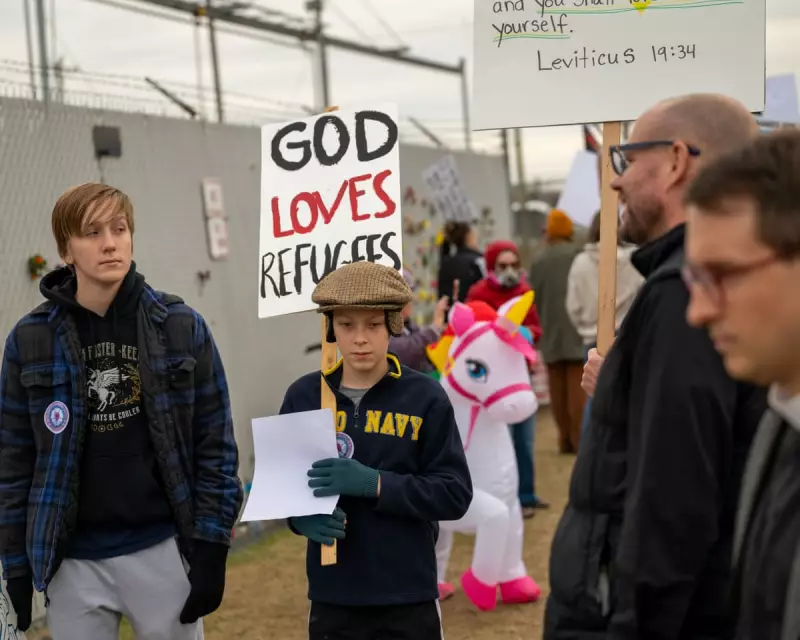
In a significant escalation of his immigration agenda, President Donald Trump has ordered a sweeping pause on all pending asylum applications in the United States. This decisive move follows a tragic shooting in Washington, which resulted in the death of National Guard member Sarah Beckstrom and left her colleague Andrew Wolfe in critical condition. The alleged assailant is reported to be an Afghan man.
Major Policy Shifts: Asylum Pause and Country-Specific Scrutiny
The directive, issued to US Citizenship and Immigration Services (USCIS), mandates an immediate halt to the consideration of approximately 1.5 million asylum applications currently in the system. USCIS Director Joseph Edlow first signalled this change last week. It is important to note that this pause appears to apply specifically to USCIS and not to the separate immigration court system, where many asylum cases are adjudicated.
This represents a stark reversal from the administration's previous efforts to clear the asylum backlog at a rapid pace. Official quarterly reports show completed asylum cases had recently surged to 135,091, a near fivefold increase compared to the same period last year.
Concurrently, the administration has imposed heightened scrutiny on citizens or nationals from 19 countries it classifies as "high-risk." For individuals from these nations, USCIS is pausing a broad range of immigration benefits. This includes applications for work authorisations, green cards, naturalisation, and family sponsorship visas.
The list of affected countries is extensive: Afghanistan, Burundi, Chad, Cuba, Equatorial Guinea, Eritrea, Haiti, Iran, Laos, Libya, Myanmar, the Republic of the Congo, Sierra Leone, Somalia, Sudan, Togo, Turkmenistan, Venezuela, and Yemen.
Unprecedented Review of Previously Approved Applications
In an unprecedented step, the USCIS memo also orders a "comprehensive re-review" of all immigration applications from these 19 countries that were approved since 20 January 2021—the day President Joe Biden took office. This mass re-evaluation may require new interviews to reassess potential national security or public safety threats.
President Trump has repeatedly claimed the Biden administration failed to properly vet Afghan migrants evacuated during the 2021 US withdrawal. "There was no vetting or anything, they came in unvetted," Trump stated last week, referring to the suspect in the Washington shooting, Rahmanullah Lakanwal, who had collaborated with the US military.
However, immigration experts contest this characterisation. Denise Gilman, co-director of the Immigration Clinic at the University of Texas in Austin, described the screening process for Afghan asylum seekers as exceptionally thorough. "I personally sat in those interviews," Gilman said. "Over and over again, I thought how ridiculous the expenditure of resources was on these cases for people we had decided needed to be evacuated."
Legal Challenges and Human Impact
These sweeping changes are almost certain to face immediate legal challenges in federal court, a common outcome for many of the Trump administration's immigration policies. Experts like Gilman anticipate that the courts may ultimately block these measures, allowing asylum claims to proceed once more.
"But in the meantime, there’s going to be a long pause and the backlog is going to grow," Gilman warned. "In the meantime, people are hurt and the administration gets its way." The policy shifts create profound uncertainty for over a million asylum seekers and effectively bar a new wave of migrants from specific nations from seeking legal status in the United States, marking one of the most restrictive immigration actions of the Trump presidency.




