
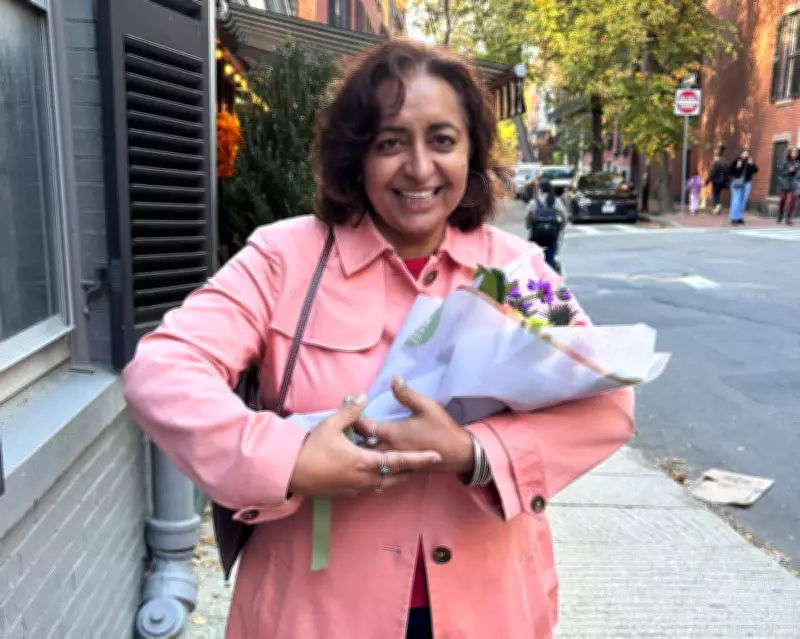
Texas Immigration Court Interpreter Detained by ICE Says 'They Want to Make Me Disappear'
Meenu Batra, the sole licensed Punjabi, Hindi, and Urdu court interpreter in Texas, has served hundreds in immigration court. Now, she finds herself detained by Immigration and Customs Enforcement (ICE), describing the experience as being treated 'like a criminal' and fearing deportation to an unfamiliar country.
Arrest and Detention Details
Batra, 53, was stopped at Harlingen International Airport last month while traveling to Milwaukee for work. ICE agents handcuffed her and transferred her to the El Valle detention facility in Raymondville, where she has been held without explanation for over a month. In a sworn deposition, Batra stated she was initially denied food, water, and medication for her cholesterol for several days. She also alleged that officers made her pose for photos with her hands behind her back to simulate handcuffs, claiming the images were 'for social media,' which left her feeling humiliated.
Background and Legal Status
Batra fled anti-Sikh pogroms in Punjab, India, arriving in the US in 1991. In 2000, an immigration judge granted her a 'withholding of removal' to India, recognizing she would likely face persecution there. This status is a humanitarian protection, not a final removal order, according to her attorney, Deepak Ahluwalia. However, the Department of Homeland Security cited a 2000 removal order, though it has not clarified where Batra might be sent. Ahluwalia suspects the government plans to deport her to a 'third country' under recent US agreements with nations like Cameroon and Rwanda.
Impact on Family and Life
Batra has spent most of her adult life in south Texas, raising four children. Her detention has disrupted their lives: her eldest daughter's boyfriend first met the family at the detention center, one son canceled a work trip, another left college to visit her, and her youngest, an 18-year-old high school student and military enlistee, struggles to focus on final projects. He had filed a parole application for Batra under a program for service members' families, hoping to secure her permanent residency.
Conditions and Experiences in Detention
From the El Valle facility, Batra reports a grim reality. She wakes daily in a windowless warehouse block, comparing it to a horror movie version of 'Groundhog Day.' Using her English fluency and knowledge of immigration policies, she assists fellow detainees with requests for confidential calls and attorney access. She has comforted a young woman suffering from sleep paralysis and helped an elderly detainee recover from a stroke. Batra has also witnessed multiple suicide attempts, with detainees often disappearing without explanation, fueling her fear that 'they want to make me disappear.'
Legal and Humanitarian Concerns
Ahluwalia emphasizes that Batra's case highlights broader issues in US immigration enforcement, including lack of transparency and potential violations of due process. The recent appeals court reversal of a rule requiring 'meaningful notice' before deportation to unfamiliar countries adds to the uncertainty. Batra's story underscores the human cost of immigration policies, as she remains in limbo, separated from her family and facing an uncertain future.




