
Liberal Leader's Trump-Inspired Immigration Pitch Draws Sharp Criticism
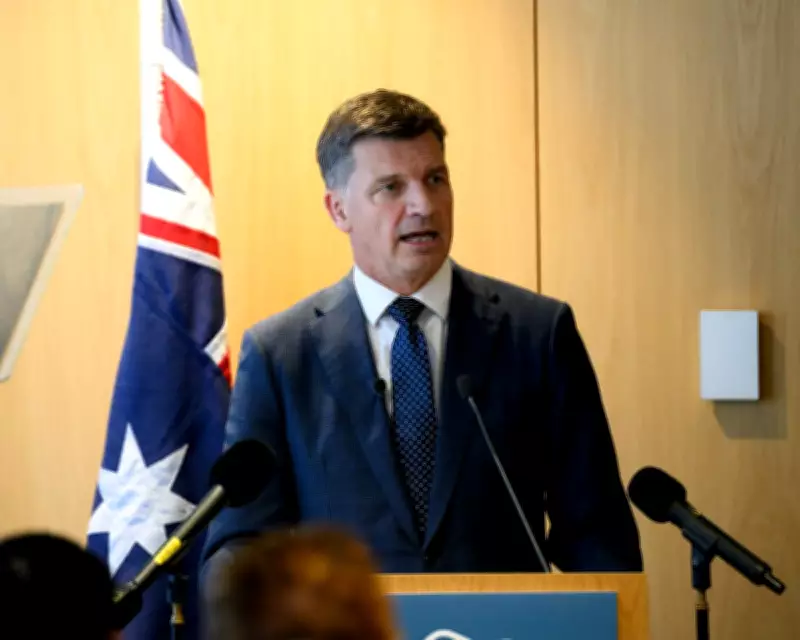
The leader of Australia's Liberal party, Angus Taylor, is facing intense backlash for what critics describe as a desperate attempt to mimic former US President Donald Trump's immigration rhetoric. Political observers note Taylor is "borrowing from Trump, pushing out a thought bubble to see how it flies" in a bid to win back voters drifting toward Pauline Hanson's One Nation party.
Undermining Australian Values for Political Gain
Taylor's immigration proposal, which labels some migrants as having "subversive intent" and coming for "transactional reasons," has been condemned as trampling over Australia's traditional fair go values. Independent MP Zali Steggall previously called out similar rhetoric in parliament, accusing the opposition of "whipping up a sense of fear" and racism regarding asylum seekers from Gaza.
"These are families that you are seeking to paint as somehow they are all terrorists, that they should be mistrusted ... and that they are not worthy of humanitarian aid," Steggall stated during parliamentary debate. She later told then opposition leader Peter Dutton to "stop being racist" before withdrawing the comment to assist House proceedings.
Trumpian Tactics in Australian Politics
Taylor's approach mirrors Trump's controversial immigration policies, including suggestions of extreme vetting based on "group identity" rather than individual circumstances. This comes despite Australia's existing robust visa system that already includes character testing and provisions to reject applicants whose presence might "incite discord" within communities.
The Business Council of Australia highlights that migrants provide substantial economic benefits, with every 1,000 migrants generating a $124 million annual economic dividend. Census data reveals over 30% of Australians were born overseas, with nearly half having at least one parent born abroad.
Historical Parallels and Current Concerns
The debate echoes Trump's 2017 Muslim ban, which caused family separations and forced refugees to cross frozen borders into Canada. Recent crackdowns by US Immigration and Customs Enforcement agents have further polarized American society, raising questions about which path Australia should follow.
Pauline Hanson openly claimed credit for pushing the Coalition toward harder immigration policies, telling 2SM radio: "Of course, I have no doubt about it whatsoever." This admission highlights how One Nation is influencing mainstream political discourse.
Policy Vacuum and Identity Crisis
Critics argue the Liberal party has lost its clear identity, having previously allowed the Nationals to dictate climate policy and now permitting One Nation to set the immigration agenda. Taylor's vague proposals leave many questions unanswered, particularly regarding asylum seekers from conflict zones like Iran and surrounding regions.
"The Liberal party, while being selfish, no longer has a clear identity of its own," observers note. "Having allowed itself to be controlled by the Nationals on climate policy and more, it's now allowing One Nation to wag the dog."
Economic Realities Versus Political Rhetoric
Migrants significantly contribute to Australia's economy, running one-third of all small businesses and filling critical roles in aged care, early childhood education, and regional fuel delivery. Young skilled migrants help address population aging and labor shortages while bringing international connections and innovation.
Despite these benefits, Taylor's speech to the Liberal-aligned Menzies Research Centre emphasized perceived threats, asking: "How many, and who? What colour are they?" This language raises concerns about racial targeting, particularly after the Coalition previously marginalized Indian and Chinese migrants before the last election.
The Path Forward
As Australia faces increased global migration amid international conflicts, the debate over immigration policy becomes increasingly urgent. Responsible leadership requires uniting communities rather than exploiting divisions for political advantage.
The fundamental question remains: Will Australia follow Trump's divisive path or maintain its tradition of fairness and inclusion? With Taylor's approval ratings suffering and the Liberal party struggling to define itself, the answer may determine Australia's political future and international reputation.




