
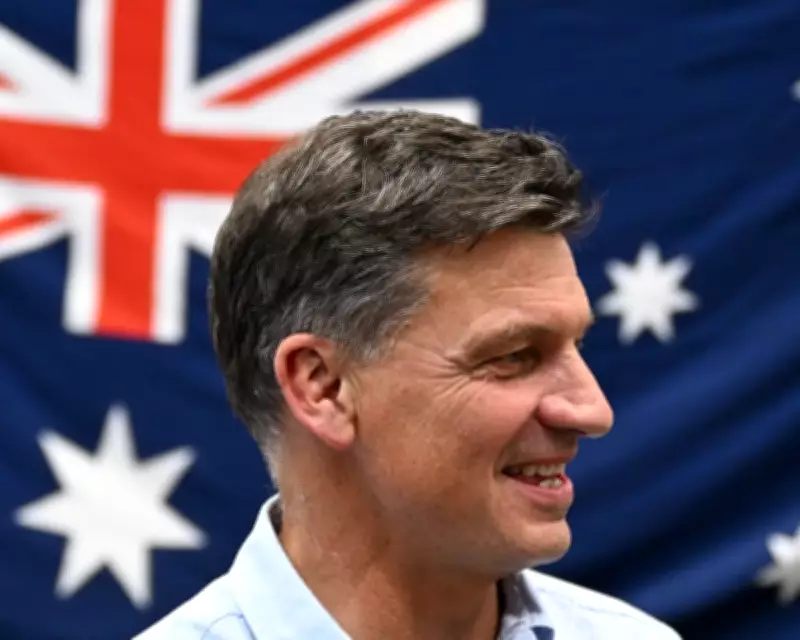
Angus Taylor's Controversial Immigration Speech Sparks Political Backlash
When Angus Taylor began discussing immigration policy this week, political observers immediately noted troubling parallels with past Liberal party failures. The opposition leader's remarks appeared to disregard crucial warnings from the party's own election review, setting the stage for a repeat of Peter Dutton's strategic missteps.
Ignoring the Election Review's Clear Warnings
Earlier this year, when the Liberal party's comprehensive review of Peter Dutton's election defeat began circulating in Canberra, journalists were stunned by its frank assessment. The document detailed in blunt, headline-worthy language exactly where the Coalition had gone wrong during the campaign.
The review specifically highlighted the party's tendency to "thoughtlessly offend groups, including the Chinese" as a widespread problem. Just a few paragraphs later, a submission emphasized that campaigning to win multicultural voters was absolutely critical, stating clearly: "we will never be back in government until we understand it."
Despite these explicit warnings, Taylor's recent immigration speech seemed to ignore these lessons entirely, prompting concerns that the Liberals might be repeating their previous electoral mistakes.
Taylor's Grim Immigration Narrative
In his address to the Menzies Research Centre on Tuesday, Taylor painted a particularly bleak picture of migration in Australia. He claimed that too many people seek to use Australia's generosity "for self-serving purposes" and promised to accelerate rejections of asylum seekers from countries deemed "safe" for return.
Amid ongoing population pressures and infrastructure challenges, Taylor asserted that Australia has for too long "turned a blind eye to a reality of immigration and integration." He declared it was "time to take back control from the technocrats, bureaucrats and activists."
Perhaps most controversially, Taylor suggested that migrants from liberal democracies have "a greater likelihood of subscribing to Australian values compared to those migrating from places ruled by fundamentalists, extremists and dictators."
Political Fallout and Criticism
Labor quickly circulated headlines about the speech across social media platforms, pointing out that in a nation where more than 50% of people are born overseas or have at least one migrant parent, Taylor's comments were remarkably tone-deaf. The suggestion that those fleeing authoritarian regimes had "self-serving purposes" drew particular criticism.
The political consequences could be significant. Just two elections ago, the Liberal party comfortably held the top five Chinese-Australian electorates. Today, they hold none of these crucial seats, demonstrating the electoral cost of poor messaging to multicultural communities.
Former Prime Minister Paul Keating delivered a searing response, accusing Taylor of cowardice and racism. Keating claimed the Coalition was abandoning principles fundamental to Australia's strength and essentially joining Pauline Hanson's "dumb bigotry."
Trumpian Comparisons and Policy Details
The election review had previously labeled Dutton unattractive to key voter groups, including women, and noted the political price paid for his policy and stylistic similarities to former US President Donald Trump. Reporting around Taylor's speech has drawn similar comparisons.
Taylor's proposals to vet social media accounts of potential migrants have been likened to Trump's hardline border policies, while his plans for enhanced screening and expanded deportation powers for law enforcement agencies have drawn comparisons to Trump's ICE agenda.
The Coalition's proposed plan would make compliance with the government's Australian values statement a binding requirement for all visa holders, including prescribing specific behaviors in the Migration Act that would constitute rule violations. However, significant questions remain about how concepts like "a fair go for all" or mutual respect could be objectively measured and enforced.
Public Opinion and Electoral Implications
Recent polling data reveals the complex landscape Taylor is navigating. Last month's Guardian Essential poll found 53% of Australians believe the country is on the wrong track. A separate DemosAU poll for Capital Brief placed immigration as the fourth most pressing issue facing Australia today, behind cost of living, fuel prices, and housing affordability.
When asked which issue contributes more to Australia's affordable housing shortage, 51% of respondents pointed to immigration, ahead of tax breaks for property investors at 29%. This data suggests immigration remains a potent political issue, though Taylor's approach risks alienating crucial voter groups.
The election review, conducted by Liberal elders Pru Goward and Nick Minchin, offered a clear strategic directive: "Successful campaigns are based on a relatively straightforward rule – get the right message to the right people in the right place at the right time."
As the Liberals look toward the 2028 election, whether they repeat the mistakes of 2025 may depend entirely on whether they heed this fundamental advice or continue down a path that has already cost them significant political ground.




