
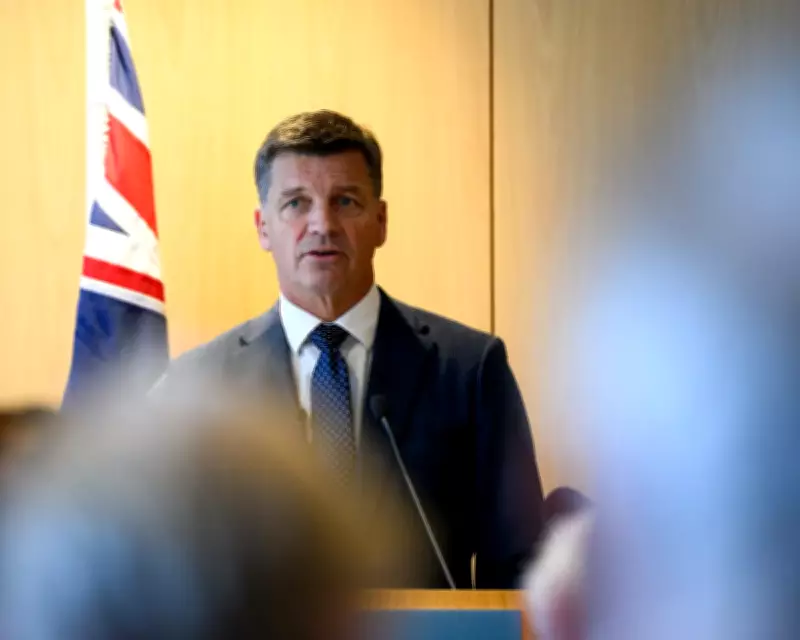
Opposition Leader Outlines Hardline Immigration Vision
Angus Taylor, leader of the opposition, delivered a significant speech at the Menzies Research Centre in Sydney on Tuesday, revealing initial details of the Coalition's proposed hardline immigration policy. The announcement marks a substantial shift in Australia's immigration discourse, though critics immediately questioned the plan's practical implementation and potential costs.
Australian Values and Visa Enforcement
While many Australians might support the principle of requiring visa applicants to commit to Australian values, Taylor provided minimal specifics about how his proposed system would function differently from existing regulations. Australia's current character test already grants the immigration minister extensive authority to refuse or cancel visas, including bans on individuals with serious criminal convictions and members of designated organizations like Hamas and Hezbollah.
The crucial question remains: How would Taylor's approach to refusing visas based on Australian values differ from the existing character test? The opposition leader offered no hypothetical examples of statements that might violate Australian values without breaching current character provisions.
Social Media Monitoring and Implementation Challenges
Under the proposed policy, tourists visiting Australia would have their social media accounts examined as part of visa vetting processes. This raises significant questions about implementation logistics. With millions of visa holders in Australia at any given time and over 500,000 visa applications processed monthly, the plan would require substantial government resources for monitoring and enforcement.
Taylor announced plans to create a new taskforce incorporating intelligence officers, law enforcement personnel, and visa processing specialists. However, this appears to duplicate functions already consolidated within the Home Affairs portfolio, which brings together agencies like ASIO, the Australian Federal Police, and immigration services.
Temporary Protection Visas and Deportation Programs
Similar to proposals from Pauline Hanson's One Nation party, Taylor advocates for resurrecting temporary protection visas (TPVs). Australia has experimented with TPVs for over four decades, with evidence suggesting they add significant costs to the visa system while providing minimal deterrence against boat arrivals or other asylum seekers. Most TPV holders eventually become permanent residents, with many achieving Australian citizenship and raising Australian-born children and grandchildren.
Taylor also proposes implementing a mass deportation program targeting individuals who arrived in Australia since 2015 as part of what he describes as "the biggest labour-trafficking scam in our history." While addressing this situation makes practical sense, Taylor provided few details about implementation methods, costs, or potential legal obstacles.
Migration Surge Context and Political Positioning
Taylor correctly noted that Australia experienced an unprecedented net migration surge to approximately 540,000 people during 2022-23. However, this increase resulted primarily from policy settings implemented by the Coalition government at the end of COVID-19 lockdowns, including unrestricted work rights for students, additional working holidaymaker visa options, fee-free visa applications, and special COVID visas.
While the Labor government has been slow to tighten these policies and needs to implement further adjustments, Taylor's attempt to blame Labor for the migration surge rather than acknowledging his own party's policy decisions has drawn criticism from immigration experts.
The speech represents a significant political maneuver positioning the Coalition on immigration policy, but substantial questions remain about practical implementation, costs, legal frameworks, and effectiveness compared to existing systems.




