
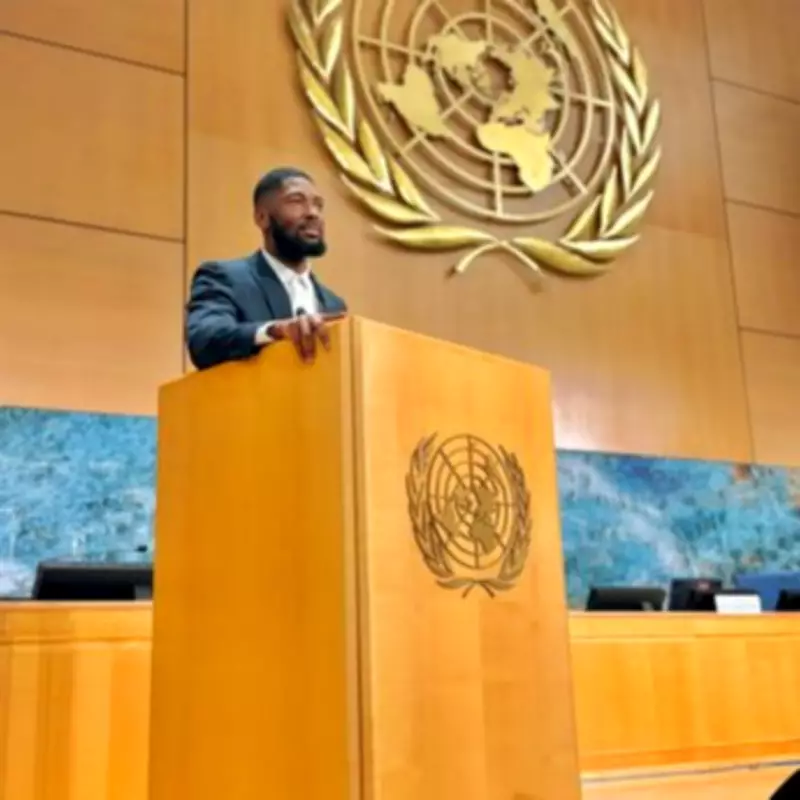
Billy Mazoya came to London from the Democratic Republic of Congo with his family in 2005. As an eight-year-old, he found himself in unfamiliar surroundings after his family fled the Congo Civil War. Upon arriving in London, he moved to Brixton, but his status as a refugee did not bring a warm welcome. His arrival coincided with the rise of the British National Party in the 2000s and the anti-immigration rhetoric that gained them support.
Billy, now 28, shared his experiences with MyLondon: 'Despite being in Brixton as a Black person, I still experienced occasional racism. The microaggressions that Black people face, such as being followed in shops. When I first arrived, you would see graffiti saying 'go home'. Those words were scrawled on the hotels we stayed at, so refugee hotels are not a new phenomenon. It was upsetting, and seeing it continue now shows we have not progressed as far as we think as a society.'
'Now, you see all this anti-immigrant rhetoric, hotels being burned, and it is definitely upsetting and triggers many memories of when I first arrived. It just shows there is still more work to be done. It was happening 20 years ago, and it is still happening now—if anything, it has gotten worse.'
Turning Pain into Purpose
Billy's experiences growing up and his observations of the current political climate inspired him to take action. In 2023, he founded his own company, Cynefin Pamoja. The name combines 'Cynefin,' a Welsh word meaning 'belonging' or a sense of habitat, and 'Pamoja,' Swahili for 'together.' As co-founder, he delivers anti-racism workshops in schools, supports youth employment, and organizes community social events across London. He is currently working with filmmakers and Warner Bros. to provide young people from deprived areas of London with access to acting opportunities.
In the three years since its creation, Cynefin Pamoja has won multiple awards for its work. This work also earned Billy the opportunity to speak at the United Nations' Permanent Forum on People of African Descent in April. He spoke about issues of injustice and the importance of people standing up and not fearing to discuss them.
He said: 'It feels as if the far right has been normalized in the political landscape. When I first arrived, you would view them as a more dystopian group of individuals who just hate foreigners—now it seems that rhetoric is normalized within actual political parties, so it is very surreal to see.'
'That is why it encourages me to keep doing what I'm doing. I offer these classes free of charge to a range of organizations, from teachers to schools. Teaching teachers helps them better understand children. Many teachers do not know what microaggressions are, so it is extremely helpful to help them identify and call them out, which educates their pupils, helps them understand better, and gives them the tools to be anti-racist allies.'
Educating the Next Generation
In some of his workshops, Billy had to explain to teachers why microaggressions, even when unconscious, are harmful. He points out examples of White teachers who might say to a Black or ethnic minority person, 'I'm almost as dark as you' after returning from holiday, or want to touch their hair. He also helps teach schoolchildren, as they are the 'next generation,' by showing them how to talk about racism and stand up for each other to create a better society.
'When I make these teachers aware, at first they cannot believe that those things are microaggressions because they see them as being interested. Yet, when you explain that you are viewing that minority person as an object to be gazed at and touched rather than a human being with boundaries, that helps highlight it to them. Once they get over the initial embarrassment, they feel extremely grateful for being taught,' he continued.
'Speaking at the UN, I could not believe it. A UN delegate reached out as they had been watching my stuff online, which is something I never would have imagined in a million years. Going to the building itself in Geneva, seeing how policies and humanitarian work are carried out across the world, and being able to speak there was a crazy, surreal feeling.'




