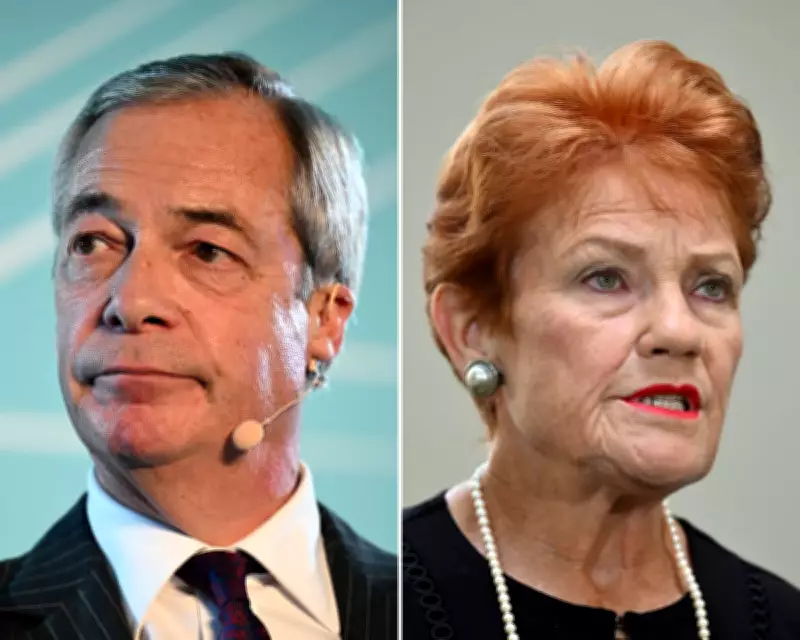
One Nation's Resurgence Mirrors Reform UK's Political Strategy
As Pauline Hanson's One Nation party experiences a dramatic resurgence in Australian politics, striking parallels are emerging with the rise of Nigel Farage's Reform UK movement. Recent polling data reveals One Nation's primary support has surged to 26%, positioning it ahead of the Coalition and within competitive range of the Labor Party. This remarkable shift in political sentiment echoes the trajectory witnessed in British politics, where Reform UK has established a consistent lead in polls since late 2024.
Immigration Concerns Fuel Political Momentum
Both One Nation and Reform UK have successfully capitalized on growing public anxiety surrounding immigration policies. In the United Kingdom, the ongoing crisis of migrant boat arrivals has reinforced perceptions that border control has been compromised. The post-Brexit period under Boris Johnson's leadership saw a significant increase in net migration, contradicting earlier promises that leaving the European Union would reduce immigration numbers.
In Australia, immigration concerns manifest differently but with similar political consequences. While net migration hasn't expanded at the same rate as in Britain, and asylum seeker boats no longer dominate headlines as they did decades ago, public sentiment connects immigration pressures with housing affordability challenges and cost-of-living strains. The persistent population growth combined with insufficient housing construction has created fertile ground for political movements promising solutions.
Cultural Anger and Political Disillusionment
The resurgence of One Nation may signal deeper currents of cultural discontent beyond economic anxieties. For years, Australia appeared resistant to the wave of rightwing populism that swept through other Western democracies. The 2023 federal election, which returned Anthony Albanese to power while rejecting Peter Dutton's leadership, suggested Australia might avoid the "Trump effect" that influenced politics elsewhere.
However, One Nation's recent polling success reveals a substantial constituency disillusioned with mainstream political parties. This segment of the electorate feels their interests are neglected by traditional power structures, creating space for alternative movements to gain traction. The combination of immigration concerns, economic pressures, and cultural grievances has proven politically potent.
Diverging Political Strategies
While similarities between the Australian and British situations are evident, important distinctions exist in political approach. Pauline Hanson continues to employ direct, confrontational rhetoric, as demonstrated by her recent controversial comments about Muslim communities. This style contrasts with Nigel Farage's evolving strategy as Reform UK positions itself as a potential governing party.
Farage has noticeably softened his public persona, presenting himself as a more statesmanlike figure in recent party broadcasts. This strategic shift toward respectability reflects the different political contexts: Reform UK operates as a genuine contender for government power, while One Nation remains more distant from immediate governing prospects.
Political Context and Future Trajectories
The contrasting fortunes of incumbent governments in both countries further differentiate the political landscapes. British Prime Minister Keir Starmer faces significant challenges following political scandals, creating an environment where Reform UK's message resonates with voters feeling they have "nothing to lose." In Australia, despite various national concerns, Anthony Albanese doesn't face the same degree of political vulnerability.
Former Liberal Prime Minister Tony Abbott's recent comments about Australia's cultural character being under threat highlight how immigration debates intersect with broader identity questions. Some observers worry this could signal a return to more exclusionary policies reminiscent of earlier eras in Australian history.
The Path Forward
As One Nation continues to gain momentum, the Australian political establishment faces crucial questions about how to respond. The party's success may encourage other rightwing movements to adopt more disciplined, professional approaches similar to Reform UK's evolution. This could potentially reshape Australia's political landscape in coming years.
Vigilance remains essential as these political movements gain influence. The intersection of immigration policy, economic concerns, and cultural identity creates complex challenges for democratic societies. How Australia navigates these issues will have significant implications for social cohesion and political stability in the years ahead.