
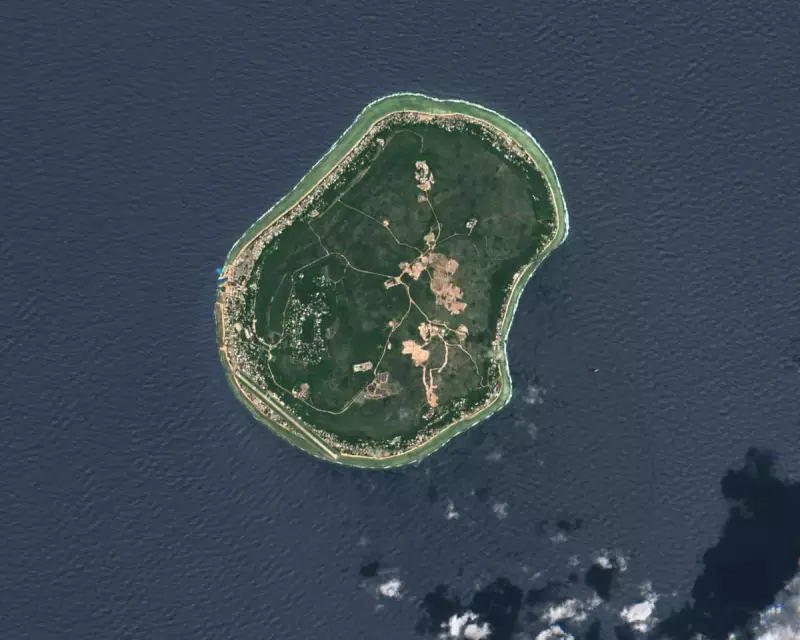
Asylum seekers transferred to the Pacific island of Nauru under Australia's offshore processing regime are reporting severe hunger and deteriorating health, claiming their meagre financial support is utterly insufficient for survival.
‘Day by day I lose weight’: The struggle to survive on $230 a fortnight
Individuals sent to Nauru receive a stipend of just $230 every fortnight for all food and essentials, equating to roughly $115 per week. With work strictly prohibited, this sum must cover everything in an economy where prices are staggeringly high.
"We cannot survive on the $230 per fortnight allowance," one asylum seeker, who requested anonymity, told reporters. "The money is not enough because everything is expensive here."
The island imports most fresh produce, leading to grocery costs far exceeding those in Australia. A single bag of grapes can cost $20, a quarter of a watermelon $24, and a small box of cereal $15. One man described skipping breakfast to afford two meals a day, stating his health is failing as he cannot afford the fruits and vegetables recommended by doctors.
"Day by day I lose weight and my health condition is not good," he said. "I can’t support myself properly. It’s so difficult to survive in Nauru."
Official ban on work exacerbates crisis
The dire situation is compounded by an official government decree. A public notice posted in late November by Nauru’s justice secretary, Jay Udit, explicitly forbids all asylum seekers from working while their applications are processed.
The notice warns that any asylum seeker caught working commits an offence, is liable for prosecution or deportation, and may have their living expenses cut or cancelled. Nauruan businesses are also instructed not to employ them.
This policy was confirmed by Australian Home Affairs officials during Senate estimates. Only those granted refugee status—a mere eight people since 2023—can apply to work legally. Despite a target timeframe of 60 days for processing claims, some have been held on the island for over four months without a decision, left in limbo and hunger.
Australia’s responsibility and international obligations
The Australian government funds accommodation and utilities on Nauru through a multi-million dollar contract with private operator MTC. However, advocates argue this does not absolve Australia of its duty of care.
Ogy Simic, advocacy head at the Asylum Seekers Resource Centre, labelled the situation "unconscionable." "The measly allowance refugees receive on Nauru is so low that people cannot afford food or drinking water," Simic said. "If Australia sends people to Nauru, then Australia must ensure they have the right to work, the means to survive and basic human dignity."
Both Australia and Nauru are signatories to the UN Refugees Convention, which includes the principle of non-refoulement—a prohibition on returning people to countries where they face persecution. Asylum seekers on Nauru live in fear of deportation if their claims are rejected, with one stating, "If I go back to my country... they will kill me."
The UN Human Rights Committee has previously ruled that Australia retains responsibility for upholding the rights of those it sends offshore for processing. With over 160 people sent to Nauru since the regime restarted in 2023, calls are growing for urgent reform to address the humanitarian crisis unfolding under Australia's watch.




