Migrants Forcibly Returned to France Face Violence and Despair Under UK Deal
In a series of rare and revealing interviews, migrants forcibly returned to France after arriving in the UK on small boats have detailed the dire consequences of a system designed to remove them. The initiative, known as "one in, one out," allows for each small boat arrival to be sent back to France in exchange for another individual being brought to the UK legally. However, since its implementation last September, only a few hundred people have been returned, a number dwarfed by the daily crossings on busy days.
Despite warnings of life-threatening dangers from traffickers, dozens of asylum seekers were forcibly removed to France on a recent Thursday morning. Many expressed deep distress, with some reporting suicidal thoughts and others breaking down in tears. The UK government has erected warning signs in Calais to deter crossings, but the plight of those detained in the UK has been well-documented through protests and reports from behind bars.
UN Experts Raise Alarms Over Potential International Law Breaches
Earlier this month, nine UN experts issued a 20-page letter to the UK and French governments, voicing serious concerns about potential breaches of international law and calling for the scheme to be scrapped. While the experiences of detainees in the UK are known, the fate of those sent back under the scheme has remained largely invisible. The UK Home Office deflects responsibility to France, and the French interior ministry has remained silent on the matter.
Through tracking over a dozen returnees, a grim picture emerges of a system ill-equipped to handle their situations. Interviews conducted over several months reveal that some have fled France for their own safety, while others have suffered violence at the hands of smugglers who have quickly adapted to the new policy. Tragically, some returnees have gone missing entirely.
Returnees Describe a "Game of Football" with Their Lives
One man from a former Soviet republic, who filmed part of his journey in a dinghy, expressed fear of being sent to Germany under the Dublin Regulation—which allows asylum seekers to be returned to EU countries where they were previously fingerprinted—and ultimately to his home country, where he faces imprisonment or death for political dissent. "The Home Office breaks your hope. They are playing a game of football with us – we are the ball," he said, highlighting the trauma that led to a PTSD diagnosis after he collapsed and was hospitalized.
A Somali man, among the first to be returned, echoed this sentiment, questioning the humanitarian protection offered by a system that abandons vulnerable individuals. "This UK agreement will go down as a dark chapter in history because it has abandoned us completely," he stated, describing the policy as painful and shameful.
Smugglers' Violence and Adaptation to the New System
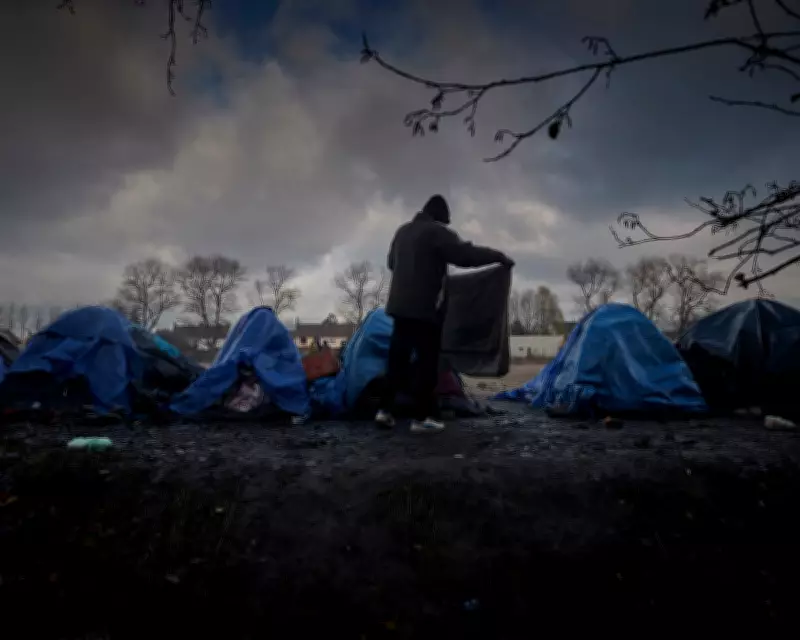
In northern France, known as the Jungle, smugglers have become increasingly violent, with gunshots often heard at night. One asylum seeker recorded a smuggler firing a gun into the air, while another described being branded with a burning piece of wood. "The smugglers do these violent things to make us afraid of them," said an asylum seeker now in Sweden, who plans to return to the UK after recovering from his injuries.
Smugglers have adapted to the "one in, one out" policy by offering new deals, such as free second trips to the UK for those detained on arrival. Returnees report being forced to work for smugglers or facing threats, with one Iranian man noting that the Home Office has stirred up a "hornet's nest" by returning people to areas where smugglers operate.
Homelessness and Missing Persons Highlight Systemic Failures
Many returnees have left France voluntarily due to threats, with at least four individuals sleeping on the streets in Italy, huddled around fires for warmth. An Afghan asylum seeker who fled France after being returned said, "If we felt that France was a safe country for us we never would have paid smugglers to make a dangerous crossing to the UK."
Disturbingly, some returnees have gone missing, with family members fearing the worst. The mother of a Kurdish returnee pleaded for news, saying, "I believe that if he was alive he would have called me. As his mum I just have a feeling that something has happened to him." Another Somali man, identified as a trafficking victim, sent a desperate email before disappearing, stating he was at the "deepest point of despair."
Age Assessment Controversy and Broader Implications
The policy's application has also raised concerns about age assessments. A 17-year-old, who slept on the streets for 20 nights in France before claiming asylum in Italy, reported that the Home Office disbelieved his age despite providing identity documents. Although Italian authorities confirmed him as a child, the Home Office maintains that its age assessment procedures are "robust."
As returnees navigate these formidable barriers, all express a determination to return to the UK, with some planning to enter via lorries and work in the hidden economy until the "one in, one out" deal ends. The system, described as a political game rather than a people-focused solution, continues to leave vulnerable individuals in peril, underscoring the urgent need for reform and compassion in immigration policies.