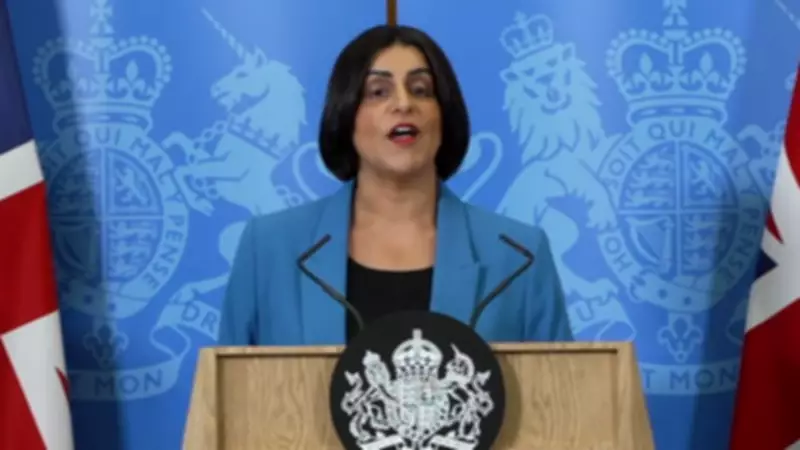
Home Secretary Mahmood Confronts Labour's Migration Dilemma While Introducing Strict Asylum Overhaul
Home Secretary Shabana Mahmood has openly admitted that the politics of migration present a "difficult" challenge for the Labour Party, even as she announced comprehensive measures to tighten Britain's asylum system. Speaking on Thursday, March 5, 2026, Mahmood described this period as a "difficult time" for Labour, where the party's identity and principles are being "bitterly" contested, particularly on issues like immigration.
Labour Values and Border Control: A Necessary Balance
Mahmood emphasized that restoring order and control at the UK's borders does not constitute a betrayal of Labour values. Instead, she argued it is an essential prerequisite for a Labour government to achieve its broader goals. "Restoring order and control at our border is not a betrayal of Labour values, it is the necessary condition for a Labour government to achieve everything it hopes to," she stated firmly.
The Home Secretary warned that if her government fails to address migration issues effectively, other political forces with opposing values might seize the opportunity. "I am very clear in the argument that I am making that these are reforms that are consistent with Labour values, and if we don't resolve these problems, others with none of our values will be given the chance to do so instead," Mahmood explained.
Responding to International Criticism and Internal Pressures
When questioned by Sky News' political editor Beth Rigby about US President Donald Trump's criticisms of Sir Keir Starmer regarding the Iran war and UK immigration policies, Mahmood maintained a diplomatic stance. She affirmed that the UK government will "always prioritise the British national interest," noting that "The president will say some things that we agree with and others that we disagree with."
Despite facing a series of embarrassing policy reversals driven by internal party dissent, Mahmood insisted that Labour MPs recognize the urgency of addressing migration. She positioned her reforms as a pragmatic middle ground between what she termed the "fairy tale of open borders" advocated by the Green Party and the "nightmare of Nigel Farage pulling up the drawbridge and shutting out the world."
Key Components of the Asylum System Reforms
The migration reforms unveiled by Mahmood include several significant changes designed to streamline and restrict the asylum process:
- Settlement Period Extension: The qualifying period for settlement will increase from five to ten years, with additional requirements such as demonstrating English language proficiency at A-level standard.
- Expedited Pathways: Certain individuals, including doctors, nurses, and those making substantial economic contributions, may qualify for settlement in five years or less.
- Retroactive Application: These changes will apply retrospectively to those already on the path to settlement.
- New Visa Routes: Introduction of a new work visa route and safe, legal pathways for student refugees, with the first arrivals expected in autumn 2027.
- Community Sponsorship Expansion: Broadening the community sponsorship scheme to allow more groups to support refugee resettlement.
- Legislative Adjustments: Removing the duty to provide asylum support while retaining the power to do so, and tightening laws to prevent deportations from being obstructed by human rights or modern slavery claims.
- Appeals System Reform: Overhauling the appeals process to ensure quicker resolutions.
- Voluntary Departure Incentives: Offering financial incentives of up to £40,000 per family for voluntary departure, modeled after Denmark's system.
- Visa Restrictions: Suspending visa routes for Afghanistan, Cameroon, Myanmar, and Sudan, and imposing visitor visa requirements for Nicaragua and St Lucia to prevent unauthorized entry.
Mahmood's announcements underscore the ongoing political tensions within Labour as it navigates the complex landscape of migration policy, balancing humanitarian concerns with public demand for stricter border controls.