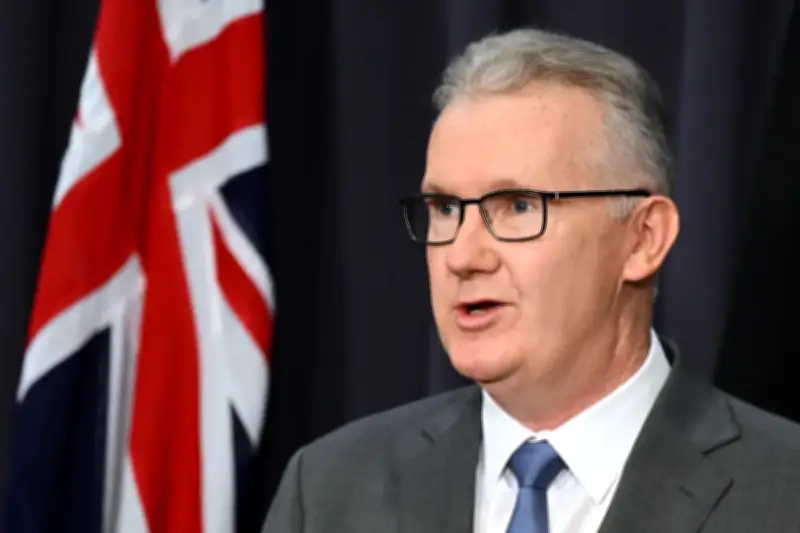
The federal government will unveil contentious plans to curb overseas arrivals to Australia on Thursday, with Home Affairs Minister Tony Burke to detail long-awaited changes to stop visa overstays and lengthy appeals processes.
Burke will address the National Press Club in Canberra with a speech titled: “The work of managing the migration program: Who arrives, who stays, who leaves”. He had been due to announce the plans in a separate address more than a month ago, but the speech was cancelled at the 11th hour amid ongoing debate inside cabinet about the direction and scale of the changes.
Migration targets and current numbers
Labor wants policy settings tweaked to ensure it can meet forecasts for net overseas migration (Nom), coming as support for One Nation surges over concerns about rates of immigration. As well as 185,000 permanent arrivals annually, the government wants net overseas migration to fall from about 305,000 to about 225,000 over two years, ending years of higher-than-expected arrivals, including from international students and working holidaymakers.

Nom measures people coming into or leaving the country for a period of at least 12 months over 16 months, including leaving and returning Australian citizens. Nom has fallen in seven consecutive quarters since September 2023. It is forecast to fall lower than pre-Covid levels by 2027-28. But temporary visa holder rates remain high. For the 2024-25 financial year, there were 568,370 overseas arrivals, according to Australian Bureau of Statistics data.
Planned changes to visa rules
Changes including efforts to stop people whose visas have expired from transferring to different categories are mooted, essentially forcing some overseas citizens to leave the country more quickly. The government is also expected to implement tougher restrictions on international students, tougher rules for their family members seeking to come to Australia, and to curb appeal rights. It will also seek to drive down the number of unlawful non-citizens currently in Australia.
Department of Home Affairs data shows that, as of July, there were 110,898 individuals not granted a protection visa who were yet to be deported. The total includes people on bridging visas and others seeking a judicial or administration review.
Political context and reactions
Labor’s efforts to regain the initiative on immigration comes as One Nation surges in the polls and as community sentiment on the number of overseas arrivals remains a key issue motivating voters. One Nation said on Monday it would cut the number of temporary migrants in Australia by more than 750,000 over three years, targeting international students and family members of skilled migrants.
Business groups, universities, the aged care sector, and both Labor and the Coalition all savaged the plan, warning Hanson’s proposals would hurt essential services and the economy. Prime Minister Anthony Albanese tried to secure Coalition support for legislative changes in talks with opposition leader Angus Taylor last week. No agreement was reached, and the speech comes a day before Albanese leaves Australia to attend the United Nations General Assembly in New York.
Independent senator David Pocock said on Wednesday the country deserved a mature conversation about immigration, not one starting with numbers. “The big thing I would love to see is a plan. There’s this constant talk about numbers, about classes of visas. Rather than actually having the conversation as a country, what is our 10-year plan for migration,” he told ABC radio. “What are the skills that we need? What are the trade-offs when it comes to housing, impact on the environment?”