
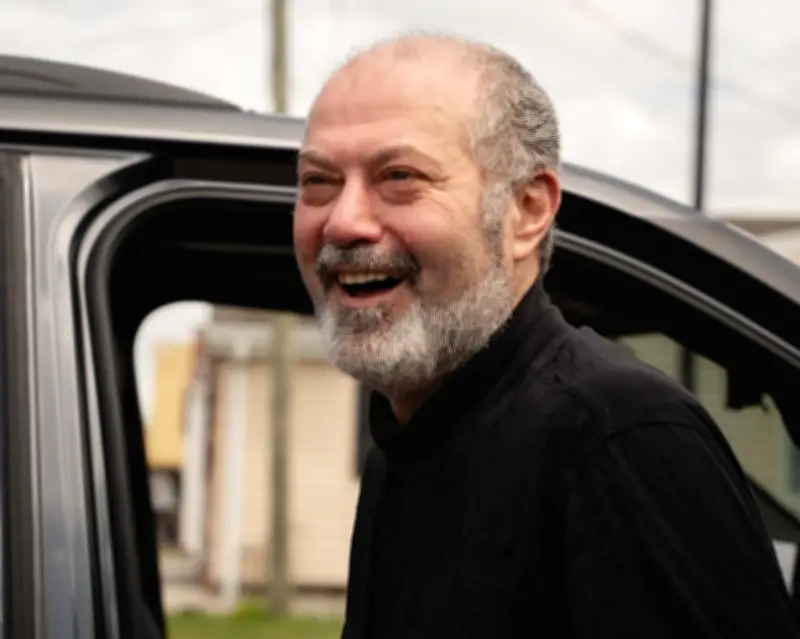
President of Wisconsin's Largest Mosque Released from ICE Custody
A federal judge has ordered the release of Salah Sarsour, president of Wisconsin's largest mosque, after finding that immigration officials likely detained him in retaliation for his public advocacy for Palestinian rights, suppressing his First Amendment rights in the process.
US District Judge James Patrick Hanlon's order on Thursday marked a sharp rebuke against Trump administration officials, including Secretary of State Marco Rubio, who had attempted to portray Sarsour as a national security threat.
Legal Team's Statement
“Salah Sarsour, who has lived in this country for more than three decades and served as a core pillar in his community without any issues, should never have been detained in the first place,” his legal team wrote in a statement. “While we continue to fight these baseless claims in court, today is about celebrating a family being reunited. It is also a sobering reminder that, if the government can target Mr. Sarsour, everyone’s free speech rights are at risk.”
Background on Sarsour's Status
Sarsour describes himself as a stateless Palestinian, according to the order. Immigration and Customs Enforcement (ICE) claims he is a Jordanian citizen. He has lived in the United States for over three decades, becoming a legal permanent resident in 1998. Immigration officials approved Sarsour’s citizenship application decades ago, though he did not naturalize.
Sarsour has gained public attention as a champion for Palestinian rights and serves as a board member of American Muslims for Palestine, an advocacy group.
Rubio's Involvement and Allegations
Rubio personally signed off on a memo to the Department of Homeland Security last year describing Sarsour as deportable despite his green card, because “his actions undermine US foreign policy to combat antisemitism around the world.” The memo, cited in Hanlon’s order, accuses Sarsour’s group of being “found to have been involved in activities providing funds to Hamas.”
On March 30 of this year, a group of plainclothes ICE officers from at least 10 unmarked vehicles arrested Sarsour and placed him in deportation proceedings. He was ultimately detained at Clay County Jail in Indiana.
Conditions of Detention
Sarsour lost 30 pounds while detained, the order says. His lawyers told the court that he was “at constant risk of developing serious complications from diabetes given that the medical staff only checks his blood-sugar levels once a month.” Tightly controlling diabetes typically requires multiple glucose checks daily.
First Amendment Violations
Hanlon’s order states that homeland security officials and Rubio likely trampled on Sarsour’s First Amendment right to free speech and appeared to have arrested him in retaliation for his Palestinian rights advocacy.
The order cited a New York Times story and the website of the Heritage Foundation, the conservative think tank behind Project 2025. The Heritage Foundation presented the White House with the idea to target prominent foreign-born Muslims and Palestinian rights leaders as terrorists to sue them, deport them, or pressure employers to fire them, the order says, citing reporting from the Times and Heritage’s own website. Sarsour was likely among the targets of that campaign.
Government's Claims and Judge's Ruling
The federal government argued that Sarsour should be deported based on two convictions from over three decades ago in Israel—one for throwing a Molotov cocktail and another for attempting to store weapons and ammunition. Sarsour denies committing those crimes.
However, Hanlon viewed those convictions as a non-issue for justifying his incarceration, noting that the federal government knew about them since the 1990s and approved his legal permanent residency and citizenship application anyway.
Sarsour’s speech on Palestinian rights “is core political speech and squarely within the scope of the First Amendment,” the order says. “Mr. Sarsour has submitted evidence allowing a reasonable inference that his protected speech was ‘at least a motivating factor’ in Respondents’ decision to detain him.”
Reactions and Conditions of Release
A spokesperson for homeland security described Sarsour as a “terrorist,” citing the convictions from his youth in Israel. Government lawyers argued that Sarsour did not have the same First Amendment rights as US citizens. They proposed that if released, he should pay a $25,000 bond, wear an ankle monitor, check in routinely with ICE, and remain confined to his house.
Instead, Hanlon ordered his release on personal recognizance, meaning Sarsour does not have to pay a cash bond to ensure his appearance in court. The order, however, requires him to remain in the state of Wisconsin.




