
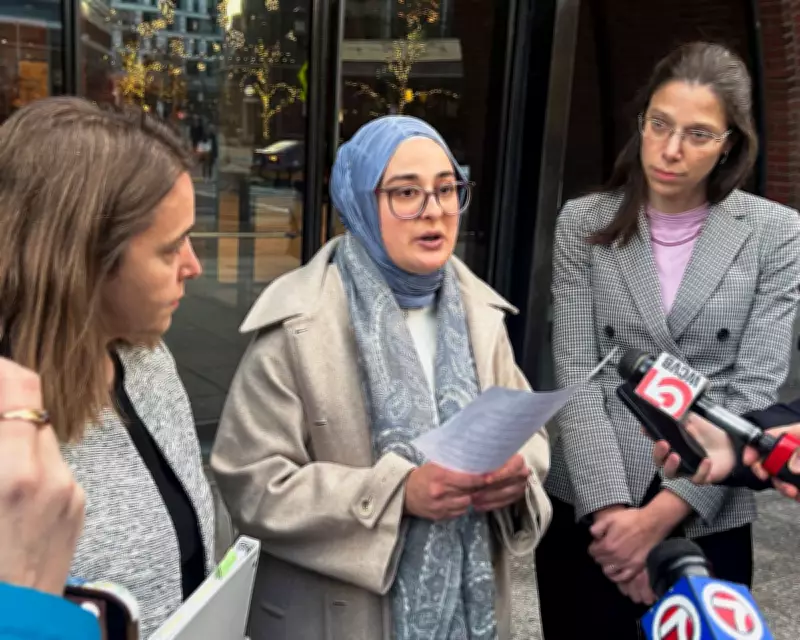
Judge Rejects Trump Administration Effort to Deport Pro-Palestinian Tufts Student
In a significant legal development, an immigration judge has rejected the Trump administration's efforts to deport Rümeysa Öztürk, a Turkish PhD student at Tufts University. Öztürk was arrested last year as part of what her lawyers describe as a targeted campaign against pro-Palestinian campus activists protesting Israel's war on Gaza.
Legal Victory for Student Activist
Lawyers for the Turkish student detailed the immigration judge's decision in a filing with the New York-based second US circuit court of appeals. This court had been reviewing a ruling that led to her release from immigration custody in May. The immigration judge concluded on 29 January that the US Department of Homeland Security had failed to meet its burden of proving she was removable, subsequently terminating proceedings against her.
Her immigration lawyer, Mahsa Khanbabai, confirmed the decision was issued by immigration judge Roopal Patel in Boston. This ruling effectively ends, at least temporarily, proceedings that began with Öztürk's dramatic arrest by immigration authorities in March on a Massachusetts street after DHS revoked her student visa.
Controversial Basis for Visa Revocation
The sole basis authorities provided for revoking her visa was an editorial she co-authored in Tufts' student newspaper a year earlier. This editorial criticised her university's response to Israel's military actions in Gaza. The arrest of Öztürk, a child development researcher, occurred in the Boston suburb of Somerville and was captured in a viral video that shocked many observers and drew substantial criticism from civil rights organisations.
Following her arrest, the former Fulbright scholar was held for 45 days in a detention facility in Louisiana. A federal judge in Vermont, where she had briefly been held, eventually ordered her immediate release after finding she raised a substantial claim that her detention constituted unlawful retaliation violating her free speech rights.
Student's Response and Legal Implications
"Today, I breathe a sigh of relief knowing that despite the justice system's flaws, my case may give hope to those who have also been wronged by the US government," Öztürk said in a statement following the judge's decision. While the immigration judge's decision itself remains non-public, the administration retains the right to challenge it before the board of immigration appeals, which operates under the US Department of Justice.
The Department of Homeland Security, which oversees US Immigration and Customs Enforcement, has not responded to requests for comment regarding this case. This legal outcome represents a notable development in ongoing debates about free speech, student activism, and immigration enforcement policies during the Trump administration's final year.




