
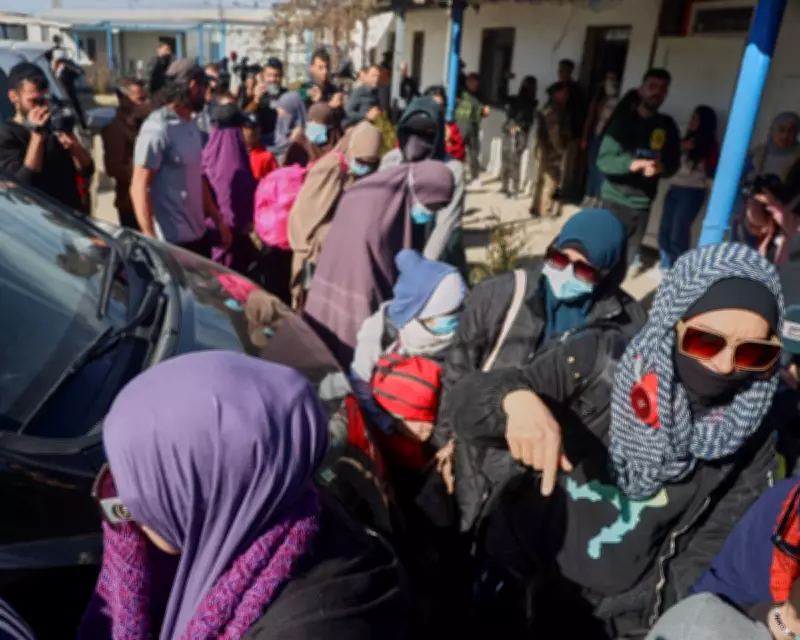
Islamic State-Linked Women and Children Arrive in Australia
A group of women and children with links to the Islamic State (IS) group have arrived in Australia, marking a significant development in the country's efforts to repatriate citizens stranded in conflict zones. The group, consisting of several women and their children, landed in Australia on Tuesday after being held in detention camps in northeastern Syria.
Background of the Repatriation
The repatriation comes after years of negotiations between Australian authorities and Kurdish-led forces who have been holding IS-linked individuals in camps such as Al-Hol and Roj. The Australian government has faced pressure from human rights groups to bring back the women and children, who have been living in dire conditions. However, the move has also raised security concerns, as some of the women are believed to have been supporters or members of IS.
Government Response
Australian Prime Minister Anthony Albanese confirmed the arrival, stating that the government's priority is national security. He emphasized that all individuals repatriated would be subject to thorough assessment and monitoring. "We have a responsibility to ensure the safety of Australians, and we will take all necessary steps to manage any potential risks," Albanese said.
Humanitarian Concerns
Humanitarian organizations have welcomed the repatriation, highlighting the plight of children born in the conflict zone. Save the Children Australia described the move as a "positive step" but called for more action to bring back remaining Australian families. The conditions in the camps have been described as appalling, with limited access to food, healthcare, and education.
Security Measures
Australian security agencies are expected to conduct extensive interviews and surveillance of the repatriated individuals. Some of the women may face charges related to their involvement with IS, while others may be placed under monitoring orders. The government has also allocated resources to deradicalization programs for those deemed at risk.
Political Reactions
The repatriation has sparked debate in Australian politics. Opposition leaders have criticized the government for not providing enough details about the security assessment process. Some have called for a tougher stance, arguing that any individual linked to IS should be prosecuted. Meanwhile, human rights advocates have urged the government to prioritize the welfare of the children, who are victims of circumstances beyond their control.
International Context
Australia is not the only country facing this challenge. Several Western nations have been grappling with the issue of repatriating citizens who traveled to join IS. The United States, France, and the United Kingdom have also brought back some of their nationals, while others have been reluctant due to security concerns.
Next Steps
The Australian government is expected to continue repatriation efforts for the remaining citizens in Syrian camps. Officials have indicated that more groups may be brought back in the coming months, subject to security clearances and diplomatic agreements. The focus will remain on balancing humanitarian obligations with the imperative of national security.




