
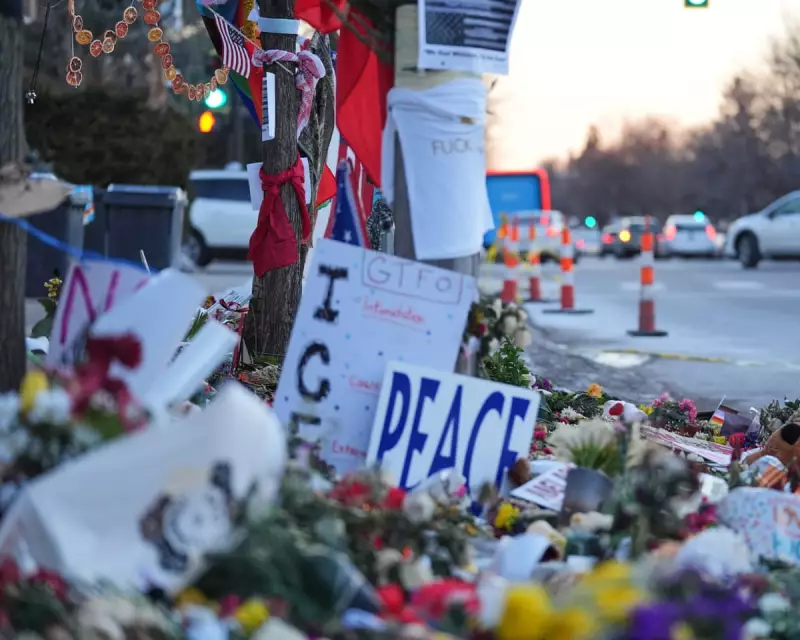
The fatal shooting of mother-of-three Renee Good by an Immigration and Customs Enforcement (ICE) agent in January 2026 has ignited national protests and cast a harsh light on an agency critics describe as a violent, unaccountable force. Video evidence of the incident, which captured a man's voice calling Good a "fucking bitch" after she was shot, stands in stark contrast to official characterisations. Homeland Security Secretary Kristi Noem maligned Good as a perpetrator of "domestic terrorism".
A Pattern of Violence, Not Isolated Incidents
Good's death is far from an isolated event. A Wall Street Journal investigation uncovered 13 instances of ICE agents firing into civilian vehicles between July and December 2025, resulting in at least eight people shot and two killed. Furthermore, the inhumane conditions within ICE's detention network have proven deadly. In 2025 alone, 32 people died in ICE custody, matching a grim record set two decades prior in 2004.
The case of agent Jonathan Ross, who shot Good, dismantles the argument that such violence stems from poor training or new recruits. Ross, an agent for a decade, was a firearms trainer, team leader, and elite member of ICE's special response unit. His profile suggests Good's killing reflects systemic design, not individual error.
The Historical Roots of a 'Racial Project'
Formed in 2003 under the Department of Homeland Security, ICE's mandate was born from the post-9/11 era's national panic, which demonised Muslim immigrants. Its foundational logic formally cast immigrants as inherent security threats. This racialised framing, however, has deep roots in American history, from the 1790 naturalisation act limiting citizenship to "free white persons" to the Chinese Exclusion Act of 1882.
While the 1965 Immigration and Nationality Act abolished racial quotas, policy shifts increasingly criminalised Black and brown immigrants. The 1996 Illegal Immigration Reform and Responsibility Act (IIRIRA) turbocharged deportations, stripping many of due process. ICE, mandated to target 100% of "deportable" people, operates with fewer restraints than police, denying detainees a guaranteed right to a lawyer. Its history includes documented racial profiling and the wrongful detention of US citizens, like Davino Watson, held for 1,273 days.
Abolition as Basic Decency, Not Radicalism
In the wake of Good's killing, some politicians have called for better training. Yet, as scholars Heba Gowayed and Victor Ray argue, tinkering at the edges is insufficient. The problem is the agency's core mission and the security logic it embodies. Former ICE acting director Tom Homan's warning that "there will be more bloodshed unless we decrease the hateful rhetoric" effectively threatens citizens for exercising free speech.
Abolishing an agency that teargasses toddlers and shoots mothers is framed not as radical, but as an act of basic human decency. The call extends beyond defunding ICE to a fundamental divestment from the idea that violence creates safety. Proposed solutions include guaranteeing legal representation for all facing deportation, expanding legal migration pathways, and ultimately centring human dignity over enforcement.
The deaths of Renee Good, Keith Porter, and those like Parady La and Luis Beltran Yanez-Cruz who perished in custody this year are cited as tragic proof that the current system fails everyone, regardless of passport.




