
Last summer, armed and masked immigration agents swept through Los Angeles, pulling people off street corners, from workplaces, parking lots, and stores. Partners, breadwinners, grandparents, and children were arrested, detained, and deported, vanishing from their neighborhoods. These raids marked a turning point in Donald Trump's mass-deportation campaign, soon followed by militarized operations in Chicago, Washington DC, Portland, and Minneapolis.
Families are still living under the shadow of those events, sorting through emotional and administrative aftermath. They file paperwork to bring deported relatives back, suppress flashbacks, and rebuild daily routines without loved ones.
Noémi: A Husband Deported, a Future Blank
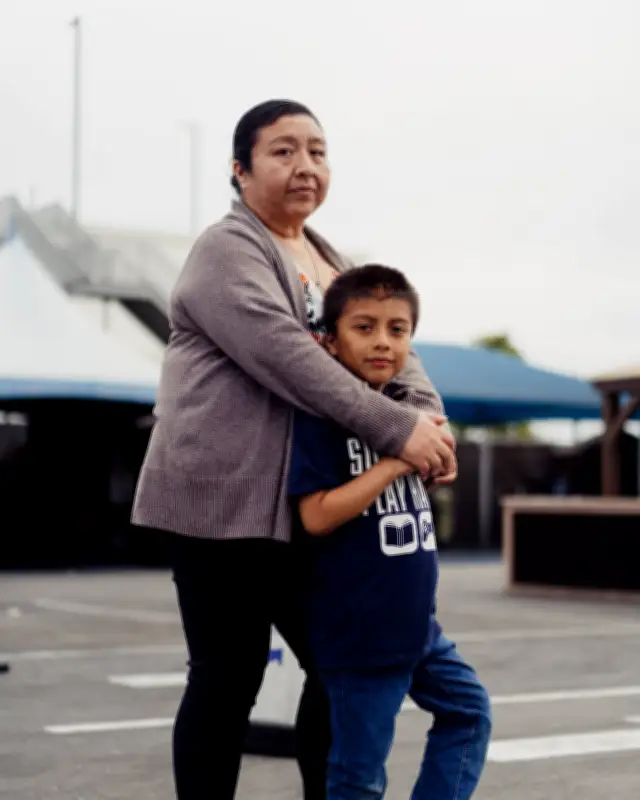
Noémi's husband, Jesús, still wakes her every morning—not with a gentle nudge, but a phone call: "Wake up, love." He calls their children Dhelainy (16), Esther (15), Angel (11), and Gabriel (6), dismissing their pleas for more sleep: "It's time for school!" Before immigration agents swarmed Westchester Hand Wash, where he worked for 10 years, before he was detained in El Paso and deported to Mexico, he would have breakfast and coffee ready.
Now he is in Kiní, Mexico, where he lived before moving to Los Angeles in 1992. Noémi was 16 when she first saw him playing soccer in Inglewood. They married two years later and hardly spent a night apart until his arrest last June. As a husband and father of US citizens, Jesús could have applied for legal residency, but he didn't have his glasses when agents pressured him to sign a document—unknowingly signing away his right to remain.
Noémi and the kids visited him in Kiní, considering relocating, but realized it was best for the children's education to return to Inglewood. Dhelainy studies law and political science at community college; Esther studies software engineering. The kids take music and dance lessons and play sports. "When we become parents, we want them to do and have everything we didn't get," Noémi said.
Daily life feels dissonant without him. Noémi misses lunchtime, when he'd bring tacos and they'd eat together. Dhelainy misses walking the dogs with her dad; she now calls him during walks and advocates for immigrant rights, considering becoming an immigration lawyer. Angel misses weekend training with his dad; now Gabriel gets roped into playing. Gabriel doesn't fully understand why his dad is away, wondering why his mom cries and why his dad can't attend his kindergarten graduation. "Because I have waited my entire life for that day," he explained, making Noémi laugh through tears.
They have submitted a green card petition for Jesús, but applications are backlogged, possibly taking six years or longer. Both girls will likely have graduated by then. Noémi seeks a lawyer to reunite them sooner. "I wish somebody could tell me: 'OK, he's going to be there two years, or three years,'" she said. The future, she added, "is all just a blank."
Christopher: An Uncle Disappeared in ICE Custody
A year ago, Christopher knew little about immigration policy. Then his uncle Daniel was taken. "And I basically had to learn," he said. On 17 June, about 10 am, Christopher got the call. Daniel, who has significant mental and intellectual disability and limited speech, was strolling in east Los Angeles when immigration agents in an unmarked vehicle cornered him. He didn't know how to respond; he understands Spanish but little English, and cannot cope with loud noises or disruptions.
Neighbors who witnessed the arrest called his family. Christopher, a US citizen fluent in English, stayed calm and began Googling. Using ICE's online detainee tracker, he traced his uncle to the federal building in Los Angeles, but national guards blocked him from visiting. The next day, he called the field office hotline with a script: "I know you have my uncle in detention, here's his name, his birthday, he's under conservatorship, he has cognitive disabilities." He didn't know Daniel's A number—a unique identification number from DHS—because Daniel had never interacted with the immigration system.
Christopher researched immigration lawyers; many were unavailable or charged tens of thousands of dollars. A friend connected him to ImmDef, which found Daniel at Adelanto detention center. A lawyer briefly met with him. "He was scared. He was confused," Christopher said. But a team was fighting to free him. Days later, Christopher got another call: his uncle had disappeared from the system. He drove to Adelanto with his sister, packing a first-aid kit and energy drinks, hoping to find him. They checked local restaurants, parks, gas stations—no sign. "I wanted to prove that the federal government can't just trample and disrespect and dump immigrants," he said. "I felt like I had failed."
One lawyer from ImmDef contacted the Mexican consulate; another thought Daniel had been sent to San Ysidro or Tijuana. Volunteers at a reception center in Tijuana said they met a man fitting Daniel's description. They found him at a local medical hospital—he had no idea where he was or that his family was searching. It took over nine months for lawyers to get Daniel paroled back into the US. Christopher breathes easier now, but still worries about other family members without status. He doomscrolls through reels tracking ICE activity in LA. "That ever-looming fear and anxiety, it still exists," he said. "God forbid I have to be put in this position again." Seeing others push back on Trump's policies helps. "It's really now just on the most confident and the bravest of us to get in front of the right people to push for real change," he added.
Mario: Arrested at a Carwash, Living in Purgatory
Mario had never been the type to stay still. He worked non-stop since coming to the US from Mexico 33 years ago. He left his San Fernando valley home at 6:30 am to commute 80 miles to the carwash in Santa Ana, returning around 8:30 pm. For three decades, he had little life outside work, but didn't mind. "I was always the breadwinner," he said. His wife, Alejandra, noted it was a point of pride that she never had to work—he earned enough for her, their three children (now 24, 29, and 33), and his elderly parents in Mexico City.
Last summer, during immigration raids, his family urged him to stay home. "They kept telling me to take a break, but I didn't listen," he said. On 19 August, he reported to work as usual. While at the computer, he heard yelling and saw co-workers running. He rushed into the restroom, heard officers questioning and detaining a co-worker, then an officer swung open the door. Soon, Mario was in handcuffs. He spent six nights sleeping on the floor of a holding cell he calls the "ice box." "The cold was so intense, so awful, that we had to huddle like little chicks next to each other to keep each other warm," he recalled. He spent two months at Adelanto, where he caught a powerful contagion—possibly flu or COVID—that spread through the center. He was released on 24 October after lawyers filed a habeas corpus petition challenging his detention.
Life has been a purgatory since. Mario must check in with ICE via a mobile app and cannot work while awaiting a final deportation hearing on 27 July—a date the family avoids. His son pays for rent and food. "I was the breadwinner for my family," he said. "Now I am his charge. I am a burden for him." In his first weeks back, Mario refused to leave the house, barely eating, with no energy to shower. "I practically had to drag him to the bathroom," Alejandra said. Her kids urged her to take him out for fresh air. "Let me sleep, I need to sleep," he would say. "I am tired." "Of what?" she kept asking. "Tired of what?" His body felt heavy and aching, though he had recovered from the virus. "Just because we have been released doesn't mean we are free," he said.




