
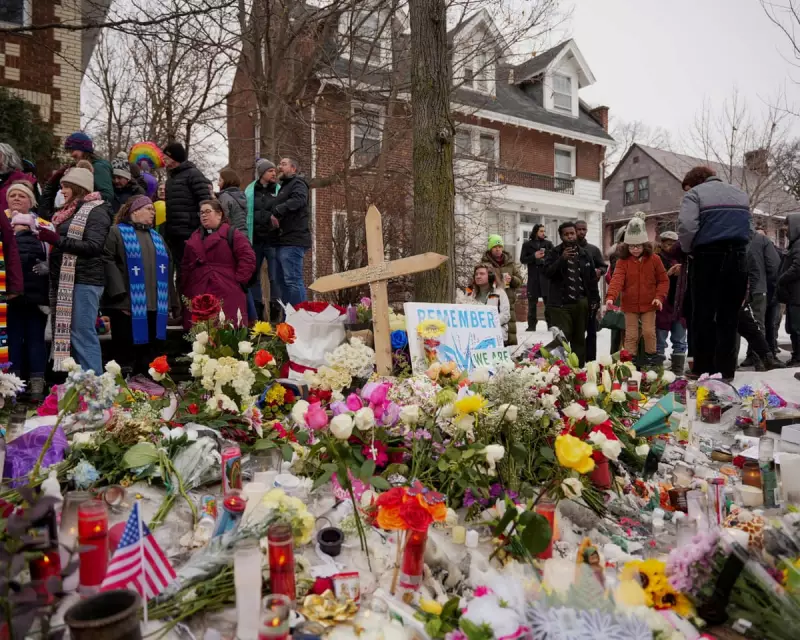
Six years after the murder of George Floyd sent shockwaves across the United States, the city of Minneapolis is again the site of a fatal encounter with a federal agent that has ignited national outrage. On 7 January 2026, an Immigration and Customs Enforcement (ICE) officer shot and killed Renee Nicole Good, a 37-year-old mother of three, barely a mile from where Derek Chauvin killed Floyd.
A Mother's Death on a Minneapolis Street
Renee Nicole Good had no criminal record and had just dropped one of her children at school. Describing herself as a poet, writer, wife, and mother, she had recently moved to Minneapolis from Kansas City. Her former husband stated she was a devoted Christian, not an activist, and had never been known to participate in protests.
Her alleged transgression was refusing to submit passively to ICE agents after her car was partially blocking a street. Cellphone footage from bystanders, which has since circulated widely, shows agents shouting expletive-laden commands before one rushed her vehicle. The situation escalated rapidly, culminating in an agent opening fire as Good attempted to drive away. Witnesses and the video evidence suggest the agent was not in immediate life-threatening danger when he discharged his weapon.
A Pattern of Force and a Failure to De-escalate
This incident marks the ninth ICE-involved shooting since the previous September, indicating a troubling pattern under the current administration. Critics argue it reflects a systemic embrace of aggressive tactics. ICE's own use-of-force policy, updated in 2023 under the Biden administration, explicitly mandates de-escalation techniques and states force should be a last resort when no safe alternative exists. It emphasises "respect for human life."
Yet, as sources within the Department of Homeland Security have conceded, these guidelines were not followed during the confrontation with Good. Experts in policing stress that de-escalation is a critical, modern skill for any officer or agent wielding state power, intended to calm situations and avoid lethal outcomes.
The Legal Standard and a Nation's Choice
The Supreme Court set a clear precedent forty years ago in Tennessee v. Garner. The ruling established that law enforcement cannot use deadly force solely to prevent a suspect from fleeing. Writing for the Court, Justice Byron White asserted that lethal force is only permissible if an officer has an objectively reasonable belief that the suspect poses a significant threat of death or serious injury to the officer or others.
Justice White's words offer a stark contrast to the philosophy some attribute to current enforcement strategies: "It is not better that all felony suspects die than that they escape." This legal principle, had it been adhered to, might have saved Renee Nicole Good's life.
The killing has drawn inevitable and chilling parallels to the death of George Floyd on 25 May 2020. Both acts of violence were committed in the open, witnessed by the public, and captured on video. Both involved agents of the state seemingly confident in their impunity. Now, as then, the nation faces a critical question: how will it respond?
The path forward requires a peaceful, lawful, and resolute demand for accountability and reform. It necessitates rejecting a vision of governance, as articulated by former Trump adviser Stephen Miller, based purely on "strength, force, and power." The memory of George Floyd and the life of Renee Nicole Good compel a reaffirmation of justice, proportionality, and the fundamental value of human life in American law enforcement.




