
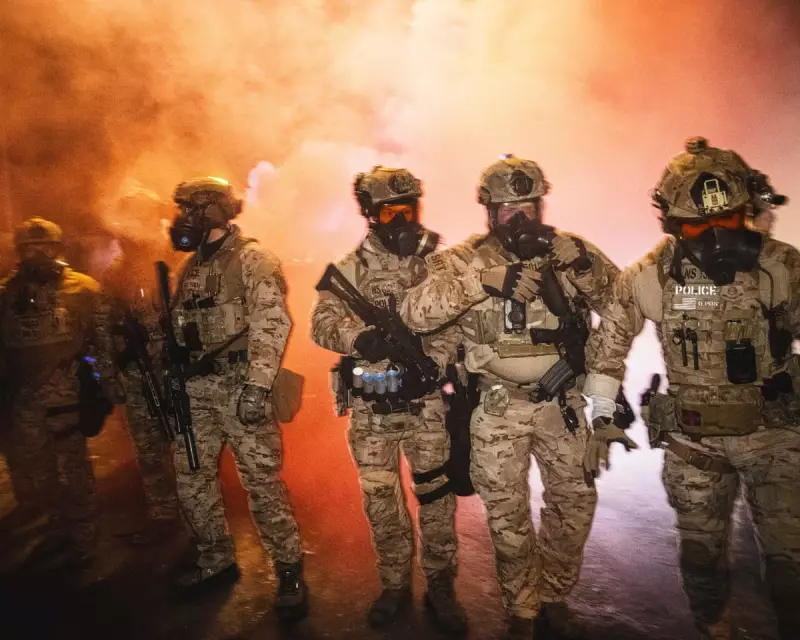
The shocking image of federal agents clashing with protesters in Minneapolis on 14 January 2026 is more than a distant American crisis. It is a stark warning of how quickly state power can be weaponised against its own people, a trajectory that feels unsettlingly possible in the United Kingdom.
The Anatomy of an Authoritarian Force
The fatal shooting of Renee Good by an Immigration and Customs Enforcement (ICE) officer this month is a brutal symbol of a transformed America. Under Donald Trump's second administration, ICE has evolved into a paramilitary presence on US streets, where the rule of law and the right to protest safely are rapidly dissolving. However, the agency's terrifying power did not emerge overnight. It was forged in the aftermath of 9/11 under President George W. Bush, which fused immigration control with national security. This mandate expanded under Barack Obama before being supercharged by Trump, who gave ICE a vast budget and a mission to combat an 'existential threat'.
This transformation required key enabling factors. A relentless right-wing media ecosystem primed the public with scare stories about illegal immigration and demographic change. Underlying this is a deep culture of racism, often masked as concern for public safety. Furthermore, a history of military supremacy blurred lines, with ICE officers' heavily armed neighbourhood raids mirroring US military operations abroad. The agent who shot Good, Jonathan Ross, previously served in Iraq, highlighting this troubling crossover.
The Chilling Familiarity of Capricious Power
For those familiar with repressive regimes, the true horror of the ICE phenomenon is not the scale of force, but the capriciousness of its application. The abiding fear is not of certain arrest, but of the constant possibility that anyone—at a traffic stop, a gathering, or online—could suddenly become a target. It represents the effacement of civil rights and the swelling of government into a volatile overlord, its power embodied in any single officer.
UK Warning Signs: A Path Without the Guns?
The United States has passed through that veil, but the UK shows alarming parallels. The political and media portrayal of immigrants as a threat to safety and social cohesion is entrenched. The government increasingly glamorises crackdown imagery, with ministers attending Home Office raids. Police powers are expanding, with protest being redefined as dissidence—evident in the scrutiny of pro-Palestine rallies' 'cumulative impact'.
Simultaneously, agencies like the UK Border Force are gaining more discretion, including the right to seize mobile phones without an arrest. This is all underpinned by a swirl of nativist sentiment. Combine this with a charismatic, mendacious political leader and a compliant right-wing press, and the UK is on a path that could lead to a similar erosion of liberties. It can happen in Britain too, potentially just with fewer guns.
The lesson from Minneapolis is clear: the institutional, political, and media environment needed for such authoritarian overreach is not far off Britain's own. Vigilance is not just for Americans; it is a necessary civic duty for everyone.




