
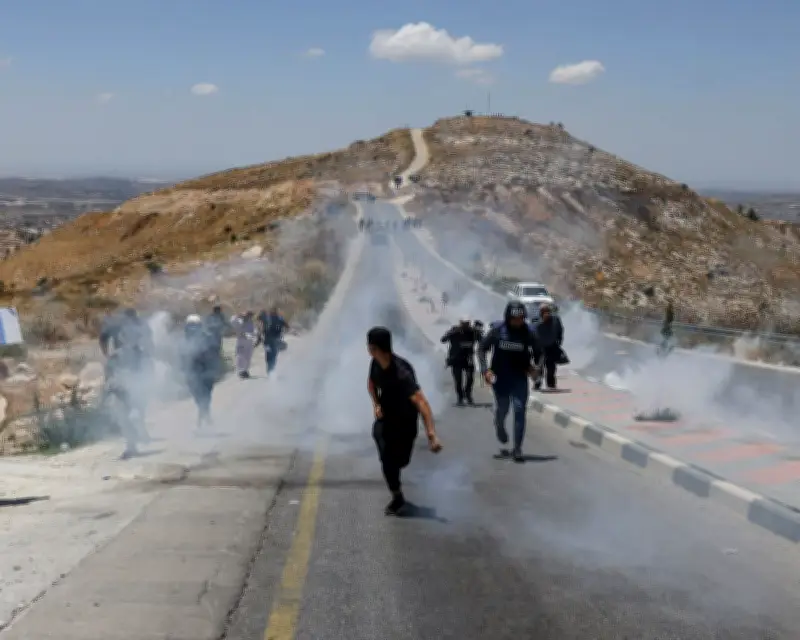
The 'ceasefire' in Gaza is a 'cruel and deadly illusion,' warned James Elder, the Unicef spokesman, on Friday. Israeli forces have killed more than 1,000 Palestinians since its declaration in October, says the Gaza health ministry, including 265 children – an average of one a day.
Violence Overshadowed by Broader Conflict
The killings and broader humanitarian crisis have been overshadowed by the war on Iran and have diverted attention from escalating violence in the occupied West Bank. Last week, former Israeli prime ministers, military chiefs and heads of security services were among the signatories of a letter accusing its government of 'doing nothing to eradicate Jewish terror' there. Ehud Olmert, one of the former prime ministers, accused Israel of 'an organized, systematic, state-funded campaign of ethnic cleansing and crimes against humanity,' with security forces assisting settler violence. Meanwhile, the army chief has reportedly described troops 'killing like we haven't killed since 1967.'
Economic Collapse Threatens Palestinian Statehood
But a report from the International Crisis Group points to another dangerous development: the relentless campaign pushing the West Bank's economy towards collapse. That does not only hurt individuals and families. Without a functioning economy, there can be no Palestinian state. As the report warns: 'The economic conditions necessary for any Palestinian future other than permanent subjugation are being dismantled.' Bezalel Smotrich, Israel's finance minister and head of a far-right pro-settler party, has said that he wants to bury the idea of Palestinian statehood and promised 'economic strangulation.'
Decades of Control and Recent Decline
Since 1967, Israel's controls on the West Bank have prevented it from developing an autonomous, functioning economy. The chokehold tightened dramatically after the Hamas attacks on 7 October 2023. The Palestinian economy saw real GDP shrink from $17.8bn to $13.7bn in 2024. Almost 300,000 Palestinians lost jobs in the West Bank and Israel.
Hidden Damage and International Complicity
The demolition of homes and uprooting of olive trees are visible. But damage behind the scenes goes deeper. The tightening of already punitive restrictions on movement in the West Bank has damaged agriculture, employment and business and fractured its economy. Few Palestinians are now permitted to work in Israel, though the security establishment reportedly believes that restoring work permits could make Israel safer. The withholding of customs revenues collected by Israel has crippled the Palestinian Authority, which paid employees just half their salaries last June. The Palestinian economy rests on the ability to do business with two Israeli banks; repeated threats to the immunity and indemnity letters underpinning that relationship have made even the US bridle.
Unlawful Practices and UK Inaction
Meanwhile, an investigation by a rights group has reported that Israeli exporters regularly hide the origin of produce grown in occupied Palestine to qualify for unlawful tax breaks. The Charity Commission is investigating after Melanie Ward, a Labour MP, said that charities in England and Wales have donated at least £28m to illegal settlements. And an Israeli real estate event in London appears to have advertised land in settlements.
This contrast casts an especially harsh light on the failure of Israel's allies to take substantive action. Sanctions against violent settlers and those who enable them are insufficient, yet the UK has shied away from a ban on trade with illegal settlements or other decisive action. MPs rightly call for more. Palestinian livelihoods, as well as lives, must be protected.




