
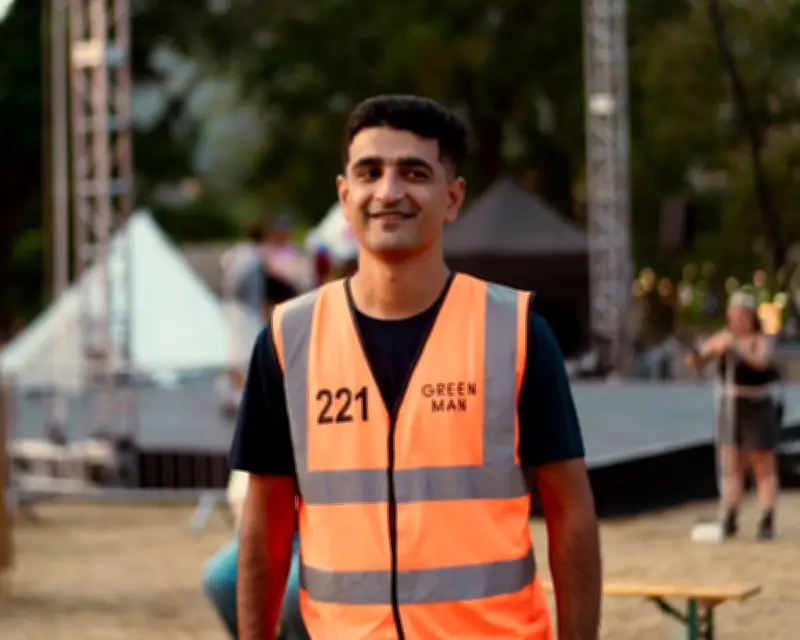
Green Man festival in Wales has marked the 10th anniversary of its refugee training programme, which has worked with 191 refugees and asylum seekers since its inception. The programme, run by the Green Man Trust, offers placements that teach communication, front-of-house work, and other skills to help participants build new lives in the UK.
Programme Details and Impact
Fiona Stewart, who owns and runs the festival, said the scheme is a proper training initiative. "The idea is that they learn about communication, integration, they learn front of house work, so dealing with the public, they're giving directions, they're asking questions," she explained. Some participants have also run their own food stalls, learning health and safety, food management, and money management.
The programme has hosted refugees and asylum seekers from 52 different countries, including Afghanistan, Libya, Sudan, Pakistan, Syria, Nepal, Yemen, and Ukraine last year. Participants are provided with camping equipment and warm clothing for the festival.
Personal Stories of Transformation
Mina, a cyclist from Afghanistan who fled the Taliban in 2022, said working at Green Man helped her feel more connected to life in the UK. She joined the programme to learn about British culture and connect with people. After studying politics at university, she will graduate this summer and return to Green Man, which this year features headliners Wolf Alice, Mogwai, Wilco, and Four Tet. "It was my very first experience of being in a festival, and my very first experience of camping," she said. She built connections with other refugees and asylum seekers, and they remain friends.
Javid, also from Afghanistan, said the festival in Bannau Brycheiniog national park was his first ever music concert. Under the Taliban, he noted, "there is no music and it's banned to listen to any music. So if someone is spotted with a musical instrument, the person would be prosecuted just because of having a musical instrument." He described camping and festivals as new experiences that excited him, and the communication skills he learned helped him in his current work as an interpreter. "The psychological benefit of participating in Green Man was that usually for people in my situation, sometimes there is bad news, and it's like a big chunk of negative energy would affect other parts of my life," he said. After receiving bad news that stopped him from running, participating in Green Man provided "a big chunk of positive energy" and helped him start running again.
Long-Term Benefits and Community Integration
M, from Egypt, said his English improved through the programme, helping him get out of his comfort zone to speak with strangers. He now works in a cafe and sings in a choir, having never been to a music festival before. He is returning for the fourth time this summer and said, "One day maybe I will perform at Green Man."
Olga, from Ukraine, said the programme gave her a fresh start. "The crew entertainment was such good stuff and you felt like, you know, part of the crew. I think this group is very special – and it actually feels that way." Another Ukrainian participant, Sophia, added, "It's quite a good idea, so you can contribute back. We are really happy not to get this for free but to contribute."
Festival's Role in a Divided Time
Stewart noted that while not every festival would provide a safe environment, Green Man does. "I've worked at other festivals where this just wouldn't be possible because of the noise level, or behaviour issues, or whatever," she said. She emphasized the programme's importance amid community divisions and hostility toward refugees. "When you meet people like this, they're trying to make the best of their lives. No one is going to be going through what they went through if what they're leaving is amazing. They just want to be accepted, and they can offer a lot as well, they can bring so much to our culture as well."
Stewart added that it is inspiring to see participants integrating with the rest of the team. "No one necessarily knows when they're part of the wider team that they're refugees or former asylum seekers unless they want to bring it up," she said. "I think it's that feeling that they're just a kid in a field with everyone else."




