
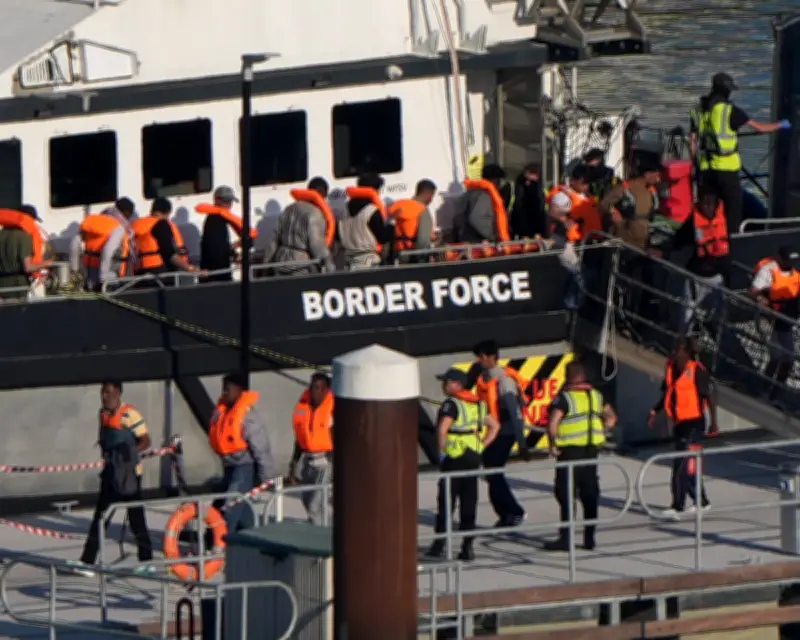
A High Court judge has ruled that Home Secretary Shabana Mahmood's decision to reduce protections for potential trafficking victims under the UK-France 'one in, one out' asylum deal was unlawful. The legal challenge was brought by five small-boat asylum seekers selected for return to France: four from Eritrea and one from Sudan. The case centered on a change in guidance that removed the right to reconsideration for those denied trafficking protections.
Court's findings on the guidance change
In a judgment published on Friday, Mr Justice Sheldon found that the guidance amendment was unlawful. He stated that the decision to prevent reconsideration of initial negative decisions made a 'real difference' in two of the asylum seekers' cases, though not in two others. All five were granted permission to proceed with their legal claims. The Home Office said the home secretary would appeal the ruling.
Details of the 'one in, one out' scheme
The 'one in, one out' deal involves the forced return of one person who crossed from France to the UK on a small boat in exchange for another asylum seeker in France who has not attempted the crossing. Mahmood amended the trafficking reconsideration guidance to expedite returns. Since the scheme began last August, more than 1,000 people have been removed to France, with many subsequently disappearing. Hundreds more await forced return from UK detention centres.
The home secretary argued that France's treaty obligations protect trafficking victims, but the court heard evidence that non-French victims or those trafficked elsewhere do not receive the same protections as in the UK, where all victims have equal rights. Sheldon noted that the decision-making process 'cannot be regarded as robust and effective.'
Personal stories of the claimants
The claimants included an Eritrean man who described being held in an underground Libyan detention facility, kidnapped, beaten, and deprived of food. Two other Eritreans reported being held against their will in Libya, with one stating that many companions died and he was forced to dig graves. A fourth Eritrean said he was trafficked four times, including being kidnapped in Ethiopia and forced to dig trenches by Belarusian soldiers near the Polish border. The fifth claimant was a Sudanese man who fled war after the Rapid Support Forces attacked his village and killed family members.
Impact and calls for return
Three of the five were removed to France. Lawyers are urging the home secretary to bring them back to the UK. Elizabeth Cole, solicitor at Duncan Lewis representing two claimants, welcomed the ruling: 'This has had significant consequences: large numbers of vulnerable people have been unlawfully removed to France as a result. We now urge the home secretary to acknowledge her obligations under both the treaty and domestic law, and bring our client, as well as potentially many others who have been unlawfully removed, back to the UK.'
One of Cole's clients said: 'It is really a feeling of hopelessness that I have. I believe that the Home Office had all the evidence in my case, but chose not to consider this. In their doing so, they failed to consider my case properly. I truly believe if they had properly considered my evidence, I would not have been returned to France.'
Emma Ginn, director of Medical Justice, said: 'This is symptomatic of the government's reprehensible attitude to trafficking survivors. Our clients' medical evidence is disregarded and their trafficking disclosures are treated as an inconvenient impediment to removal.'
Government response
A Home Office spokesperson said: 'Last-minute modern slavery claims must not be used to frustrate the removal of illegal migrants. We are reforming our laws to stop dubious last-minute claims, while strengthening protections for those who need them.'




