
A prominent conservative activist and ally of former President Donald Trump has admitted that a key goal is the elimination of same-day voter registration, during a significant federal trial in the United States.
The Trial and the Testimony
The revelations emerged during a week-long trial in Winston-Salem, North Carolina, concerning Senate Bill 747, a new law that heightened registration requirements for voters. The case, presided over by Judge Thomas Schroeder, examines whether the legislation discriminates against college students. The judge called for legal briefs at the end of November 2024 following the proceedings.
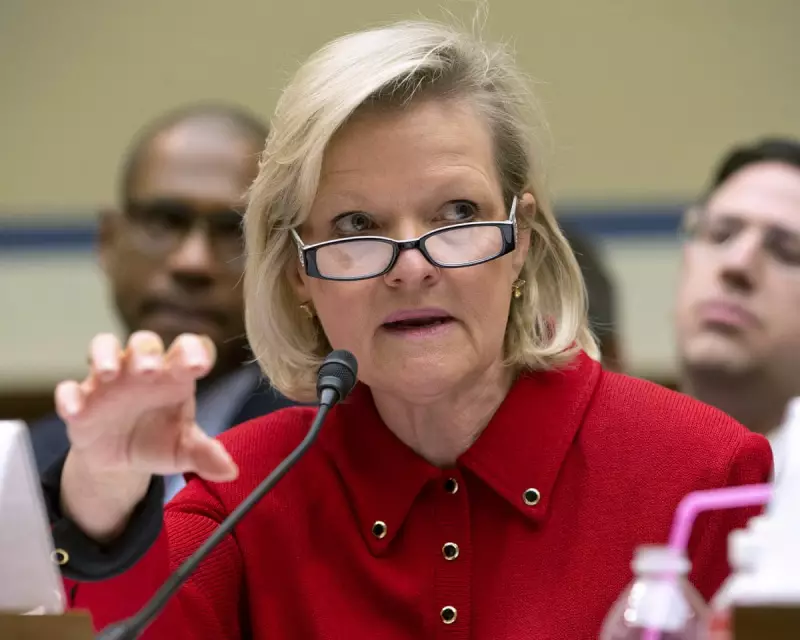
Cleta Mitchell, a founder of the Election Integrity Network and a key figure in Trump's efforts to challenge the 2020 election results, was compelled to testify. She had fought strenuously to avoid participating in the case. In her testimony, she framed same-day registration as a vulnerability, particularly in relation to student voters.
"You create a continuum where you’re just breaking little bones all along the arm. Pretty soon you’ve got a broken arm," Mitchell stated in court, according to a brief filed by the plaintiff, Democracy North Carolina. She argued that allowing same-day registration with student IDs at on-campus polling locations made it "easy [to cheat]".
Impact on Student Voters
The contested law introduces stricter rules for those who register and vote on the same day during the early voting period. It permits election officials to discard a ballot if a single registration letter sent to the voter's address is returned undelivered. Furthermore, it requires same-day registrants to provide documentary proof of residency, such as an electricity bill—a requirement not imposed on other voters.
Plaintiffs argued that state legislators relied on suggestions from Mitchell and Jim Womack, president of the North Carolina Election Integrity Team, when drafting the law. They contend the activists' explicit policy goal was to discriminate against younger voters' access to the ballot.
Womack, who testified alongside Mitchell, was dismissive of college voters, suggesting their "attention span is focused on other things until just before the election". He and Mitchell described themselves as "hostile witnesses to both sides" in the case, which they said centred on their work to convince the legislature to "can same day registration, get rid of it permanently".
Legal Arguments and Wider Context
Chris Shenton, senior counsel for the Southern Coalition for Social Justice representing the plaintiffs, argued that conservative lawmakers deferred to the activists' claims about potential fraud without conducting any study on the provision's actual impact. "They viewed it as a common sense change that was in the law at the request of the constituent groups," Shenton said.
Democracy North Carolina estimates that about half of the people using same-day registration in the state are college students. They argue that targeting these voters violates the age discrimination provision of the 26th Amendment. In the 2024 presidential election, where 5.7 million North Carolinians voted and Trump won the state by roughly 183,000 votes, the provision in question is expected to affect, at most, a few thousand votes.
State leaders defending the lawsuit countered that there was "no evidence" legislators adopted recommendations because of Mitchell and labelled the plaintiffs' case as relying on "guilt-by-association". However, Womack stated after the trial that if lawmakers had fully embraced their recommendations, same-day registration would have been eliminated entirely—a position Mitchell strongly supports.




