
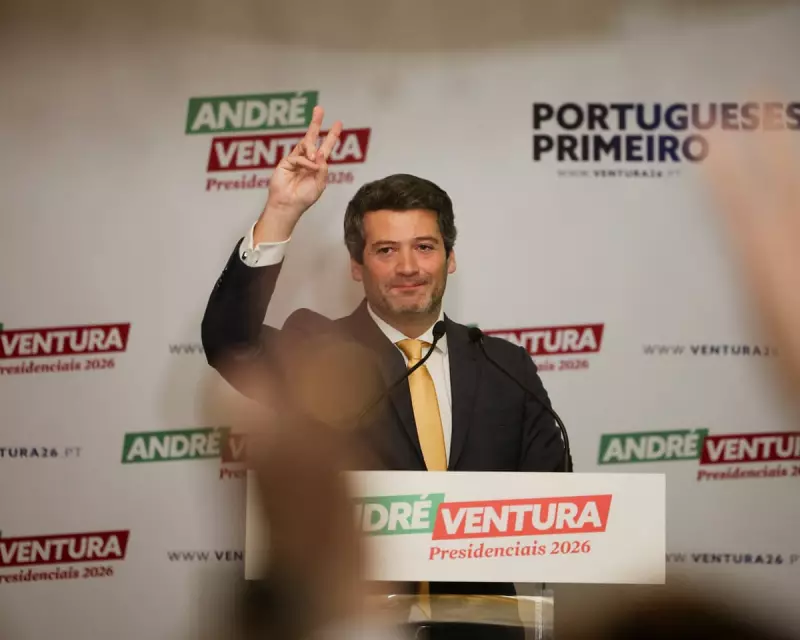
Portugal is set for a politically charged presidential runoff next month, a rare event that underscores a significant shift in the nation's political landscape. Moderate socialist candidate António José Seguro will face the far-right leader of the Chega party, André Ventura, on 8 February after neither secured a majority in Sunday's first round.
A Runoff Reflects a Fragmented Nation
This will be only the second presidential runoff in Portugal since the end of its fascist dictatorship five decades ago, with the last occurring in 1986. The need for a second vote highlights growing voter disenchantment with mainstream parties and the dramatic rise of the populist right. While the presidency is largely ceremonial, it holds crucial powers, including the ability to dissolve parliament and veto legislation.
With all votes counted, Seguro led the first round with 31.1% of the vote. Ventura followed with 23.5%. In third place was João Cotrim de Figueiredo of the pro-business Liberal Initiative party, who secured around 16% of the vote among a field of 11 candidates.
The Surge of the Far Right
The performance of André Ventura's Chega party continues its remarkable ascent. Founded just seven years ago on an anti-establishment and anti-immigration platform, Chega became Portugal's main opposition party after a parliamentary election in May, winning 22.8% of the vote. Its influence has already pushed government policy on immigration towards a more restrictive stance, mirroring trends seen across Europe.
Despite this momentum, opinion polls consistently show Ventura losing the forthcoming runoff, hampered by a high voter rejection rate exceeding 60%. Analysts frequently describe Chega as Ventura's "one-man show," a perception reinforced by his presidential bid despite repeatedly stating his ultimate goal is to become prime minister.
Campaigns Gear Up for a Decisive Battle
Ventura struck a defiant tone following the results, telling supporters, "Now we need to unite the entire right wing … I will fight day by day, minute by minute, second by second so that there won’t be a Socialist president. We will win." He declared that "The country has woken up after these 40 years of no runoffs."
However, his path to victory is complicated. Prime Minister Luís Montenegro stated his centre-right Social Democratic Party, whose candidate came fifth, would not endorse either contender. Furthermore, third-place candidate Cotrim de Figueiredo has explicitly said he does not want Ventura as president.
The Economist Intelligence Unit noted that a Seguro-Ventura runoff "would be more straightforward given his [Ventura’s] limited appeal beyond his core base," suggesting a likely victory for the socialist candidate.
Other notable candidates included retired Admiral Henrique Gouveia e Melo, who led Portugal's Covid-19 vaccination campaign, securing 12.3% of the vote. The election also featured satirical candidates, such as comedian Manuel João Vieira, who campaigned on promises of a Ferrari for every citizen and wine on tap in homes, garnering just over 1% of the vote.
The 8 February runoff now presents Portuguese voters with a stark choice between a moderate socialist and a figure representing Europe's rising far-right populism, in a vote that will be closely watched across the continent.




