
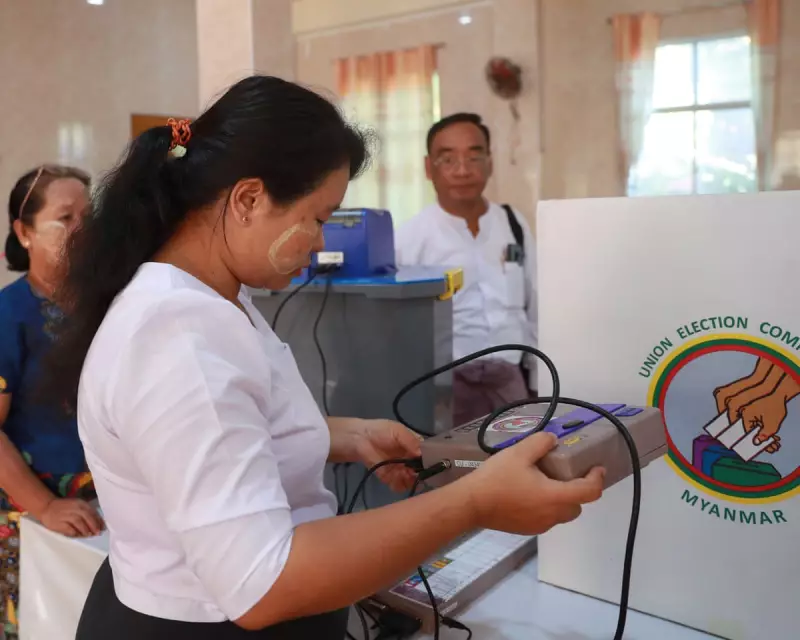
Voters in conflict-ravaged Myanmar formed queues on Sunday to participate in the second phase of a nationwide election orchestrated by the country's military junta. This stage follows an initial round of polling marked by notably low turnout and widespread international condemnation, with critics labelling the entire process a 'sham exercise' designed to cement the army's political control.
A Process Devoid of Meaningful Opposition
The election is being conducted in the shadow of a brutal civil war that erupted after the military seized power in a February 2021 coup. The junta detained the democratically elected leader, Nobel laureate Aung San Suu Kyi, and plunged the nation of 51 million into chaos. Suu Kyi's National League for Democracy (NLD) party, which won a landslide victory in the last credible election in 2020, has been dissolved. Dozens of other anti-junta parties met the same fate for refusing to register for what they view as an illegitimate vote.
The United Nations, numerous Western governments, and leading human rights organisations have uniformly stated that, in the absence of any credible opposition, the election is neither free, fair, nor credible. "We are always living in fear": inside Myanmar's 'sham' election, reported earlier, highlights the atmosphere of intimidation surrounding the polls.
Foregone Results and Tilted Playing Field
The military-backed Union Solidarity and Development Party (USDP) is poised for a sweeping victory. After the first phase of voting on 28 December, the USDP had already secured 90 of the 102 lower house seats contested. Official figures placed voter turnout for that round at just 52.13%, a significant drop from participation rates in the 2015 and 2020 elections.
Richard Horsey, senior Myanmar adviser for the International Crisis Group, offered a stark assessment: "The USDP is on track for a landslide victory, which is hardly a surprise given the extent to which the playing field was tilted in its favour. This included the removal of any serious rivals and a set of laws designed to stifle opposition to the polls."
Junta chief Min Aung Hlaing has publicly hailed the election as a success. During a recent visit to a central Myanmar township, he urged authorities to work on boosting participation, claiming the first phase showed the people's "strong desire to participate in the democratic process."
Stability Claims Amid Deepening Humanitarian Crisis
The ruling generals have framed the election as a path to political stability and a better future. However, this claim starkly contrasts with the nation's dire reality. Myanmar is grappling with one of Asia's most severe humanitarian emergencies. According to the Armed Conflict Location & Event Data Project, at least 16,600 civilians have been killed since the coup. The United Nations estimates the conflict has displaced a staggering 3.6 million people.
A final round of voting is scheduled for 25 January. In total, elections will be attempted in 265 of Myanmar's 330 townships, including areas where the junta does not maintain full military control. Political analysts warn that the regime's attempt to install a stable administration through this process is fraught with risk. Any resulting military-controlled government is unlikely to gain broad international recognition, further isolating the country.




