
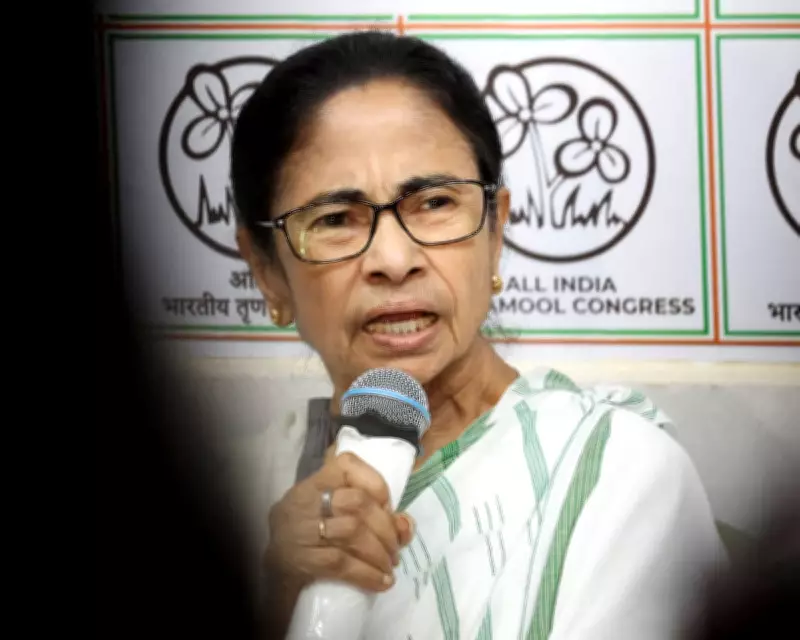
West Bengal Chief Minister Mamata Banerjee, one of India's most prominent female politicians, has refused to resign after her party suffered a defeat in the state elections to Prime Minister Narendra Modi's Bharatiya Janata Party (BJP). The election results, announced on Monday, marked a historic victory for the BJP, which won 207 out of 294 seats, while Banerjee's Trinamool Congress (TMC) was reduced to 80 seats. This outcome ended the TMC's 15-year rule in the state.
Banerjee's Defiant Stance
In a press conference on Tuesday night, Banerjee accused the BJP of "forcefully capturing" the elections and declared she had no intention of stepping down. "Why should I step down? We have not lost," she said. "The mandate has been looted. Where does the question of resignation arise?" She added that the TMC was "defeated not by public mandate but by conspiracy."
Constitutional Crisis Looms
Under India's constitution, Banerjee cannot legally remain as chief minister after her party's loss. The governor of West Bengal stated that if she does not step aside voluntarily, police will be sent to "evict her" from her office. The matter could also escalate to the Supreme Court. The BJP has already moved to ban advisers appointed by Banerjee from entering their offices.
Political Reactions
Sambit Patra, the BJP's national spokesperson, called Banerjee's refusal to resign "constitutional blasphemy." He said, "What Mamata Banerjee has said and done today is deeply unfortunate. This is an attack on a longstanding democratic convention. It is not an attack on the BJP, but an attack on democracy and the constitution."
Banerjee's Political Legacy
Banerjee, known to supporters as "didi" (older sister), built a reputation as a tough, street-fighting politician who led the TMC to defeat the Communist party, which had ruled West Bengal for over three decades. Now, without power in the state legislature, the TMC's position as a formidable opposition force against the BJP is under threat.
Allegations of Interference
Banerjee alleged that Modi and Home Minister Amit Shah "directly interfered" in the elections. She also accused the chief of the election commission, appointed by the Modi government, of being the "villain of this election." With the BJP now controlling 21 of India's 28 states, Banerjee warned of "one party rule" and said she would consult other opposition leaders.
Support from Opposition
Sanjay Raut, parliamentary chair of Shiv Sena (UBT), backed Banerjee's decision, stating that the election commission had become "slaves" to the Modi government. He called for opposition parties to unite against the "dictatorship of the Centre and partisan behaviour of the election commission."
The BJP's victory in West Bengal, one of India's largest and most politically significant states, was a long-standing goal and is seen as a key step toward the party's complete dominance of the country's political landscape.




