
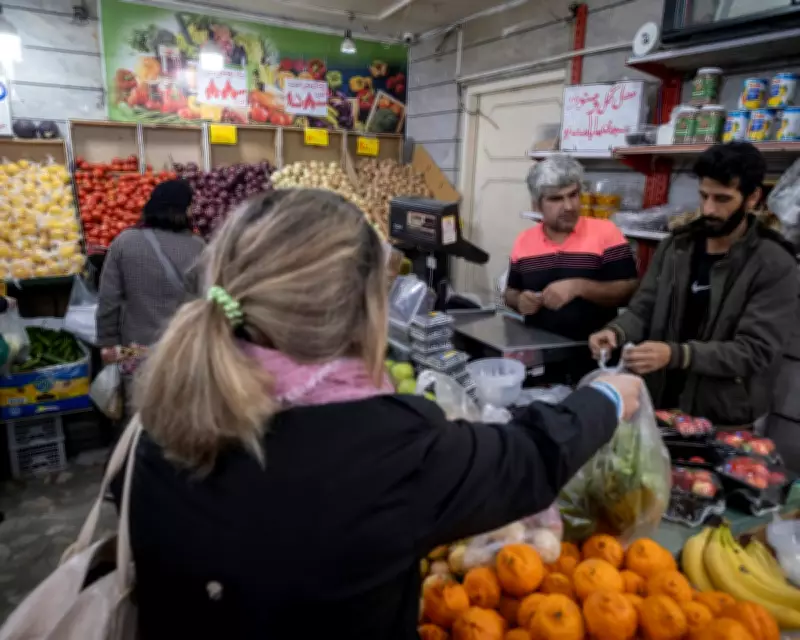
The partial lifting of internet restrictions in Iran has unveiled a surge of public anger over soaring food prices, as ordinary Iranians express dismay at annual inflation rates reaching 308% for vegetable oil, 190% for chicken, and 170% for rice.
Restoration of Connectivity
Iranian authorities began restoring global internet connections on Tuesday, which had been severed on the first day of the US-Israeli conflict against the Islamic Republic on 28 February, mirroring actions taken during mass protests in January. However, connectivity remained inconsistent on Wednesday, with mobile internet largely disconnected and many sites still restricted. Despite this, the partial restoration was sufficient to reveal an outpouring of frustration over price inflation and food shortages.
One user on social media lamented: “Everything is so expensive. It has become a disaster. You leave the market with a broken heart after spending all your savings. It is unbearable. We have no patience left to lead a normal life.”
Government Response
President Masoud Pezeshkian, who has been credited for lifting the internet restrictions, blamed the United States for Iran’s economic difficulties, stating that Washington “had moved to economic warfare after failing to bring the government down.” In a lengthy statement, the Ministry of Intelligence expressed concerns that internet freedom could be exploited for “cognitive warfare,” warning that adversaries aimed to “incite protesters and drag them on to the streets.” The statement added: “The enemy, defeated on the military front, now focuses its efforts on soft warfare, cognitive warfare, and social provocations.”
Economic Measures
The government announced the formation of a “resistance economy committee” to combat price gouging and address shortages. However, hyperinflation has become entrenched in Iran due to trade sanctions, exchange rate pressures, and subsidy reductions implemented in January. Data from the International Monetary Fund indicates that food inflation has surged to between 140% and 200%, pushing overall inflation to 70%.
Public Sentiment
Support for continued internet restrictions was only 9% in a survey published on Wednesday. In an effort to counter support for Reza Pahlavi, the son of the late shah, government supporters attempted to flood the internet with claims that Pahlavi had openly endorsed attacks by Israel and the US, targeting “youngsters returning to the internet.”
Others expressed relief at being able to communicate with the wider world. Human rights activist Emadeddin Baghi wrote: “Three bloody months have passed, but not for those who lost a loved one or had their home destroyed. In this period our voices found no echo except on some internal platforms and to the best of our ability we spoke and wrote in defence of the rights of the voiceless.”
The prominent rapper Toomaj Salehi, who was sentenced to death in 2024 for supporting protests in 2022 but later released, stated that internet access is “not a favour to us – it is our right. And without filters as well. Like free elections, freedom of expression, freedom of assembly, freedom of parties, and many other freedoms, these are our rights and not favours.”




