Green Party's Resounding Victory in Gorton and Denton By-Election
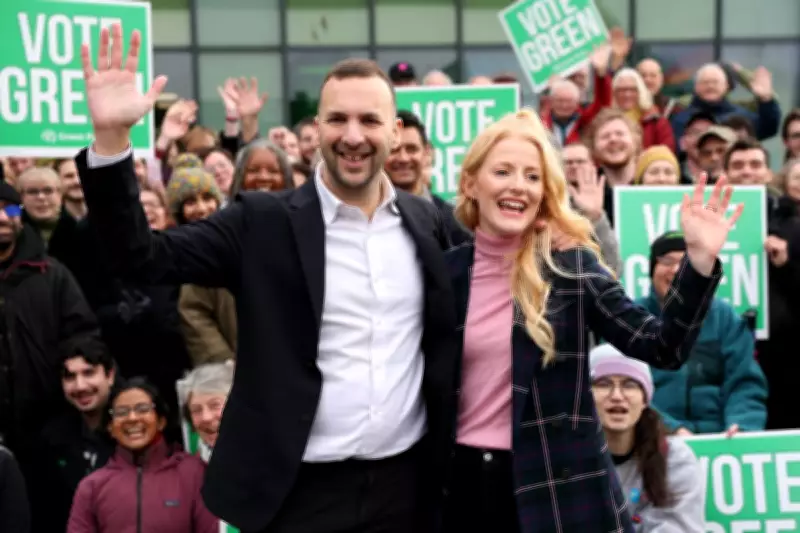
In a stunning political upset, the Green Party has secured a decisive win in the Gorton and Denton by-election, capturing 40.6 percent of the vote. This result, which saw Labour finish a distant third with less than 10,000 votes, underscores a profound shift in the British political landscape. Under ordinary circumstances, Labour should have easily retained this seat, but internal candidate disputes and voter discontent created an opening that Green Party leader Zack Polanski aggressively exploited.
A Fractured Political Environment Emerges
The final vote count confirms what polls have suggested for months: the United Kingdom is now entrenched in an era of messy, multi-party politics. This by-election serves as a critical preview of the tactical voting dynamics and party rivalries that will shape the next general election in 2029. Keir Starmer's strategy of framing the upcoming election as a direct battle against Nigel Farage and Reform UK appears increasingly flawed, as voters demonstrate a willingness to abandon traditional parties in search of alternatives.
Tactical Voting and Party Hostilities
Gorton and Denton has highlighted the toxic and confusing battles that will unfold in hundreds of constituencies if current trends persist. With the Greens remaining hostile to the Labour leadership and left-leaning parties clustered closely in opinion polls—Labour at 18 percent, Greens at 17 percent, and Liberal Democrats at 14 percent—the fight to become the primary challenger party will intensify. Approximately half of current Labour voters are considering switching to the Green Party, with their main barrier being the perception of a wasted vote, an equation that is now shifting in the Greens' favor.
Moreover, the by-election revealed that progressive voters are reluctant to rally behind an unpopular Prime Minister and government. Labour, which won over 50 percent of the vote in Gorton and Denton in 2024, should have been the obvious choice to block Reform UK, but voter anger transcended traditional left-right divides. Both Green and Reform voters share a belief that "Britain is Broken," making appeals to the status quo ineffective.
Conservative Collapse and Reform's Strategy
The Conservative Party's performance was equally telling, with the party recording just 1.9 percent of the vote and losing its deposit for the first time in decades. Conservative voters who prioritized stopping Labour or the Greens largely shifted to Reform UK, though Reform still finished a distant second behind the Greens. This dynamic suggests that as the Greens gain national traction, wavering Conservative voters may increasingly back Reform in competitive seats, reminiscent of how Jeremy Corbyn's leadership influenced Boris Johnson's 2019 landslide.
Implications for Reform UK and Future Elections
While Gorton and Denton was only 413th on Reform UK's target list, and the party outperformed the combined Conservative and Brexit Party vote from 2019, the result raises strategic questions. Reform performs better in low-turnout environments, but this by-election demonstrated that motivating voters to oppose the party can significantly impact outcomes. The party must balance rallying its base with avoiding actions that galvanize opposition.
Much remains fluid in this evolving political landscape. By-elections both shape and reflect public sentiment, and leadership changes or shifts in party direction could alter the electoral calculus. Keir Starmer has been weakened by this result, and Reform UK's polling success depends on maintaining dominance in future contests. However, one enduring truth from Gorton and Denton is clear: voters across the spectrum are deeply unhappy with the state of the country and frustrated by the political class's perceived inability to address critical issues.