Zelenskyy Voices Concerns Over Trump's Tactics as Geneva Peace Negotiations Commence
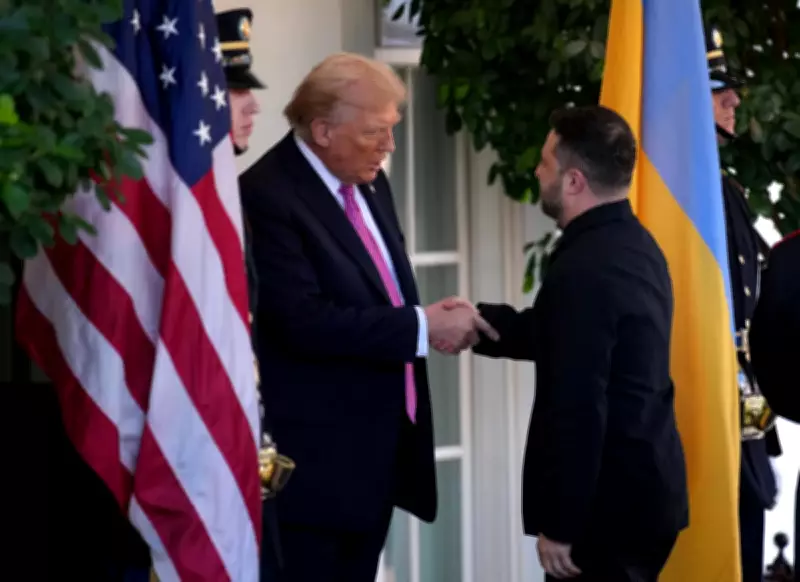
Ukrainian President Volodymyr Zelenskyy has publicly criticized former US President Donald Trump for what he describes as "unfair" pressure on Kyiv during the opening of crucial peace talks between Ukraine and Russia in Geneva. The negotiations, mediated by the United States, concluded their first of two scheduled days on Tuesday, with both sides agreeing to continue discussions on Wednesday.
"Not Fair" Pressure from Trump
In a candid interview with Axios, Zelenskyy expressed frustration that Trump has repeatedly called on Ukraine, rather than Russia, to make concessions in the peace process. "It is not fair that Trump keeps publicly calling on Ukraine, not Russia, to make concessions in negotiating terms for a peace plan," Zelenskyy stated. He added, "I hope it is just his tactics and not the decision," highlighting his concerns as Russian, Ukrainian, and US negotiators gathered in Switzerland.
Trump has intensified his rhetoric in recent days, suggesting that Ukraine must act swiftly to ensure the success of the talks. Speaking from Air Force One on Monday, Trump remarked, "Ukraine better come to the table fast. That's all I'm telling you." This comes amid the ongoing conflict, which has now lasted nearly four years since Russia's invasion began in 2022.
Geneva Talks Focus on Practical Issues
Ukraine's lead negotiator, Rustem Umerov, reported that the initial day of talks in Geneva centered on "practical issues and the mechanics of possible decisions," though he did not provide specific details. Russian officials remained silent on the proceedings, but Russian news agencies cited a source describing the discussions as "very tense," lasting six hours across various bilateral and trilateral formats.
Zelenskyy also emphasized that any peace plan requiring Ukraine to cede territory beyond what Russia has captured in the eastern Donbas region would be rejected by Ukrainians if put to a referendum. This stance underscores the high stakes of the negotiations, which aim to resolve a conflict that has resulted in significant casualties and displacement.
Military Developments and Regional Tensions
Amid the diplomatic efforts, Ukraine's domestic security service, the SBU, announced that Ukrainian drones targeted the Taman oil terminal in Russia's Krasnodar region and a chemicals plant in the Perm region overnight. An official noted that this was the second attack on the Taman terminal since January 22, while the Metafrax Chemicals plant, described as a major methanol producer in Russia and Europe, was hit approximately 1,600 kilometers from Ukraine.
Robert Brovdi, commander of Kyiv's drone forces, stated that Ukrainian drones have struck nine oil refineries across Russia since the start of the year, part of broader operations targeting 240 facilities in Russia and Russian-occupied territories. These actions highlight the ongoing military intensity despite the peace talks.
International Implications and Hybrid Threats
The talks occur against a backdrop of heightened regional tensions. Lithuania's Vilnius airport resumed operations after a brief closure due to weather balloons from Belarus entering its airspace, marking over ten similar incidents since October 2025. Meanwhile, France released the tanker Grinch, suspected of being part of Russia's sanctions-busting "shadow fleet," after its owner paid a multimillion-euro fine.
In a related development, a senior Russian military official claimed that Starlink terminals used by the Russian military have been inactive for two weeks, but this has not affected drone operations. However, Ukrainian Defense Minister Mykhailo Fedorov argued that the shutdown had a considerable impact, with Ukraine recapturing 201 square kilometers from Russia last week, according to an analysis by the Institute for the Study of War.
Thomas Nilsson, head of Sweden's Military Intelligence and Security Service, warned that Russia has escalated its hybrid threat activities, including disinformation and cyber-attacks, and seems willing to take greater risks in the region surrounding Sweden, regardless of the outcome in Ukraine.