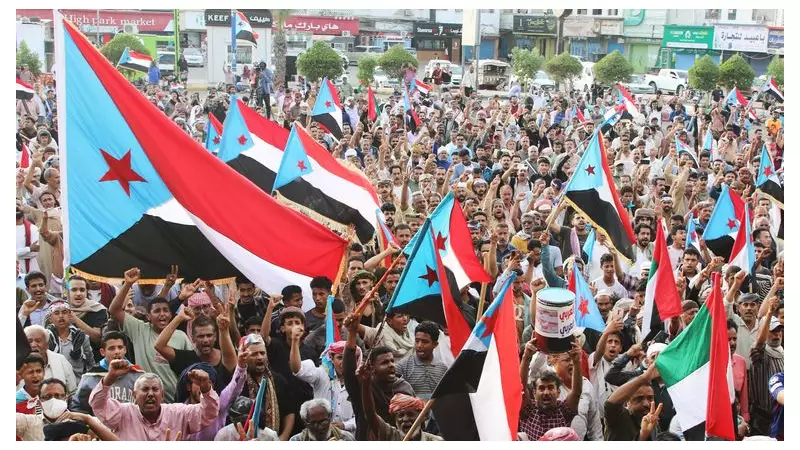
Yemen's southern separatist movement has taken a dramatic step towards independence, announcing a new constitution and plans for a future referendum. The move by the UAE-backed Southern Transitional Council (STC) significantly escalates internal tensions within the Saudi-led coalition fighting the Houthi rebels.
A Declaration of Sovereignty
On Friday, 3 January 2026, the head of the STC, Aidarous al Zoubeidi, issued a video statement outlining the group's new constitutional framework. The document, comprising 30 articles, formally describes the creation of 'the State of South Arabia'. This proposed state would cover the territory of the former independent southern state, the People's Democratic Republic of Yemen, which existed from 1967 until unification in 1990.
Al Zoubeidi stated the constitution would be in effect for a transitional period of two years. After this, he said a referendum would be held on 'exercising the right to self-determination for the people of the South'. During the two-year interim, he called for dialogue between relevant parties in north and south Yemen to agree on a path forward.
Coalition Fractures Widen
The announcement is the latest and most formal sign of the deepening rift between key members of the anti-Houthi coalition. While Saudi Arabia backs Yemen's internationally recognised government, the United Arab Emirates has been a primary supporter of the STC. The UAE announced it was pulling its troops out of Yemen shortly after the separatists' statement was released.
In recent weeks, the situation has deteriorated into open confrontation. Last month, STC-linked fighters seized control of two southern provinces from Saudi-backed forces and took over the presidential palace in Aden, forcing the government to flee to Riyadh. On Friday, the day of the constitution announcement, Saudi warplanes bombed STC camps and military positions in Hadramout province as Saudi-backed fighters attempted to seize the facilities.
Regional Repercussions and Stalled Peace
This internal conflict threatens to completely unravel the coalition that has been fighting a decade-long civil war against the Iranian-backed Houthi rebels in the north. The Saudi-led coalition's stated goal has been to restore the internationally recognised government, but the growing animosity between its own factions is now a primary focus.
In a statement, the UAE's foreign ministry said it was dealing with the situation with 'restraint' and a 'commitment to de-escalation'. Conversely, the Saudi ambassador to Yemen, Mohammed al-Jaber, posted on X that the kingdom had tried for weeks to urge the STC to stop its escalation and leave Hadramout and Mahra provinces, but faced 'continued intransigence and rejection' from Aidarous al Zoubeidi.
The practical impact of the STC's constitutional declaration remains unclear, and it may be largely symbolic. However, it represents a major setback for efforts to prevent an outright conflict between the separatists and their former allies in the coalition, further complicating the path to peace in Yemen.