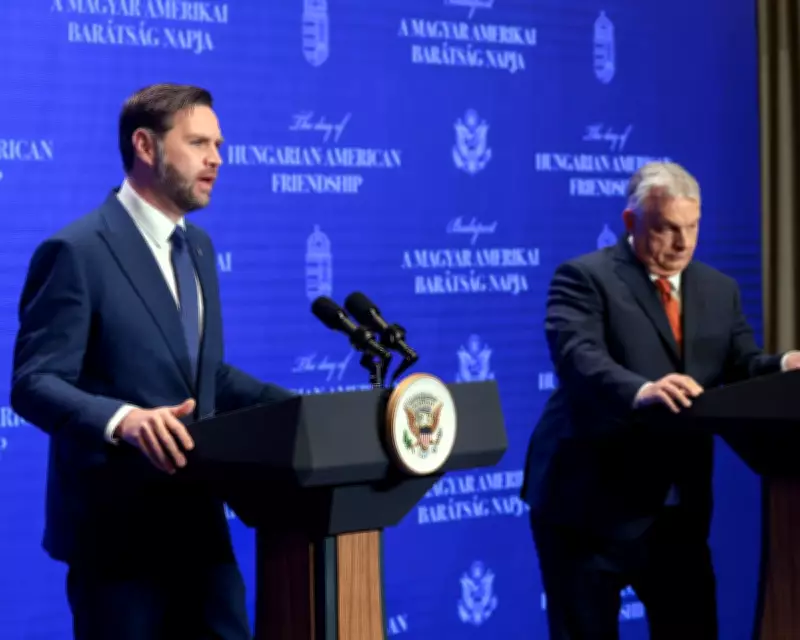
In a striking display of political rhetoric, US Vice-President JD Vance has launched a sharp critique against what he termed "unprecedented and disgraceful" foreign interference in Hungary's upcoming parliamentary election. During a joint press conference in Budapest with Hungarian Prime Minister Viktor Orbán, Vance accused European bureaucrats of engaging in one of the worst examples of election meddling he has ever witnessed, alleging they aim to "destroy the economy of Hungary."
Contradictory Stance on Interference
However, Vance's condemnation of external influence was swiftly followed by a robust endorsement of Orbán's candidacy. He explicitly stated his intention to assist Orbán in the election campaign and expressed confidence in the prime minister's victory this Sunday. This move has drawn immediate scrutiny, with critics highlighting the apparent contradiction in Vance's position—denouncing interference while actively participating in it.
Praise for Orbán's Policies
Vance lavished praise on Orbán, describing him as a fierce advocate for Hungary who staunchly defends Western civilization values. He aligned with Orbán on key issues, including energy policy and the conflict in Ukraine, reinforcing the prime minister's campaign narratives. Vance's attacks on "Brussels" and Ukraine, both frequent targets in Orbán's political discourse, are likely to escalate tensions within the European Union.
Broader Implications for EU-US Relations
This incident raises significant concerns among EU leaders, who must now navigate the complexities of a US vice-president openly interfering in an EU member state's electoral process. The situation underscores the evolving dynamics in international diplomacy, where traditional boundaries of non-interference are being tested. As Hungary prepares for its vote, Vance's actions may influence not only the election outcome but also future transatlantic relations, prompting debates on sovereignty and democratic integrity in Europe.