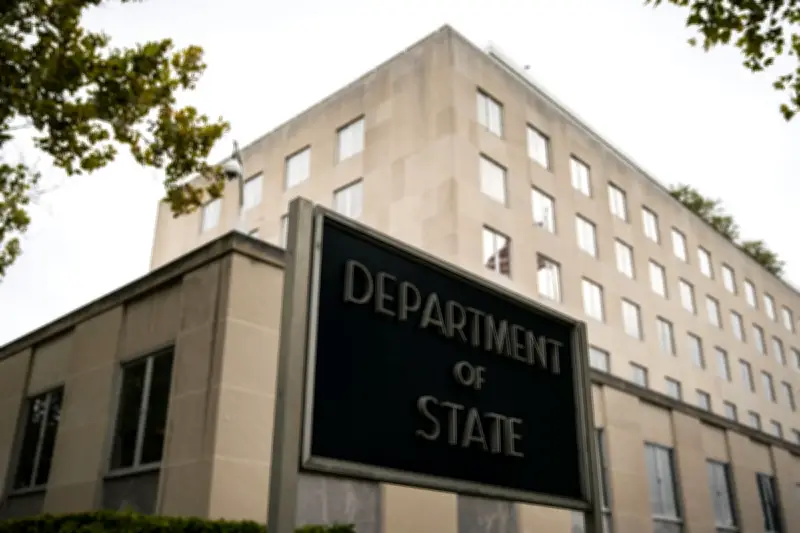
The United States State Department has informed Congress of its intention to close five foreign consulates and missions across Asia, Africa, North America, and the Caribbean. The move, justified on cost grounds, has drawn sharp criticism from Democrats and foreign policy experts who warn that it could create a diplomatic vacuum that China is poised to fill.
Closures and Congressional Notification
According to a notice served to several congressional committees, the closures will affect missions in St George's, Grenada; Nagoya, Japan; Medan, Indonesia; Douala, Cameroon; and Winnipeg, Canada. The State Department has emphasized that it is following proper congressional notification procedures, stating, "The department is committed to following congressional notification procedures including post closures. We have nothing further to report at this time."
The closures are the latest in a series of cutbacks overseen by Secretary of State Marco Rubio. Last year, the department fired more than 1,300 employees, including 246 foreign services officers and 1,107 civil servants. This aggressive downsizing has left more than half of the US's 195 ambassadorial posts unfilled, including in key locations such as Germany, Cuba, Egypt, Saudi Arabia, and Pakistan, according to the American Foreign Service Association.
China's Expanding Diplomatic Footprint
Critics argue that the closures will weaken US influence precisely where China is expanding its presence. China currently has diplomatic missions in three of the five locations where the US is closing facilities: St George's, Nagoya, and Medan. Senator Jeanne Shaheen, the top Democrat on the Senate Foreign Relations Committee, voiced strong opposition, stating, "China has a diplomatic presence in three of the five locations where the state department is closing shop and Beijing is going to exploit that new vacuum to undercut American interests."
Shaheen also questioned the cost-saving rationale, noting, "The yearly operating costs of these diplomatic facilities represent a tiny fraction of the state department's yearly budget. Is that worth pulling back from these places where China is present?"
Impact on Canada and Bilateral Relations
The decision to close the consulate in Winnipeg has sparked particular concern in Canada, especially given President Donald Trump's recent announcement of 50% tariffs on a range of Canadian goods. The Winnipeg consulate, opened in 2001, has been vital for facilitating trade and investment, particularly in the province of Manitoba. Brad Kirbyson, a former political specialist who worked at the consulate for 20 years, told the Canadian broadcaster CBC that the closure could harm US interests.
"I'm sure it'll save them a few dollars, but I think the net effect is to lose touch with a broad swath of Canada by not having a presence there," Kirbyson said. "The United States found that it was a very long way between the US consulate in Calgary and the one in Toronto. It makes a lot of sense to have a consulate in the middle of the country that can cover issues in this part of the world."
A spokesperson for the Canadian embassy in Washington responded, "Canada and the US have a long history of collaboration on areas of shared interest, including through our foreign offices in both countries."
Broader Cutbacks and Future Risks
The closures are part of a broader reassessment of US bilateral relationships since Trump returned to the White House in January 2025. The White House Office of Management and Budget has even pushed for a more extensive closure program involving up to 30 foreign missions. However, Democrats, supported by national security and foreign policy specialists, argue that such moves dangerously reduce the US's diplomatic footprint and global influence, especially when combined with last year's dismantling of USAID, the main overseas development body, which was drastically reduced before being folded into the State Department.
A State Department spokesperson defended the approach, saying, "We are focused on ensuring our diplomatic footprint is efficient, effective and delivers results for the American people." Yet, the planned closures have intensified debates about the future of US diplomacy and the strategic implications of ceding ground to China.