The administration of US President Donald Trump is reportedly asking countries to contribute $1 billion (£747 million) to secure a permanent seat on a newly unveiled Board of Peace for Gaza, a move that has prompted a public objection from Israel.
Israel Claims Lack of Coordination on Board Structure
A statement from the office of Israeli Prime Minister Benjamin Netanyahu confirmed on Sunday, 18 January 2026, that the United States did not coordinate the creation of the board with Israel. The statement added that Israel's Foreign Minister, Gideon Saar, would raise the issue directly with US Secretary of State Marco Rubio.
The board, which was formally announced by the White House on Friday, is set to be chaired by Donald Trump himself. Its primary task will be to supervise Gaza's transitional administration as part of the ongoing peace process.
The $1 Billion Membership Fee and Board Composition
According to a draft charter seen by Reuters and first reported by Bloomberg News, the US has contacted approximately 60 countries with the proposition. The deal suggests that a contribution of $1 billion would allow a nation's membership to extend beyond an initial three-year term.
The board's structure includes an 11-member executive panel, alongside additional members. The composition of the founding executive board has already stirred controversy, particularly the inclusion of Turkish Foreign Minister Hakan Fidan, despite Israel's firm opposition to any Turkish role in Gaza's future.
Other notable figures on the executive board include:
- Trump's special Middle East envoy, Steve Witkoff.
- His son-in-law, Jared Kushner, both of whom helped negotiate the underlying peace plan.
- US Secretary of State Marco Rubio.
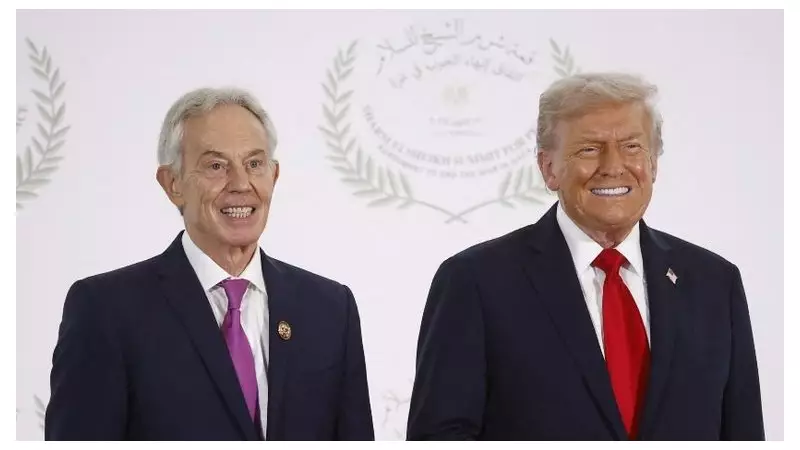
- Former British Prime Minister Sir Tony Blair.
- UN Special Coordinator for the Middle East Peace Process, Sigrid Kaag.
- Nickolay Mladenov, the former UN Middle East envoy appointed as High Representative for Gaza.
Further members encompass US Deputy National Security Adviser Robert Gabriel, billionaire Marc Rowan, and World Bank President Ajay Banga, who is Israeli.
International Invitations and Security Plans
Invitations have been extended to a wide array of global leaders. Jordan's foreign ministry stated that King Abdullah II received an invitation from President Trump, while the offices of the Egyptian and Turkish presidents confirmed theirs. The leaders of France, Germany, Australia, and Canada were also reportedly invited, alongside European Commission President Ursula von der Leyen.
On the security front, the White House announced that Major General Jasper Jeffers will command an International Stabilisation Force. This force will be responsible for security operations, demilitarisation, and ensuring the safe delivery of humanitarian aid in Gaza.
In a post on his Truth Social platform, President Trump hailed the board as "the Greatest and Most Prestigious Board ever assembled at any time, any place." He indicated in an interview with Reuters that after addressing the Gaza conflict, the board's remit would expand to tackle other global conflicts.
This week marked the start of the second phase of President Trump's 20-point plan to end the war in Gaza, first unveiled in September 2025. A fragile ceasefire took effect in October 2025, but the enclave has continued to experience deadly violence, with both Israel and Hamas accusing each other of violating the terms.
The conflict originated with the Hamas-led attack on Israel in October 2023, which killed approximately 1,200 people and saw 251 taken hostage. The subsequent Israeli offensive in Gaza lasted two years, with the Hamas-run health ministry reporting around 70,000 Palestinian fatalities.