US to Offer Passport Services to Citizens in Israeli West Bank Settlements
The United States has announced it will provide on-site consular services in two Israeli settlements located in the occupied West Bank, marking a significant departure from previous diplomatic protocols. This unprecedented move has ignited fierce criticism from Palestinian authorities, who describe it as a blatant violation of international law that undermines the prospects for an independent Palestinian state.
Breaking with Tradition: A One-Day Initiative in Efrat
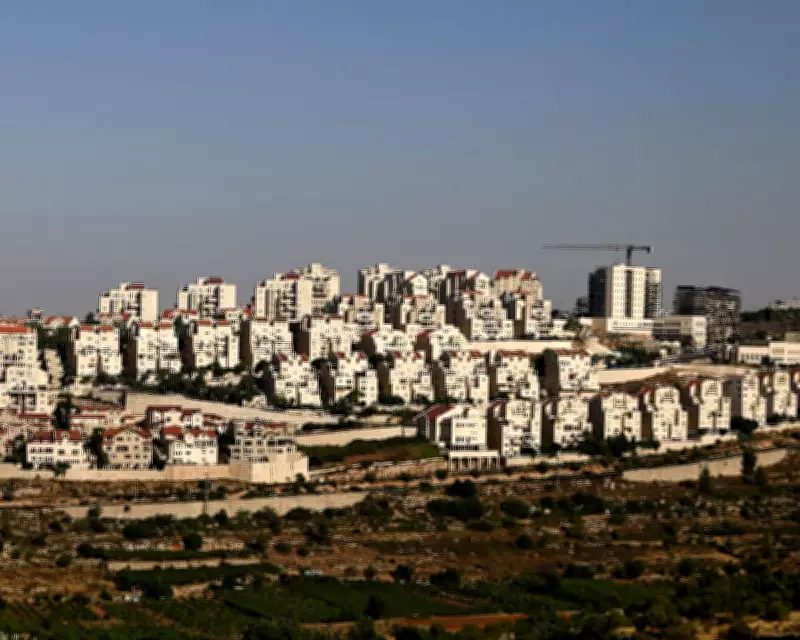
In a post on social media platform X, the US embassy in Jerusalem revealed that as part of celebrations for the 250th anniversary of American independence, it would offer routine passport services in the West Bank settlement of Efrat for a single day this Friday. The embassy confirmed that similar consular facilities would be extended in the coming months to Beitar Illit, another Israeli settlement, along with the Palestinian city of Ramallah and three cities within Israel proper.
Israeli settlements in the West Bank, territory that Israel has occupied since the 1967 Middle East war, are considered illegal under international law. Efrat itself is home to approximately 12,000 Israeli residents and is situated just 12 kilometers south of Jerusalem. The settlement has a significant population of American immigrants among its inhabitants.
Palestinian Authorities Condemn "Clear Violation of International Law"
The Palestinian Authority's Colonization and Wall Resistance Commission issued a strongly worded statement condemning the American initiative. The commission declared that this action "constitutes a clear violation of international law and a blatant favouring of the occupation authorities," directly referring to Israel's administration of the territory.
Mu'ayyad Shaa'ban, who heads the commission, emphasized that this step "entrenches a settlement reality that undermines the possibility of establishing an independent and sovereign Palestinian state." The militant group Hamas echoed these sentiments, describing the move as "a dangerous precedent" and "a practical recognition of the legitimacy of settlement and the occupation's control over the West Bank."
Israeli Government Welcomes the Diplomatic Shift
In stark contrast to Palestinian reactions, Israeli Foreign Minister Gideon Saar warmly welcomed the American decision. "We appreciate the important decision by the US embassy to extend consular services to Efrat, in Judea and Samaria," Saar stated, employing the biblical terminology for the West Bank preferred by many Israeli officials.
Hugh Lovatt, a senior policy fellow with the Middle East and North Africa programme at the European Council on Foreign Relations, provided crucial context for understanding this policy shift. "The background is very clear," Lovatt explained. "Mike Huckabee, the US ambassador to Israel, is an avowed proponent of the Greater Israel vision and supports the realisation of that vision between the Jordan River and the Mediterranean Sea."
Lovatt further noted that "this is a signal that the US will not treat the Israeli settlements in the West Bank in any different way from towns within Israel."
Escalating Tensions in the West Bank
This diplomatic development occurs against a backdrop of escalating violence and political tension in the West Bank. Just last week, Israel's cabinet approved measures designed to tighten the country's control over the territory and facilitate land purchases by settlers, a move that Palestinians have characterized as "de facto annexation."
Settler violence and military raids have intensified significantly since the outbreak of war in Gaza in October 2023. In a particularly tragic incident last week, Israeli settlers shot and killed a Palestinian American man during an attack on a village, according to reports from the Palestinian health ministry and eyewitness accounts.
On Tuesday, arson attacks targeted Palestinian homes in Masafer Yatta and surrounding villages in the south Hebron Hills, an area that has experienced repeated assaults by violent settlers in recent years.
Political Context and Demographic Realities
The current US administration under President Donald Trump, while publicly opposing Israeli annexation of the West Bank in line with longstanding American policy, has taken no concrete measures to curb settlement expansion. Settlement activity has actually increased since Trump took office last year.
Estimates suggest that tens of thousands of dual American-Israeli nationals currently reside in the West Bank. The US currently provides passport and consular services through its embassy in Jerusalem and a branch office in Tel Aviv.
More than 500,000 Israeli settlers now live in the West Bank alongside approximately 3 million Palestinians. Most settlements consist of small towns encircled by security fences and protected by Israeli military personnel. Much of the territory remains under Israeli military control, with limited Palestinian self-rule administered by the western-backed Palestinian Authority in certain areas.
Israeli Prime Minister Benjamin Netanyahu's ruling coalition includes numerous members who advocate for formal annexation of the West Bank, drawing support from a substantial voter base within the settlements. These politicians frequently cite biblical and historical connections to justify Israeli claims to the territory captured during the 1967 conflict.