US-Iran Talks in Islamabad: 21-Hour Marathon Fails to Bridge Nuclear Divide
The United States and Iran engaged in a high-stakes diplomatic marathon in Islamabad, Pakistan, with both sides deploying massive delegations for talks that ultimately failed to resolve their longstanding disputes. The negotiations lasted 21 intense hours, bringing together hundreds of officials to address complex issues including Iran's nuclear program, control of the Strait of Hormuz, and US compensation demands.
Delegation Showdown in Pakistan
Iran arrived with two planeloads of negotiators, including numerous members of the Islamic Revolutionary Guard Corps (IRGC) to ensure military gains weren't compromised at the diplomatic table. Their team featured experienced diplomats like Ali Bagheri Kani, deputy secretary of the supreme national security council and chief negotiator in previous nuclear talks, and Abbas Araghchi, foreign minister and chief negotiator during the 2015 nuclear agreement.
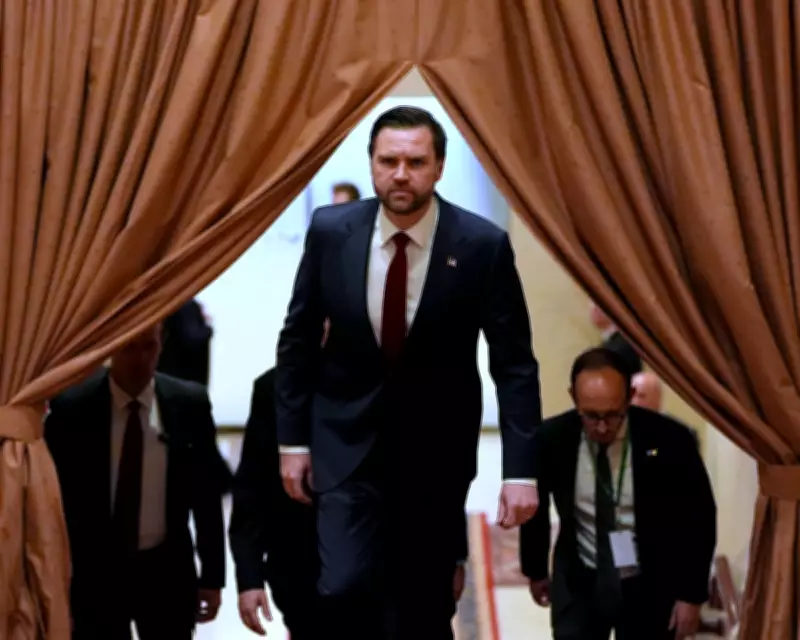
The United States, often criticized for minimalist negotiating teams, sent Vice President JD Vance along with nearly 300 officials, signaling a new seriousness in approaching the Iranian delegation. The US team included specialists across political, legal, security, economic, and military domains, with Iranian technical documents on nuclear facility safety alone running over 100 pages.

Communication and Complications
During the talks, Vice President Vance maintained frequent communication with former President Donald Trump, speaking at least a dozen times, and even once with Israeli Prime Minister Benjamin Netanyahu. Iranian Foreign Minister Araghchi quickly claimed this conversation with Netanyahu hardened the US position, complicating negotiations further.
Robert Malley, a veteran of nuclear talks with Iran under President Joe Biden, offered a pointed assessment: "Twenty-one hours was 20 hours too many if the goal was to reiterate a demand Iran had already rejected. It was many hours too few if the goal was to negotiate."
Fundamental Disagreements Remain
The talks revealed persistent fundamental disagreements between the two nations. Vance stated the US came to Islamabad "to see if we could get to a situation where the Iranians were willing to accept our terms," language that former Iranian Foreign Minister Javad Zarif criticized as demonstrating "unchanging US take-it-or-leave-it arrogance."
Iranian Foreign Ministry spokesperson Esmaeil Baghaei acknowledged that the limited timeframe made reaching an outline agreement unlikely, identifying two or three outstanding issues: Israel ending its offensive in Lebanon, establishing protocols for shipping governance in the Strait of Hormuz, and determining the future of Iran's highly enriched uranium stockpile.
Nuclear Program Stalemate
On Iran's nuclear ambitions, Vance emphasized: "The simple fact is that we need an affirmative commitment that they will not seek a nuclear weapon and they will not seek the tools that will enable them quickly to achieve a nuclear weapon." The inclusion of "quickly" is significant, as enrichment at 3.67% purity—the maximum under the 2015 nuclear deal—leaves Iran far from weapons-grade material.
Iran's practical enrichment capacity is currently zero due to previous US attacks on nuclear sites, making the debate largely theoretical but deeply tied to national sovereignty concerns.
Strait of Hormuz: Iran's Strategic Leverage
The Strait of Hormuz emerged as a critical bargaining chip, with Iran currently selecting which nationalities' ships can pass through this vital waterway. According to Tanker Tracker data, 2 million barrels of Iraqi oil and 4 million barrels of Saudi oil passed through the strait recently, demonstrating Iran's new economic and diplomatic weapon.
Mohammad Taghi Naghdali, a member of the Iranian parliament, declared: "The Strait of Hormuz is something beyond the atomic bomb for us, an atomic bomb that operates continuously on a global level and demonstrates the strategic depth of the Islamic republic." He presented the options as either returning to war or maintaining this strategic pressure on global trade.

Domestic Pressures and Future Prospects
Iran faces significant domestic challenges, with inflation approaching triple digits, an ongoing internet blackout threatening businesses and civil society, and leadership security concerns. Despite these pressures, surviving the conflict thus far represents a notable achievement for the Iranian government.
Pakistan, serving as host and mediator, continues urging both sides to keep diplomatic channels open rather than resume hostilities. Meanwhile, Israel's Energy Minister Eli Cohen suggested the lack of agreement might justify military action against Iran.
Vance offered a nuanced perspective on the talks' outcome: "We leave here with a very simple proposal, a method of understanding that is our best and final offer. We'll see if the Iranians accept it," implying potential for continued dialogue despite the current impasse.