Senior Trump Official Extends Hand to Europe's Far Right in Diplomatic Maneuver
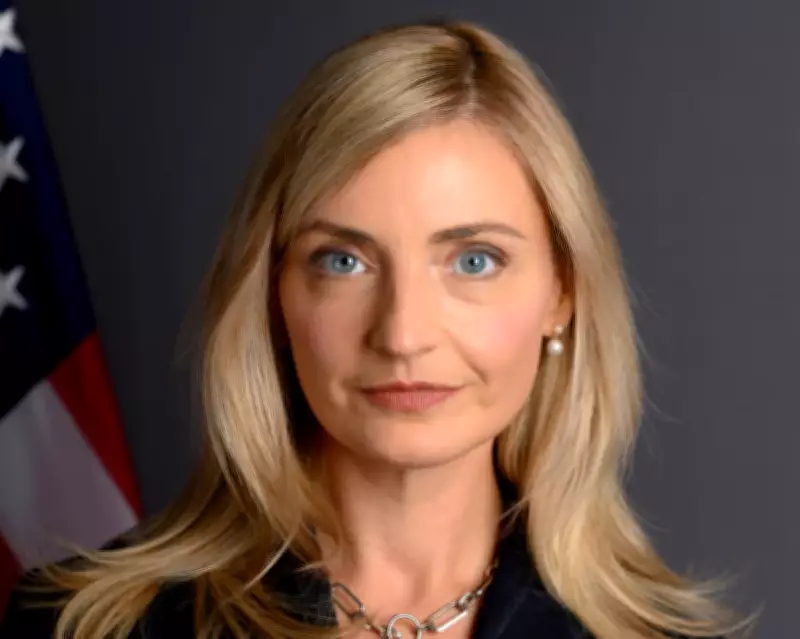
As Donald Trump intensifies his criticisms of the European Union and NATO, Sarah B. Rogers, a high-ranking official in the US State Department, has emerged as a vocal critic of hate speech and immigration policies in allied nations. Rogers, who serves as the undersecretary of state for public diplomacy, has been actively engaging with far-right European politicians and amplifying their narratives, marking a notable departure from traditional diplomatic norms.
Rogers' Role and Controversial Statements
Appointed in October, Rogers holds a top-tier position created in 1999 to foster relationships between the US and foreign publics. However, her focus appears skewed toward winning over specific segments of foreign opinion. On social media, she has described migrants in Germany as "barbarian rapist hordes" and linked Sweden's immigration policy to sexual violence, stating, "If your government cared about 'women's safety,' it would have a different migration policy." She has also echoed views criticizing advocates of unlimited immigration from developing nations.
In response to inquiries, Rogers defended her posts, arguing that her comments on German migrants referred specifically to the Cologne attackers and should not be illegal. She clarified that her Sweden remark addressed internet censorship debates, and by "official knowledge production," she meant mainstream media, academia, and NGOs.
Expert Analysis on Strategic Alignment
Experts observe that Rogers' actions reflect a broader Trump administration strategy to bolster anti-democratic movements in Europe. Léonie de Jongea, a professor at the University of Tübingen, noted, "The Trump administration has a vested interest in strengthening anti-democratic movements abroad, as doing so helps advance its own agenda while lending legitimacy to these actors." Georgios Samaras of King's College London added that Trump's contempt for mainstream institutions has evolved into a governing identity, with warmth toward Europe's far right serving as culture export and power projection.
Meetings with Far-Right Figures
Rogers has actively courted European far-right groups. She met with Markus Frohnmaier, an Alternative für Deutschland (AfD) parliamentarian, discussing the Trump administration's national security strategy. Frohnmaier claimed the meeting indicated Washington's desire for a strong German partner. Despite criticism, Rogers defended the engagement, noting Frohnmaier's role as AfD's foreign policy spokesman and dismissing allegations of his Russian ties as unsubstantiated.
AfD, designated as a "confirmed rightwing extremist" force by Germany's intelligence agency, faces ongoing legal challenges. Rogers' predecessor, Darren Beattie, also met with Frohnmaier and was later fired for associations with white supremacists. Samaras commented that such contacts legitimize transatlantic far-right alignment, particularly significant given Germany's historical context.
Amplification of Far-Right Narratives
Rogers has promoted far-right messaging in the UK, reposting a GB News headline about a banned "Walk with Jesus" march and commenting, "As mass migration disrupts societies, liberal political freedoms lose out." The march was organized by UKIP, a party accused of Islamophobia. Rogers explained her tweet referenced both immigration protests and evangelical marches, questioning whether UKIP deserved free-assembly rights.
She also reposted a video by Jack Hadfield, a journalist with far-right connections, discussing sexual assault rates among foreigners in the UK. Hadfield's data, sourced from anti-immigrant groups, has been disputed. Rogers downplayed his past involvement in a racist Facebook group, calling it a possible joke and noting she doesn't scrutinize every reporter's history.
Defense of Controversial Figures
Rogers has defended individuals like Lucy Connolly, who served prison time for inciting racial hatred. On a podcast, Rogers argued Connolly's posts would be legal in the US, portraying her as a bereaved mother. De Jongea noted that complaints about hate speech laws are a common far-right tactic to frame liberal institutions as suppressive.
Visa Sanctions and Legal Battles
Rogers has supported visa sanctions against individuals accused of promoting censorship, targeting laws like the European Digital Services Act and UK's Online Safety Act. She named Imran Ahmed of the Centre for Countering Digital Hate, leading to a lawsuit and a temporary restraining order against his deportation. Ahmed stated, "I will not be bullied away from my life's work of fighting to keep children safe from social media's harm and stopping antisemitism online."
Samaras interpreted these moves as part of a strategic template to destabilize European governments and benefit far-right forces electorally. This approach, he suggested, mirrors domestic strategies like Project 2025, aiming to export influence and reshape political landscapes abroad.