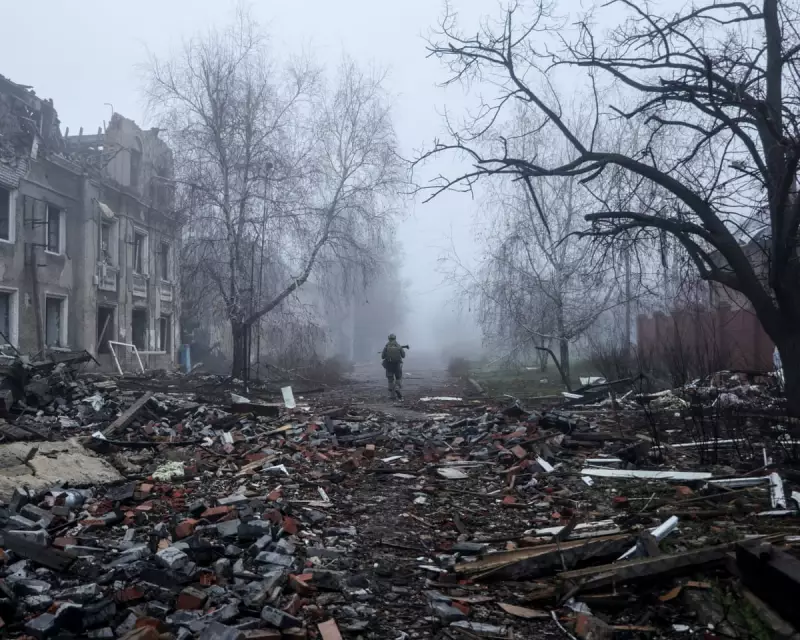
High-stakes diplomatic efforts to end the war in Ukraine have reached a critical impasse, with Russian President Vladimir Putin showing little appetite for compromise and insisting on terms that would severely undermine Ukrainian sovereignty. This comes after a summit in Moscow between Putin and Donald Trump's special envoy, Steve Witkoff, failed to yield progress.
A Summit with No Breakthrough
The meeting on Tuesday followed intense diplomatic activity, including the presentation of a controversial 28-point US peace plan to Kyiv two weeks ago. That initial proposal, widely seen as favourable to Moscow, was subsequently reworked by US and Ukrainian officials in meetings in Geneva and Florida. The revised offer formed the basis of the discussions in Moscow.
While Ukrainian President Volodymyr Zelenskyy stated the updated proposal "looks better" and the White House expressed optimism, the Kremlin struck a different tone. Following Witkoff's departure, Russian officials stated the two sides were "neither further nor closer to resolving the crisis in Ukraine." They emphasised that "there is a lot of work to be done."
Putin's Military Posturing and Unwavering Demands
In the lead-up to the talks, Putin projected an image of military strength. Russian state television broadcast carefully curated images of the president in military fatigues at a command post, where he claimed control of the strategic city of Pokrovsk—a claim swiftly denied by Ukraine.
According to Pjotr Sauer, the Guardian's Russian affairs reporter, the message was clear: "We're winning this war, so it's better to pressure Ukraine into peace... or wait for us to continue fighting, and then Ukraine will be in an even worse situation."
Russia's core demands, which have not shifted, include:
- Deep cuts to Ukraine's armed forces and a ban on Western military assistance.
- Limits on Ukraine's political independence.
- The handover of Ukrainian territory in the east currently not held by Russia.
- A pledge from Ukraine never to join NATO.
Putin has also consistently questioned Zelenskyy's legitimacy, suggesting a deal may not be possible regardless of terms.
The Controversial Role of the US Envoy
The choice of envoy has raised significant questions about the US approach. Steve Witkoff, a former property developer with no prior diplomatic experience, has been exposed for coaching Russian officials on how to win Trump's favour. A leaked phone call to Bloomberg last week revealed Witkoff advising Kremlin aide Yuri Ushakov, showcasing a closeness to the Russian position that contrasts sharply with the "quite intense" pressure applied to Ukrainian negotiators.
"Witkoff is not ideological, he's a purely transactional person," said Sauer. "He thinks: 'If only Ukraine just gives up this land, then we can get a deal with everyone.'"
This dynamic means Witkoff is unlikely to apply meaningful pressure on Putin, instead potentially returning to Washington with the message that Ukraine must make major concessions.
An Uncertain Path Forward
European leaders, who had hoped for a pivotal week, now fear the summit has simply increased pressure on Kyiv to capitulate. Analysts believe any substantial revision to the original plan is unacceptable to the Kremlin, which views the current military trajectory as favourable.
"The Russians see this as a win-win situation," Sauer explained. Either the original plan proceeds, or they "just keep on fighting." With Putin reportedly happy to continue the conflict and Trump's domestic political pressures mounting, the prospect of a peace deal acceptable to both Kyiv and Moscow appears distant. The danger, analysts warn, is that the US administration may eventually walk away, leaving Ukraine in a vulnerable position.