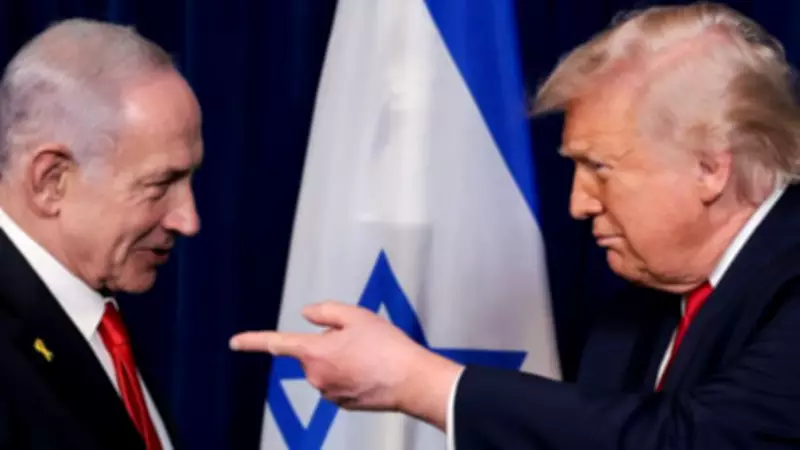
Trump's Public Rebuke of Israeli President Exposes Growing US-Israel Rift Over Iran
In the complex landscape of Middle Eastern politics, a significant schism has emerged between the United States and Israel, two nations historically bound by strong alliances. The tension became publicly evident when former President Donald Trump launched a stinging attack on Israeli President Isaac Herzog, criticizing him for failing to pardon Prime Minister Benjamin Netanyahu.
Trump, who has issued nearly 2,000 pardons during his presidency, declared that Herzog should be "ashamed of himself" for not granting clemency to Netanyahu. The Israeli prime minister faces serious criminal charges including bribery, fraud, and breach of trust, with legal proceedings stretching over six years marked by numerous delays and excuses.
Netanyahu's Legal Battles and Pardon Request
Netanyahu has consistently argued that his duties as prime minister leave little time for court appearances, though he initially maintained his intention to prove his innocence through legal channels. However, in a significant shift at the end of last year, Netanyahu formally requested a presidential pardon, claiming the ongoing case had become a distraction from governing.
His political opponents were quick to respond, asserting that "only the guilty ask for a pardon." Herzog issued a carefully worded statement explaining that the pardon process involves lengthy legal procedures and cannot be decided unilaterally, while simultaneously expressing his "deep appreciation" for Trump despite the public criticism.
Behind the Scenes: The Iran Policy Divide
The public disagreement over Netanyahu's pardon request masks deeper policy divisions between the two nations, particularly regarding Iran. Netanyahu's recent low-profile visit to Washington—his sixth since Trump's return to office but notably lacking the usual fanfare and press conferences—revealed growing concerns within the Israeli cabinet.
Israeli officials fear the United States may soften its stance toward Iran, potentially offering nuclear enrichment deals, easing sanctions, and failing to address Iran's ballistic missile arsenal or its support for proxy groups including Hamas, Hezbollah, and the Houthis in Yemen.
Netanyahu expressed "general skepticism about the nature of any agreement with Iran," marking one of his most critical comments about Trump's administration, though he quickly followed with praise for Trump as "a great friend of the State of Israel, who was like no other."
Military Concerns and Diplomatic Calculations
The strategic divergence extends to military considerations. JD Vance has expressed significant reservations about potential U.S. military action against Iran, citing concerns about American casualties if Iran retaliates against U.S. bases in the Middle East. Meanwhile, Israel is reportedly developing contingency plans for unilateral action, though such measures would still require support from Trump's administration.
Critical questions remain unanswered: Even if the United States avoids direct military engagement, would it replenish Israel's missile supplies for the Iron Dome air defense system? While the assumption leans toward affirmation, certainty remains elusive.
Netanyahu's Precarious Position
The Israeli prime minister faces multiple challenges beyond international diplomacy. With a general election approaching later this year, Netanyahu's political future is uncertain. He confronts not only domestic criminal charges but also war crimes indictments from the International Criminal Court, restricting his travel to avoid potential arrest.
Netanyahu has become something of a diplomatic pariah internationally, with Trump standing as his most powerful—and perhaps only—high-profile ally on the world stage. This relationship adds another layer of complexity to the already strained U.S.-Israel dynamic as both nations navigate their differing priorities regarding Iran's regional influence and military capabilities.
The public exchange between Trump and Herzog serves as a visible symptom of deeper policy disagreements that threaten to redefine one of the most significant international relationships in modern geopolitics.